Tit-for-Tat
You move into a new apartment. The first week, your downstairs neighbor asks to use your Wi‑Fi while his gets set up. You say yes and text the password. He thanks you and starts bringing your packages upstairs when he sees them. One month he forgets, and a box sits in the lobby overnight. You do not scold him. The next time, he carries two boxes up and leaves a note. Over a few rounds, the pattern settles. You start kind. Then each of you answers with the last thing the other did.

Tit-for-tat starts with cooperation. Then it copies whatever the other side did last time. It rewards a smile with a smile, and a jab with a jab. Because it is simple and visible, it builds trust fast. Because it forgives after one good move, it stops grudges from spiraling. Picture two people across a table with a small two‑way arrow over a center line: move 1 sets the tone, and move 2 mirrors it.
Therefore
Open nice. Mirror their last move once, and reset to nice as soon as they do.
Robert Axelrod, 1980
At the University of Michigan in 1980, political scientist Robert Axelrod ran a tournament. He asked researchers to submit computer programs that would play the Prisoner’s Dilemma over and over. The winner would be the program that earned the most points across hundreds of rounds. Anatol Rapoport sent a tiny program called TIT FOR TAT. It cooperated on the first move, then copied the opponent’s last move. Against dozens of complex entries, it won the first tournament and then a second, larger one. When Axelrod printed the results, the pattern was plain: the strategies that started kind and mirrored were the ones others learned to cooperate with.
A small reminder, on a team whiteboard or a shared fridge, that starting kind and mirroring keeps cooperation stable and punishes cheating fast without grudges.
$3.50
2.5 inches vinyl · weatherproof · ships in 1–3 days
Mix & save: 3 for $9 · 5 for $14 · 10 for $25· free shipping at ten
- Weatherproof vinyl
- Ships from Wayzata in 1–3 business days
- Secure checkout
If anything is wrong, we'll refund or replace it. Read the policy
Related patterns
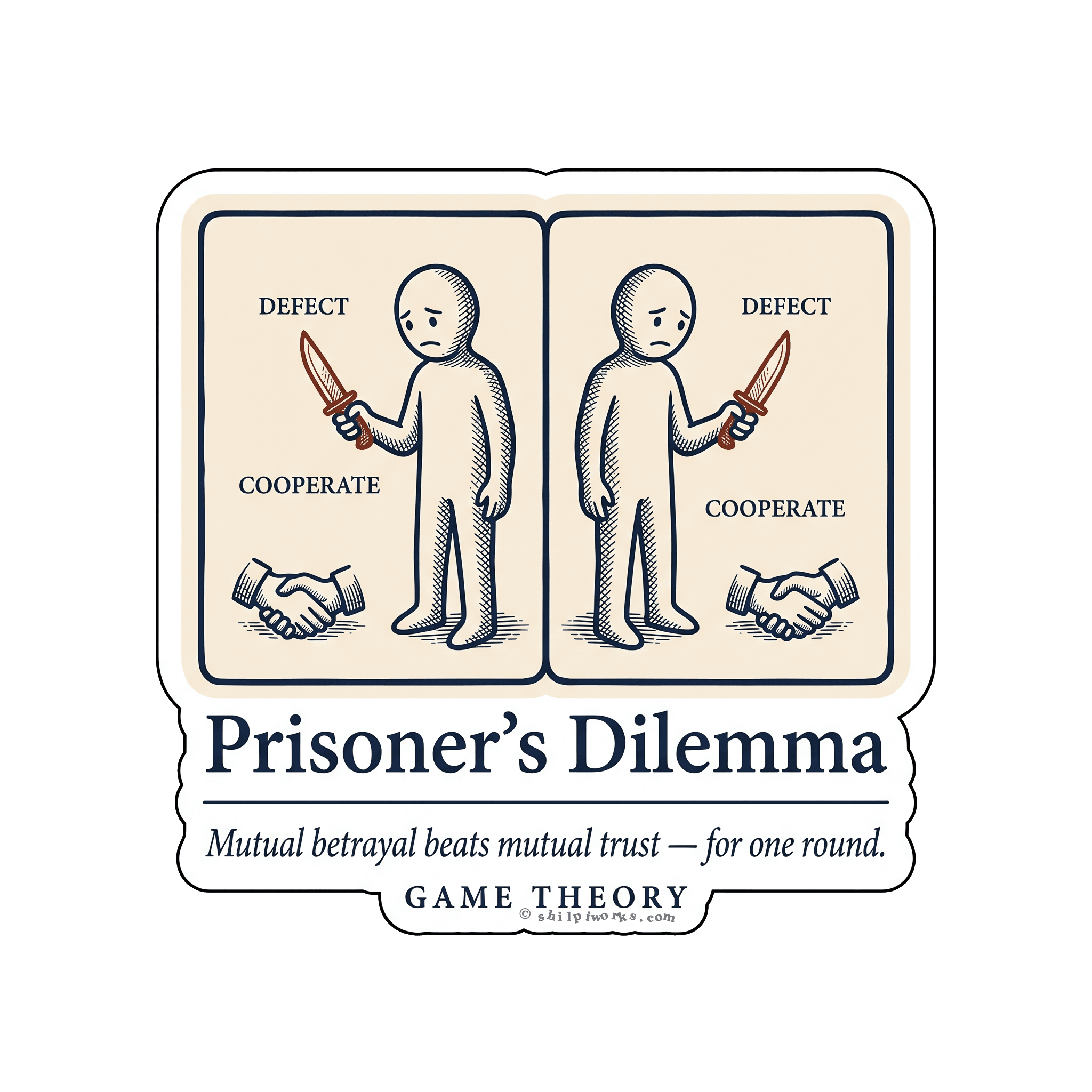
contrasts with
Prisoner's Dilemma Game Theory Concept
One round rewards betrayal, repeated rounds reward fairness.
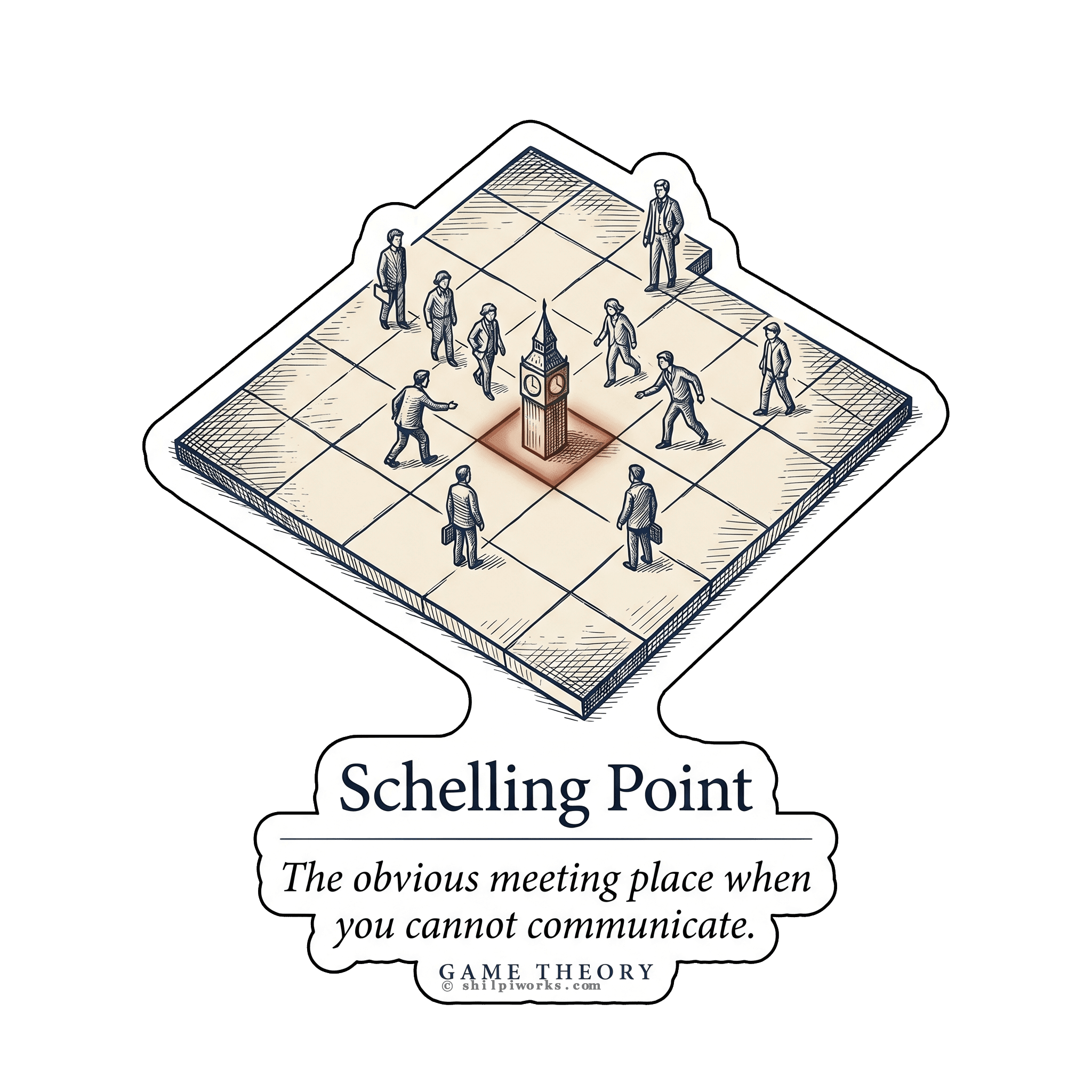
pairs with
Schelling Point: The Obvious Meeting Place
Shared expectations help coordination without talking.

extends to
Coevolutionary Intertwine: Growth & Reciprocity
Partners shape each other's behavior over time.