Punctuated Equilibrium
You watch a product at work sit unchanged for years. Same login, same reports, same tiny annoyances. Then one quarter a rebrand lands, three features ship at once, and the whole layout moves. It feels like nothing happened and then everything did. The same thing shows up in your own life. You grind for months and see no progress, then a door opens and two more follow. Progress does not arrive like a ramp. It arrives like a staircase, with long treads and a sharp riser.
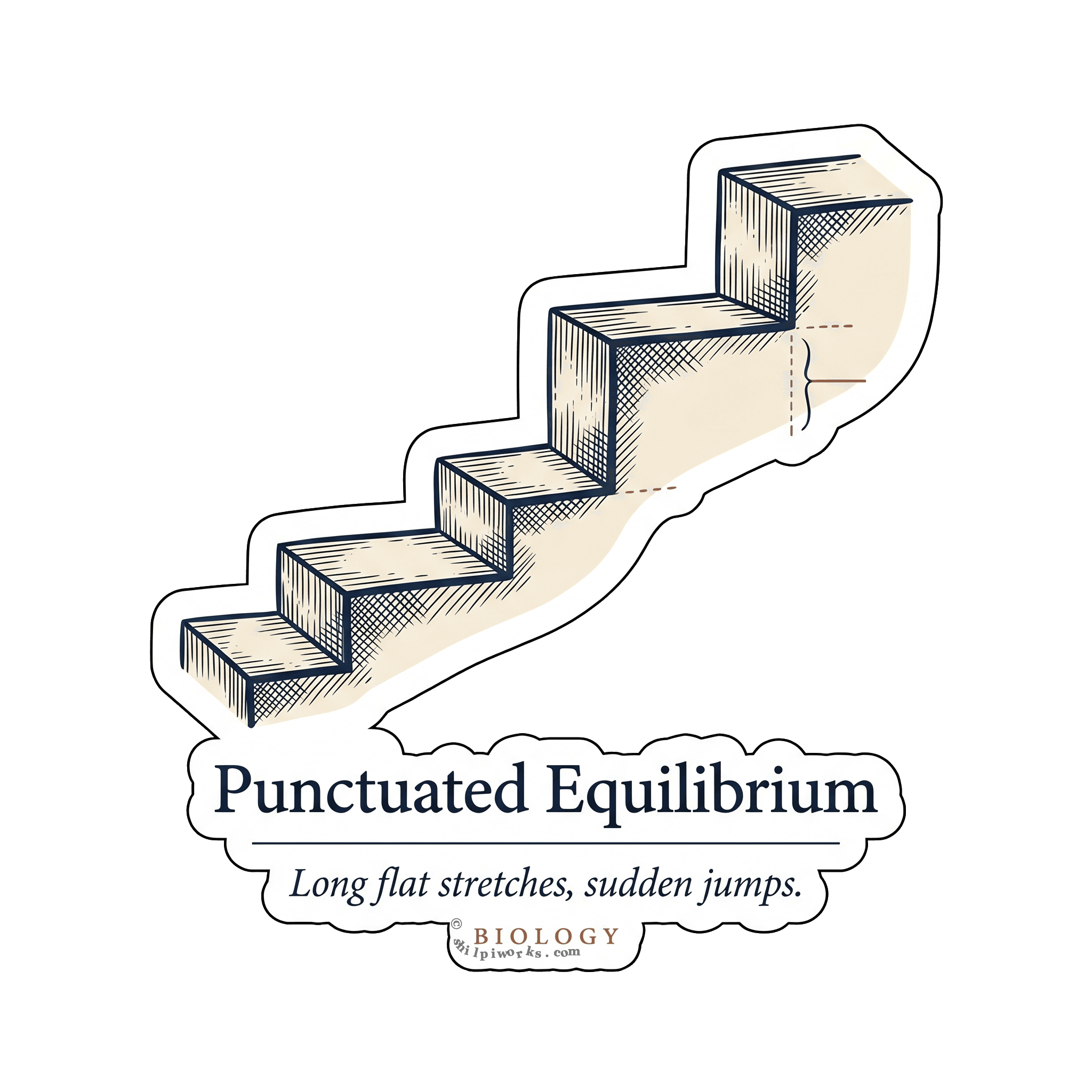
In biology, most species hold steady for long spans. Then conditions shift or a small group gets isolated, and selection works fast. A new form spreads, the line jumps, and stasis returns. The fossil record shows long flat stretches with thin layers where traits change. We expect smooth progress, but many systems move by steps.
Therefore
When you are stuck on a flat stretch, do not assume nothing is working. Keep options ready so you can move fast when the window opens.
Eldredge and Gould, 1972
In 1971, Niles Eldredge was sorting Devonian trilobites at the American Museum of Natural History. The species Phacops rana sat in layer after layer with the same eyes and spines. Then, in a thin band of rock, a slightly different form appeared and then stayed the same for a long run. He told his friend Stephen Jay Gould about the pattern. In 1972 they published “Punctuated equilibria” in a volume called Models in Paleobiology. Their claim was simple: most lines sit still for ages, and big changes happen fast in small, isolated groups that later spread. The fight was loud, but many fossil series fit the steps.
A small reminder, on a laptop lid or a lab notebook, that plateaus are not failure and the next step often comes fast, all at once.
$3.50
2.5 inches vinyl · weatherproof · ships in 1–3 days
Mix & save: 3 for $9 · 5 for $14 · 10 for $25· free shipping at ten
- Weatherproof vinyl
- Ships from Wayzata in 1–3 business days
- Secure checkout
If anything is wrong, we'll refund or replace it. Read the policy
Related patterns
contrasts with
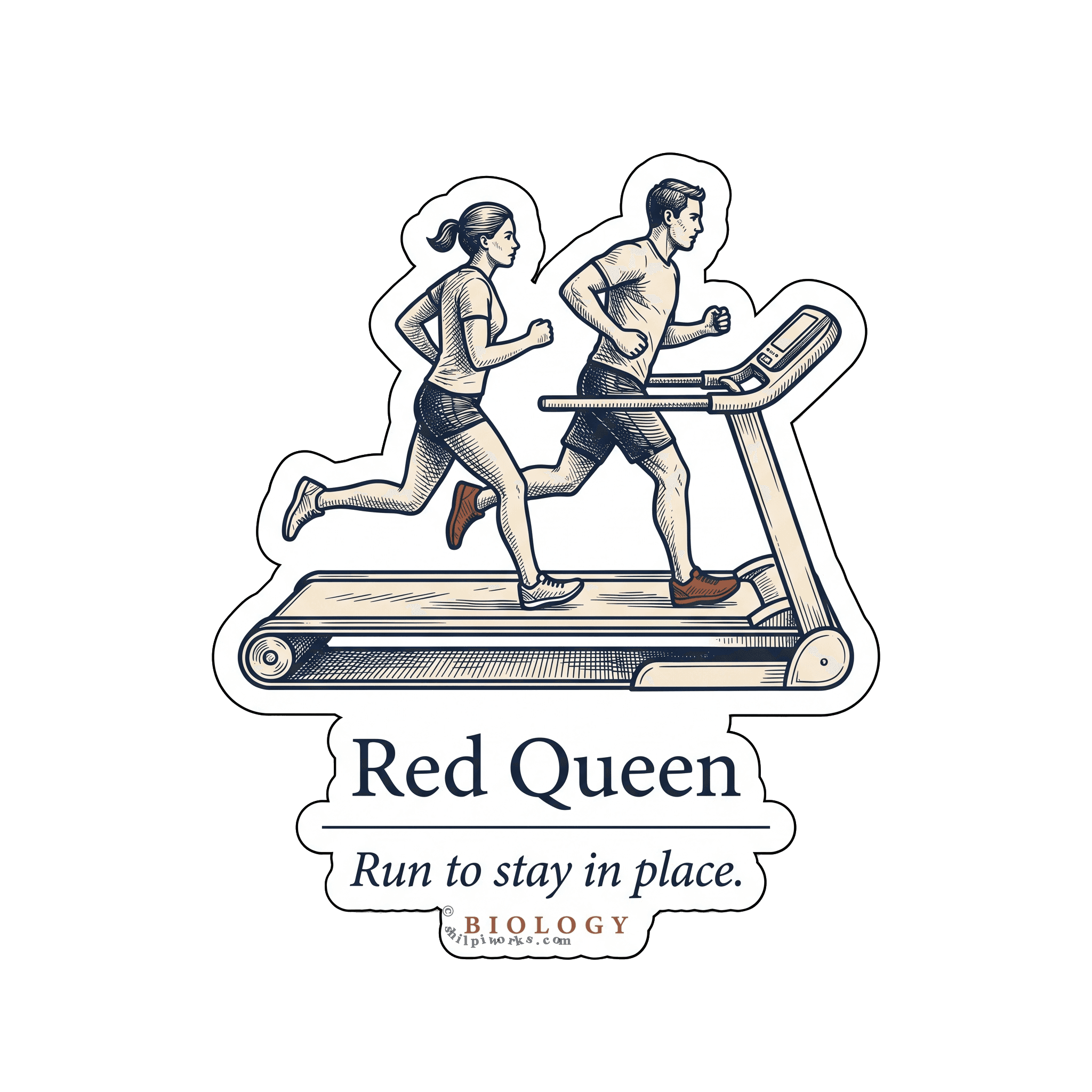
Red Queen Principle: Constant Evolution
Red Queen says constant change; this says long stasis then bursts.
pairs with
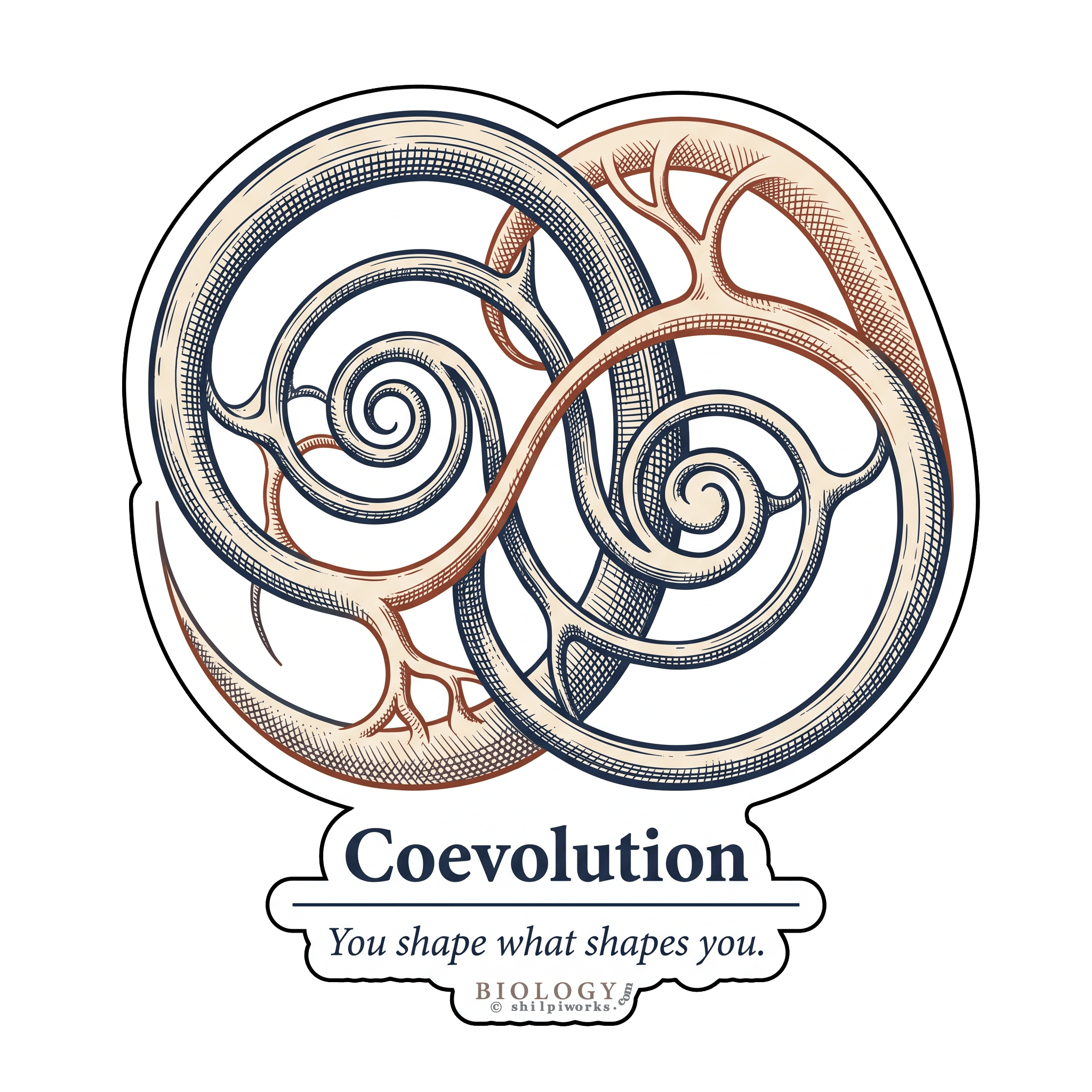
Coevolutionary Intertwine: Growth & Reciprocity
Interactions can trigger those bursts in short, intense runs.

extends to
Creative Destruction: The Cycle of Innovation
Industries sit steady, then a disruption leaps the staircase.