Prisoner's Dilemma
You and a roommate both see the trash bag sagging and smell last night's takeout. It is late, and it is raining, and the chute is down two flights. Taking it out costs you a trip. Leaving it costs you nothing if the other person handles it. You both think the same thought: I did it last time, and I have an early meeting. You leave it. They leave it. The kitchen smells worse in the morning, and both of you start the day annoyed. Each of you picked the small knife over the handshake, and both paid for it.
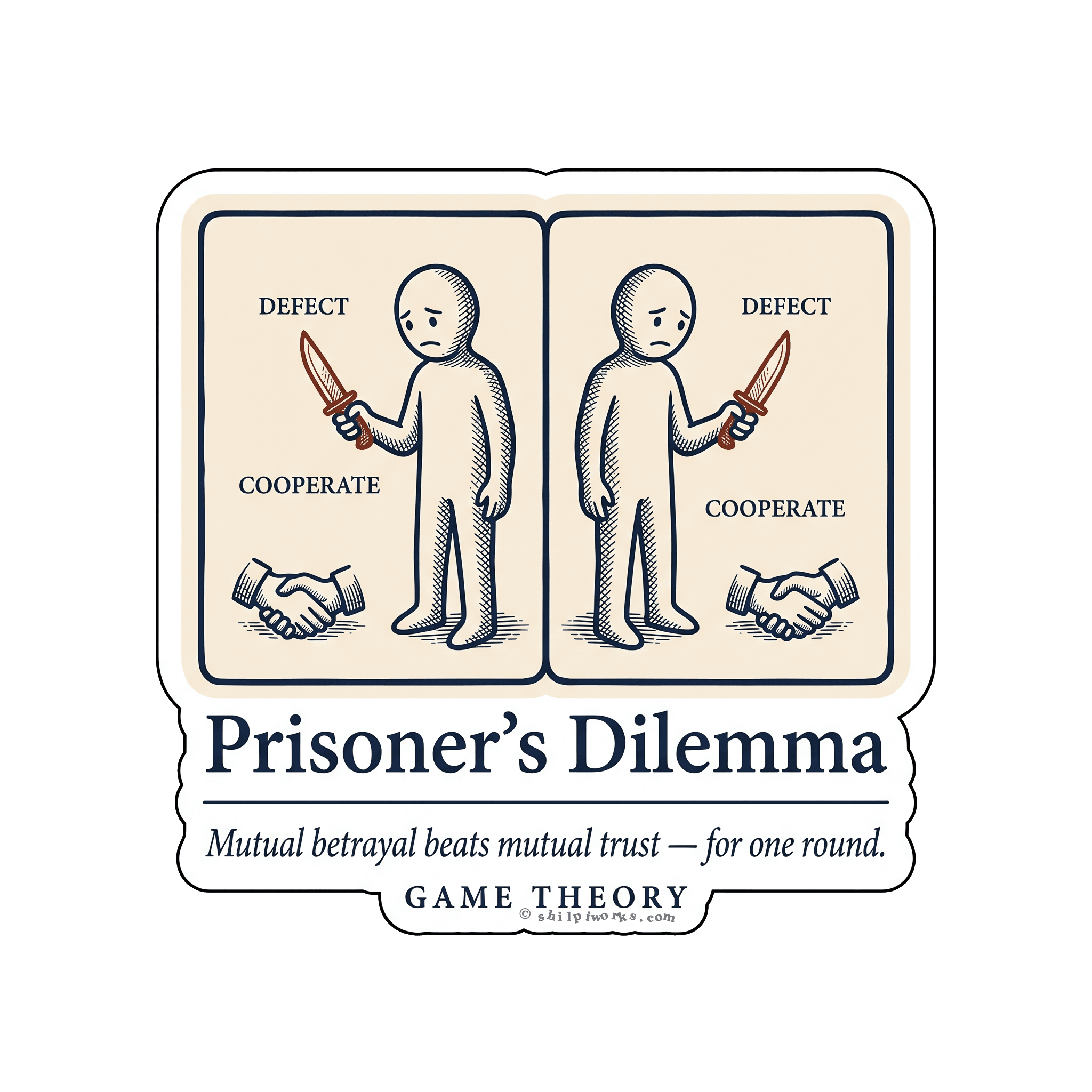
The prisoner's dilemma is any choice where two people cannot talk or enforce a promise. Each does better by cutting, no matter what the other does. The fear is being the one who shook hands while the other held a knife. So both pick the knife, and both end up worse than if they had cooperated. You see it in chores, price wars, and doping in sports. In one round, betrayal wins. Over many rounds, the next meeting changes the payoff.
Therefore
Before you act, ask if this is one time or a relationship. If you will meet again, start with the handshake and match their next move.
Robert Axelrod, 1980
Robert Axelrod, a political scientist at the University of Michigan, ran a computer tournament in 1980. He asked researchers to send short programs that would play a repeated prisoner's dilemma against every other program. Each match went many rounds, and scores added up. The winner was Anatol Rapoport's tiny entry, "Tit for Tat." It opened with cooperation, then simply did whatever the other program did last time. It punished a cut, and it forgave a return to trust. It won again in a second tournament with more complex rivals. Axelrod wrote up the result in The Evolution of Cooperation in 1984. Nice, clear, and retaliatory worked best.
A small reminder, on a team whiteboard or a fridge door, that the easy knife today often cuts tomorrow's deal and wastes both mornings.
$3.50
2.5 inches vinyl · weatherproof · ships in 1–3 days
Mix & save: 3 for $9 · 5 for $14 · 10 for $25· free shipping at ten
- Weatherproof vinyl
- Ships from Wayzata in 1–3 business days
- Secure checkout
If anything is wrong, we'll refund or replace it. Read the policy
Related patterns

pairs with
Tit-for-Tat Strategy: Game Theory Reciprocity
How cooperation survives when games repeat.
contrasts with
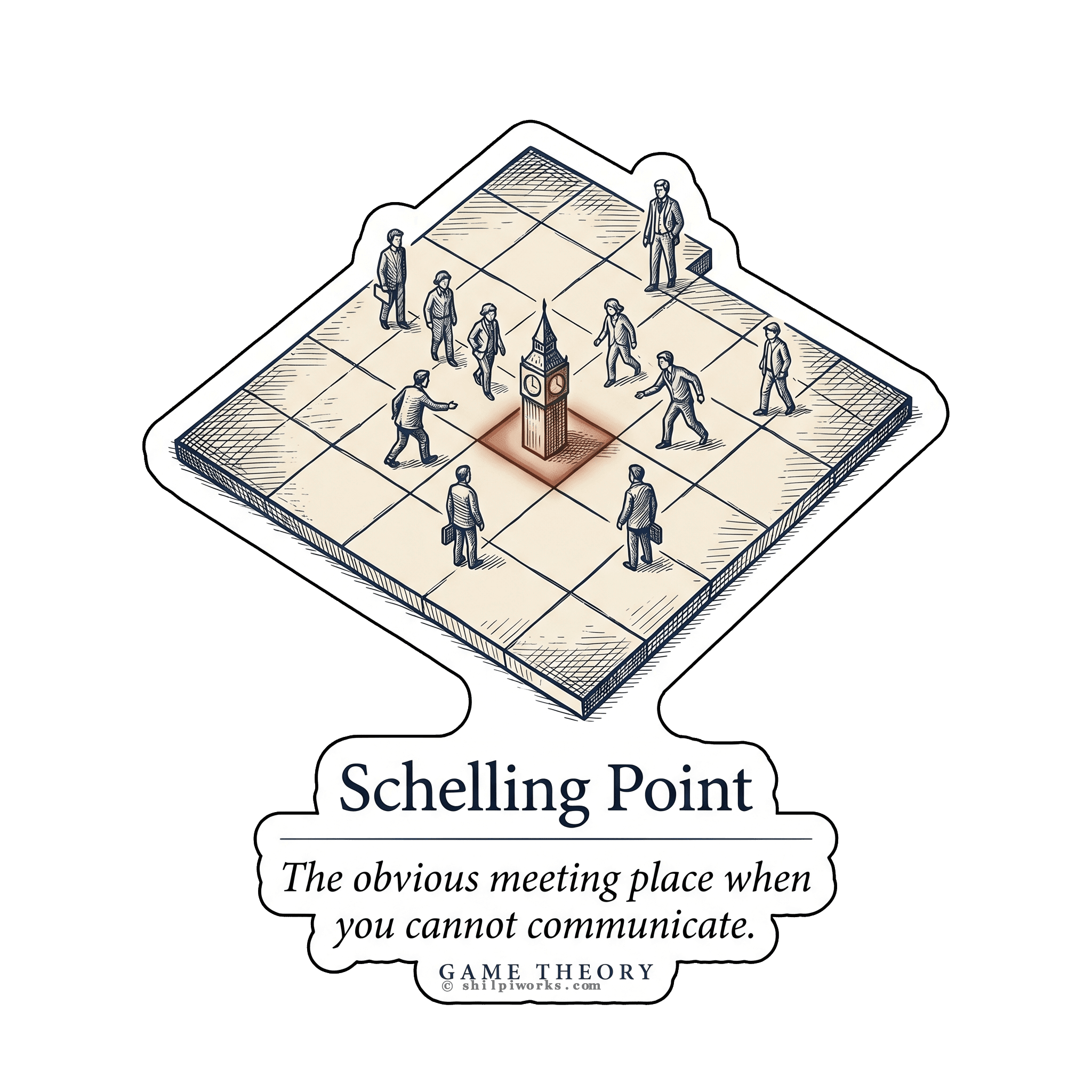
Schelling Point: The Obvious Meeting Place
Coordination without talking, unlike PD's mistrust with misaligned payoffs.
extends to
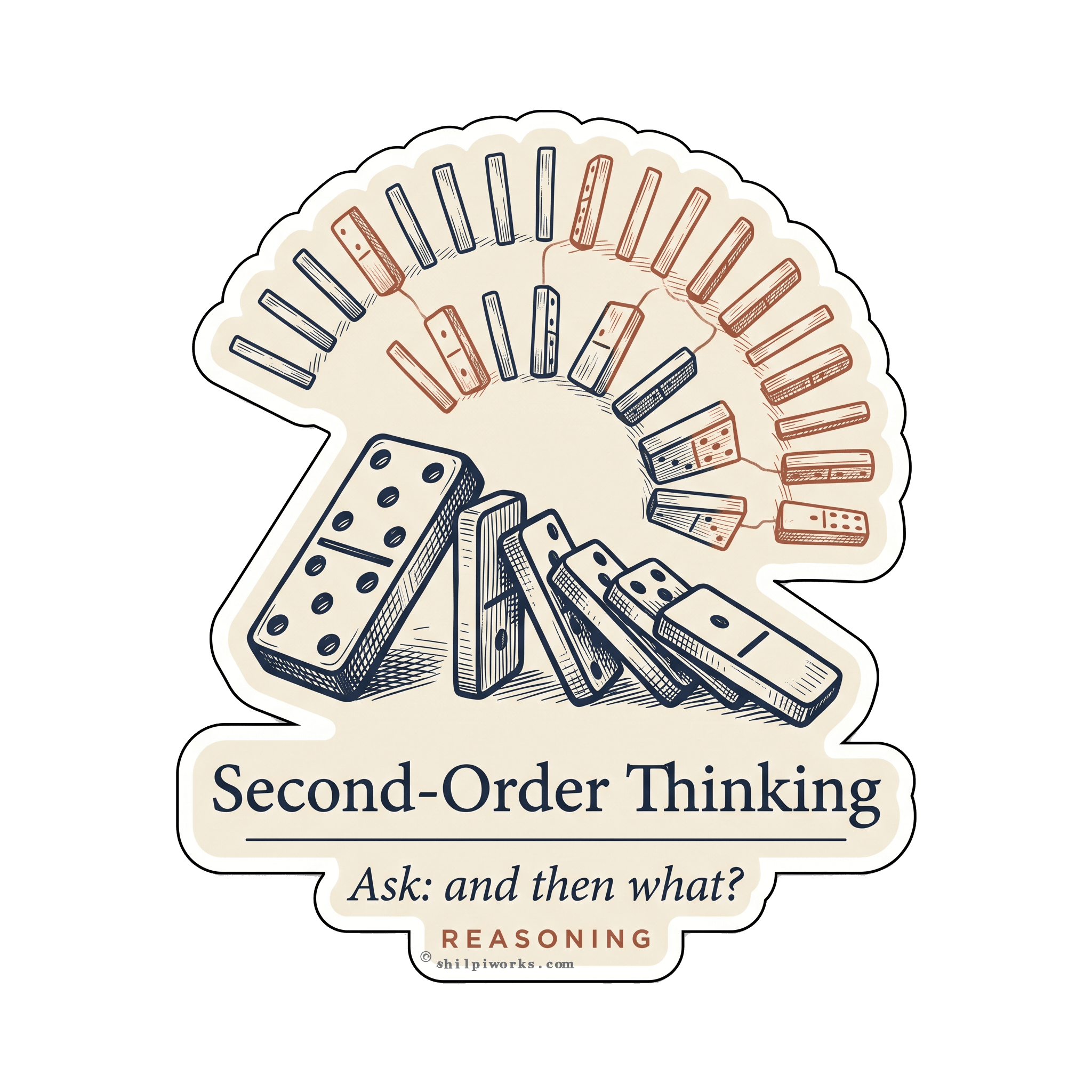
Second-Order Thinking Domino Chain
Think past this round to change today's move.