Coevolution
You start a group chat at work to cut email. People like it at first. Then urgent messages creep in because it is fast. You mute the channel and ask people to tag real emergencies. Soon everything has an emergency tag, because that is the only way to be heard. You stop looking at the tag and scan for your name, so people add your name to every post. You did not set out to make spam. You and everyone else trained each other into it.
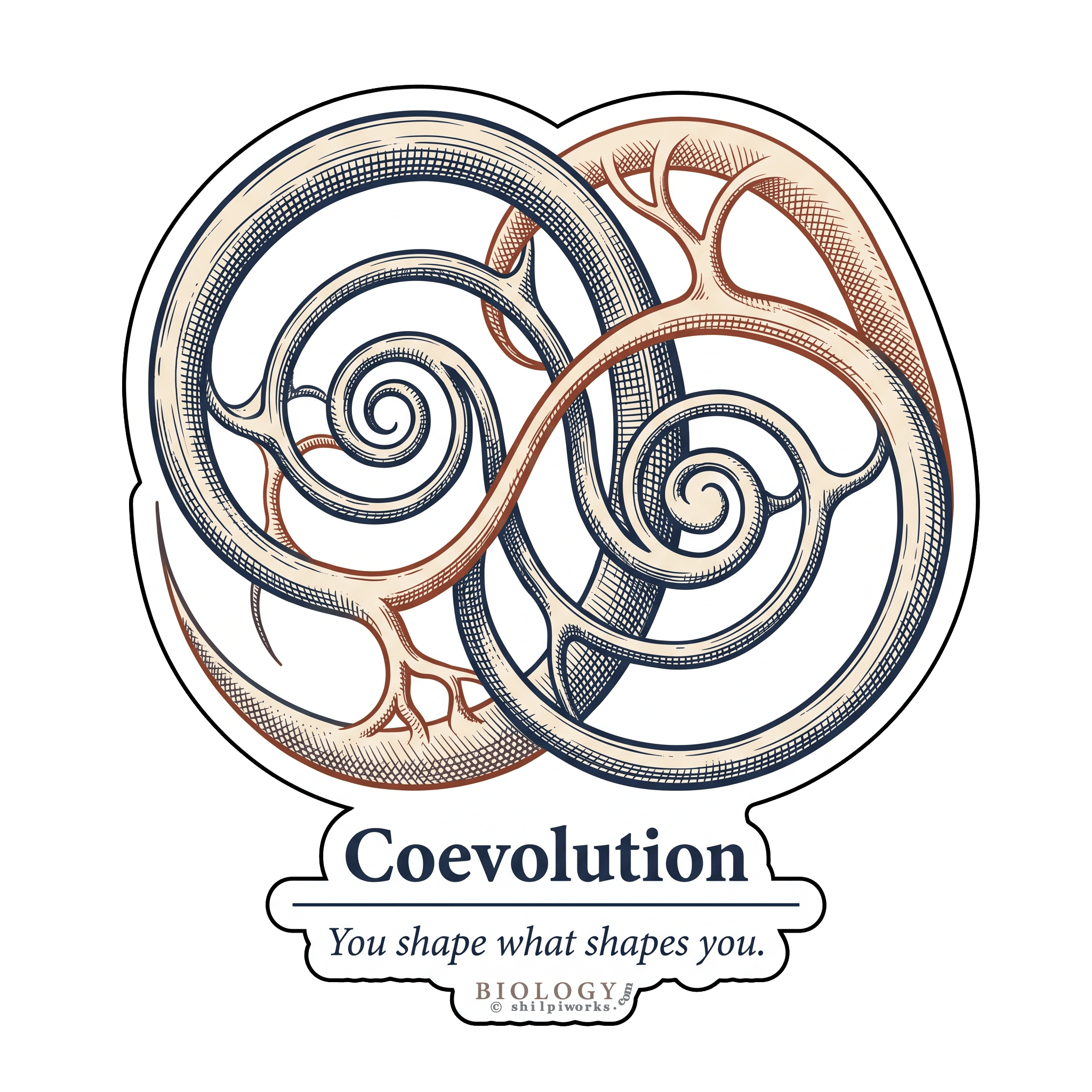
Living things change in response to each other. A flower that fits a bee better gets more visits, and the bees that fit that flower get more food. Predators get faster, and the prey that outrun them have babies. You change too, with rules at work, rival teams, or the way spammers and filters learn each other. Each side is both the sculptor and the clay. Over time you get a match that keeps shifting.
Therefore
When you change a system that has another mind on the other side, expect it to answer you. Plan for the answer, or you will only chase your own move.
Darwin, 1862
On seeing the Madagascar star orchid Angraecum sesquipedale, with a nectar spur almost a foot long, Charles Darwin wrote in 1862 that there must be a moth with a tongue to match it. He had not seen the moth. He reasoned that only such an insect could reach the nectar, and the orchid would reward the moth that could. In 1903, Walter Rothschild and Karl Jordan described a hawkmoth with the needed tongue, later named Xanthopan morganii praedicta. In 1992 researchers filmed it uncoiling that tongue and pollinating the orchid. The flower and the insect had built each other, step by step.
A small reminder, on a laptop lid or a field notebook, that what you push on will push back and help decide your shape.
$3.50
2.5 inches vinyl · weatherproof · ships in 1–3 days
Mix & save: 3 for $9 · 5 for $14 · 10 for $25· free shipping at ten
- Weatherproof vinyl
- Ships from Wayzata in 1–3 business days
- Secure checkout
If anything is wrong, we'll refund or replace it. Read the policy
Related patterns
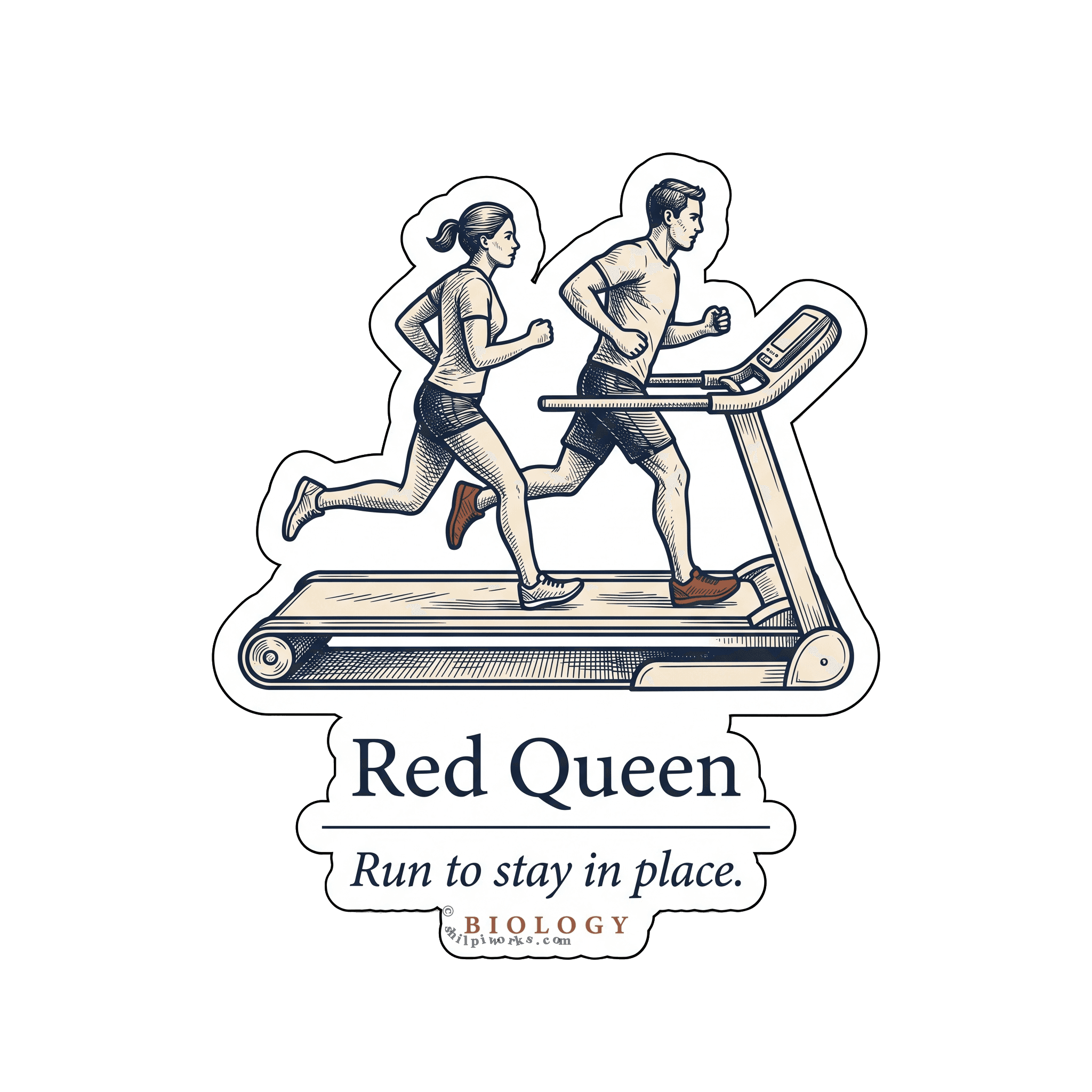
pairs with
Red Queen Principle: Constant Evolution
The treadmill inside predator–prey and rivalries.
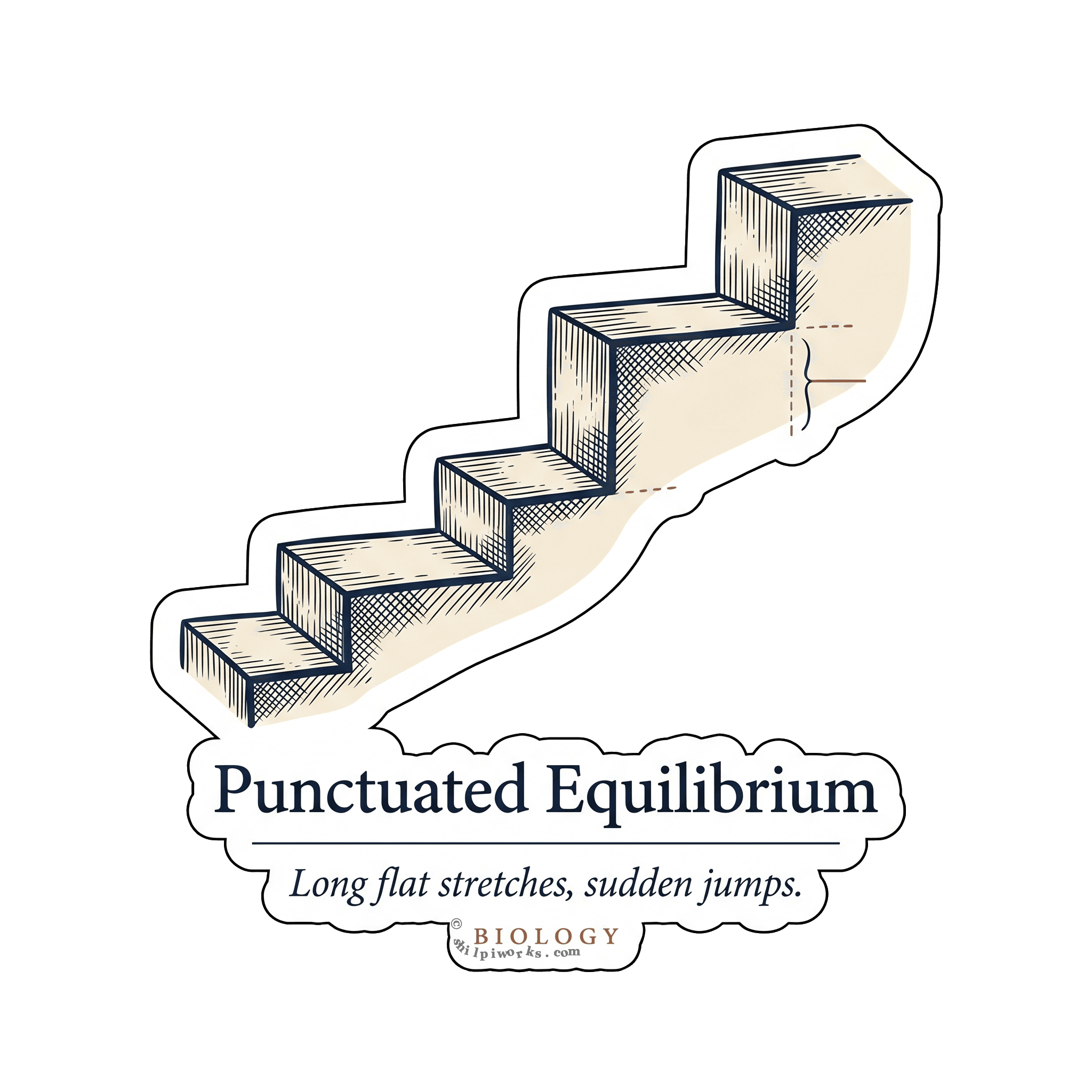
contrasts with
Punctuated Equilibrium Evolutionary Steps
Bursts and plateaus, not steady mutual pressure.

extends to
Tit-for-Tat Strategy: Game Theory Reciprocity
Reciprocal moves that shape partners across rounds.