Schelling Point
You and your co-workers lose the group chat at a crowded conference. The Wi‑Fi dies. The badge map is useless. You all wander for a minute, then you notice the tall clock in the lobby. You head there because you think everyone else will think the same way. When you reach it, two of them are already waiting. A third walks up a minute later. None of you planned it. You did not need to. The central clock, on that checkerboard floor, did the planning.
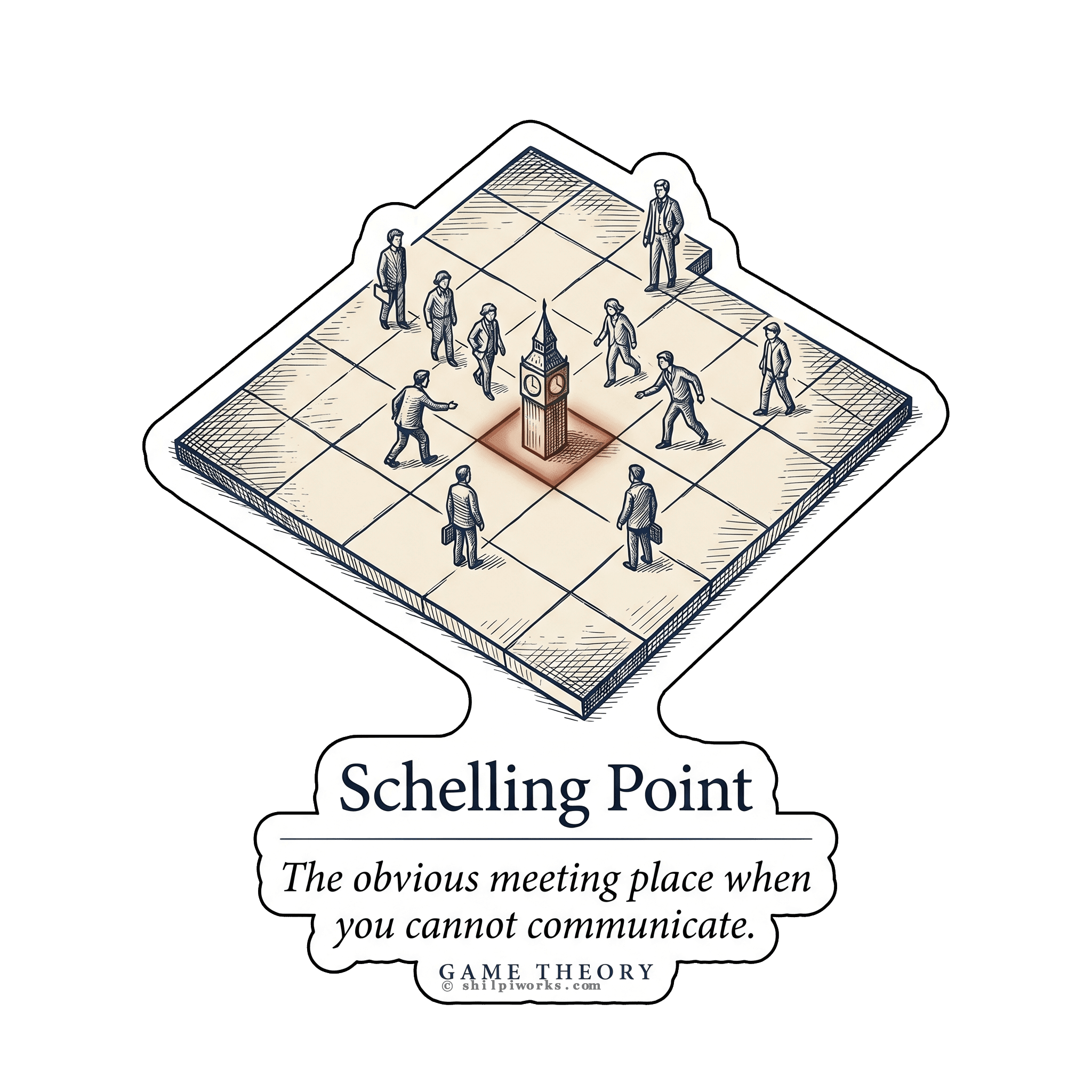
When people cannot talk, they still guess what others will do. They pick the most obvious place or time because they expect others to do the same. Noon is easier than 12:17. The big clock in the center beats a side door. Money, a handshake, and driving on one side of the road work the same way. Nobody enforces it. Shared expectation pulls you together.
Therefore
When you want people to coordinate without talking, make one choice stand out. Name a single spot and a simple time, and let them meet themselves there.
Schelling, 1960
Thomas Schelling, an economist at Harvard in 1960, ran a simple test. He asked people where they would meet a stranger in New York tomorrow if they could not contact each other. Most gave the same answer without being told one existed: the information booth at Grand Central, at noon. He ran versions of the question with cities, dates, and puzzles. The answers kept clustering on something obvious that each person expected the other to expect. Schelling called that shared target a focal point. He argued in The Strategy of Conflict that many real agreements work this way, without rules or calls.
A small reminder, on a travel wallet or a team whiteboard, that one clear default lets people collect themselves without messages, nudges, or a boss.
$3.50
2.5 inches vinyl · weatherproof · ships in 1–3 days
Mix & save: 3 for $9 · 5 for $14 · 10 for $25· free shipping at ten
- Weatherproof vinyl
- Ships from Wayzata in 1–3 business days
- Secure checkout
If anything is wrong, we'll refund or replace it. Read the policy
Related patterns

pairs with
Tit-for-Tat Strategy: Game Theory Reciprocity
Coordinate through repeated behavior, not shared landmarks.
contrasts with
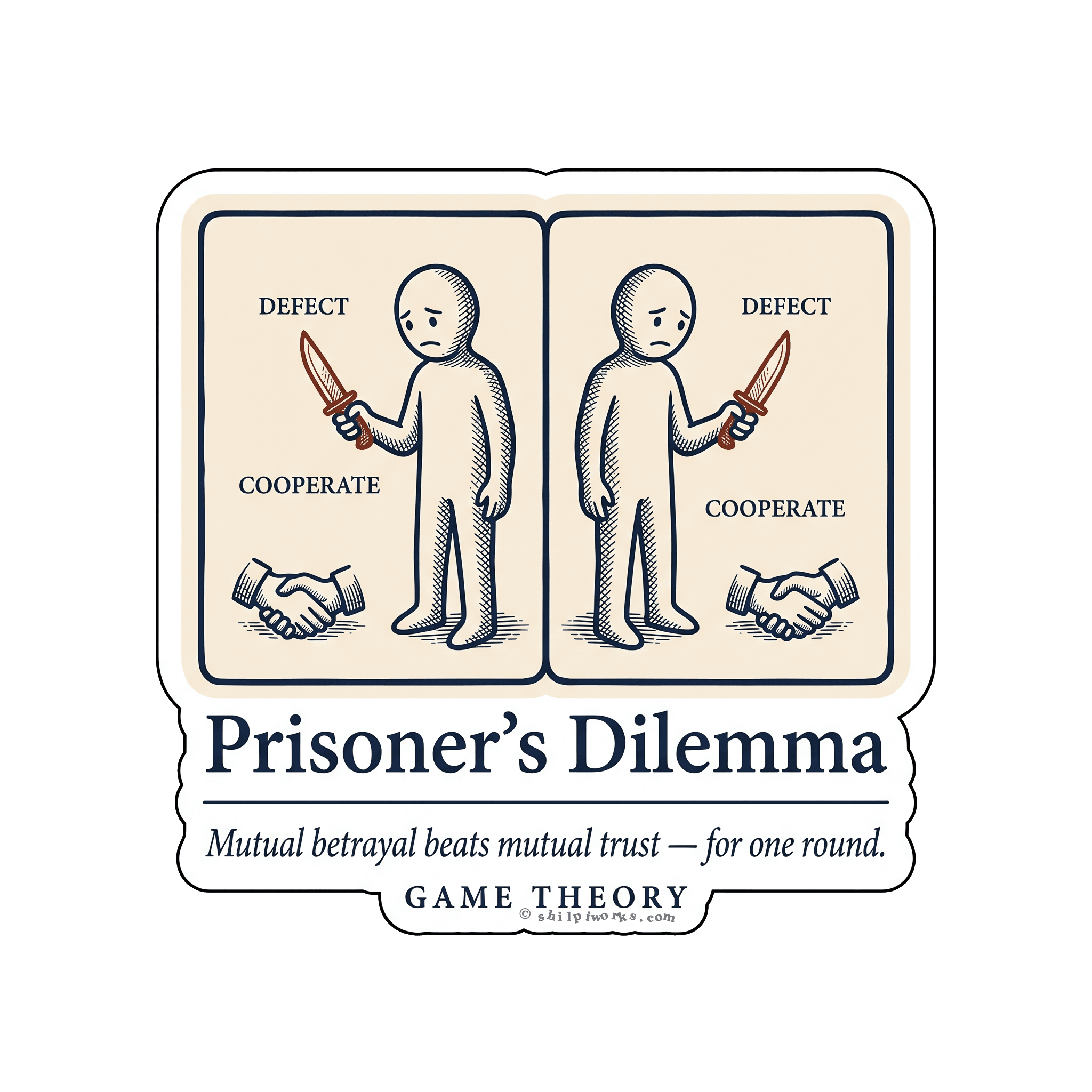
Prisoner's Dilemma Game Theory Concept
When lack of trust blocks coordination, even with clear payoffs.

extends to
Path to Progress: Commitment & Consistency
Once a focal spot exists, habits and rules lock it in.