Friendship With All
The story
This verse is said during pratikramana, the rite of looking back over one's faults and turning away from them. It is said above all on Samvatsari, the last day of Paryushan, when Jains ask pardon of everyone they may have hurt in the year and say "Micchami dukkadam". In the lay confession it asks pardon of every being harmed, knowingly or not, across all one's lives.
खामेमि सव्वजीवे, सव्वे जीवा खमंतु मे। मित्ती मे सव्वभूएसु, वेरं मज्झ न केणइ॥
khāmemi savva-jīve, savve jīvā khamantu me | mittī me savva-bhūesu, veraṃ majjha na keṇaï
Vandittu Sūtra (Śrāvaka-pratikramaṇa Sūtra), gāthā 49, the Śvetāmbara reading; the Digambara Mūlācāra, gāthā 43, has the same verse in its own wording; our translation
The same moment, today
Two people bump shopping carts at the end of an aisle in a supermarket. One cart hits the other's wheel with a loud clatter. Both shoppers freeze for a second. One glares, waits for an apology, and grips the handle tight. The other mutters a fast excuse and hurries away. An hour later, both of them are still replaying the moment in their heads while they unload their groceries at home. It's easy to carry a tiny grudge around all afternoon.
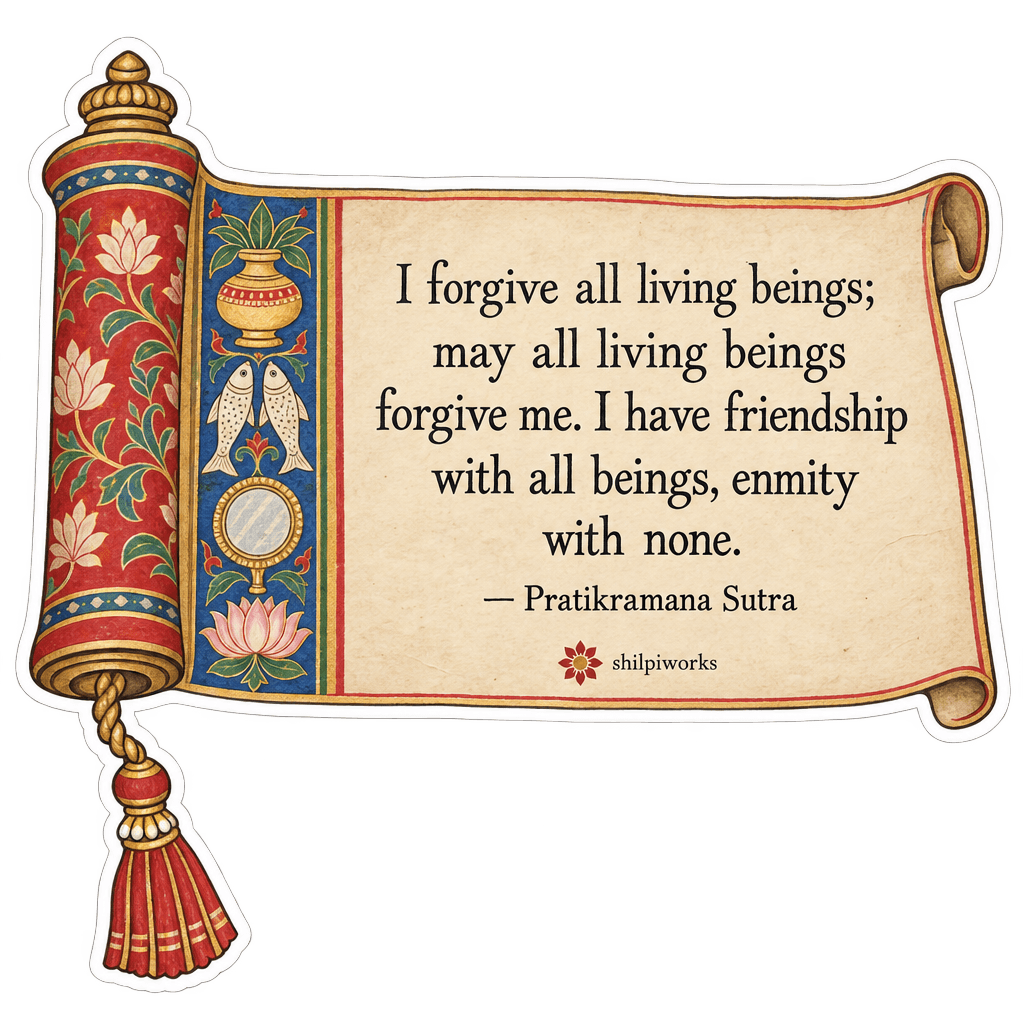
This line comes from the practice of pratikramana, which means turning back from your mistakes. Jains don't treat forgiveness as a favor you grant someone when they prove they deserve it. They treat it as work you do to clean your own slate. Svetambara Jains speak this line on Samvatsari, the last day of the eight-day fast called Paryushan. Digambara Jains say it on Kshamavani at the end of their ten-day fast. People reach out to friends, relatives, and neighbors to say micchami dukkadam, which means "may the harm I did come to nothing." They don't just ask people they know; they ask every single living creature they might have hurt.
The lesson
Before you go to sleep tonight, let go of one grievance you've been nursing against someone else. Then send a quick note to someone you were sharp with, and clear the air.
Where this comes from
Vattakera, second century
Both major Jain traditions say this verse, but they read it from different books. The Svetambara version comes from verse 49 of the Vandittu Sutra, a confession that laypeople speak during their regular rites. Digambara Jains don't accept that book as scripture. They recite the verse from verse 43 of the Mulacara, a work by the teacher Vattakera from around the second century, where a monk facing death says the words to leave no anger behind. The English here isn't quoted from a published translation. It's a plain rendering of the Prakrit verse that both traditions share.
A small reminder, on the notebook cover or the laptop lid, that carrying anger only weighs down the person holding it.
$3.50
2.5 inches vinyl · weatherproof · ships in 1–3 days
Mix & save: 3 for $9 · 5 for $14 · 10 for $25· free shipping at ten
- Weatherproof vinyl
- Ships from Wayzata in 1–3 business days
- Secure checkout
If anything is wrong, we'll refund or replace it. Read the policy
Related patterns
pairs with
Jain Mutual Service Quote
Why mutual support makes universal forgiveness possible.
contrasts with
Master of Self Jain Wisdom
Why anger makes you your own worst enemy instead of a friend.

extends to
Ahimsa Universal Soul Quote
How treating every living creature like yourself stops harm before it starts.