Clinging Is Possession
The story
The seventh chapter of the Tattvartha Sutra defines the five things a Jain vows to give up: violence, lying, stealing, unchastity and possession. The first four get fuller definitions. Possession gets two words, and they move it from the object to the mind. The Sarvarthasiddhi explains that the clinging is the work of guarding, getting and tending things, whether they are cows and gems or attachments inside.
मूर्च्छा परिग्रहः
mūrcchā parigrahaḥ
Tattvārtha Sūtra 7.17 in the Digambara recension, 7.12 in the Śvetāmbara; our translation
The same moment, today
A man buys a new white coffee mug for his desk at work. It's just a cheap ceramic cup, but it's clean and it's his. A few days later, a coworker borrows it without asking. The man spots it sitting on someone else's desk with a dark coffee ring inside. He feels a sudden knot in his stomach. He doesn't need that mug right now, and he owns six more at home. Still, he can't stop staring at it across the room.
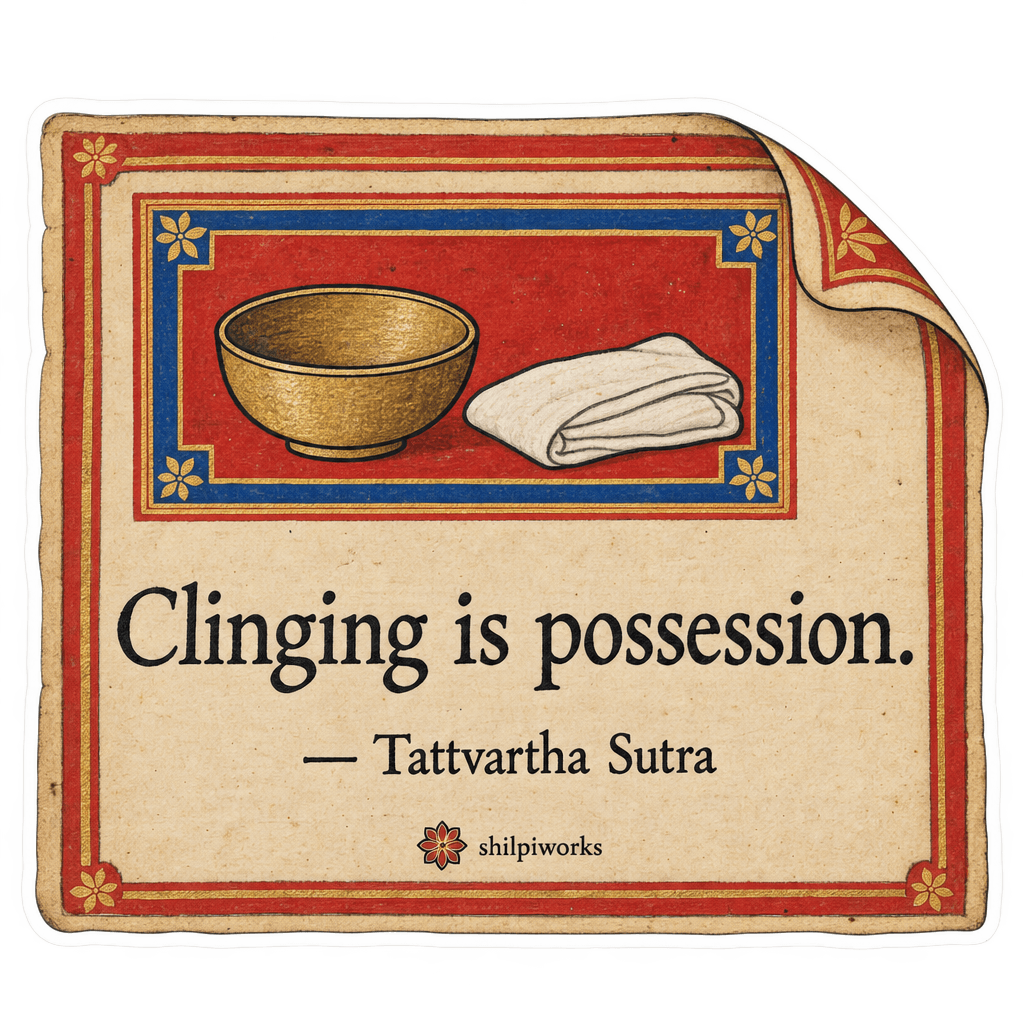
As the line above shows, the Tattvartha Sutra defines possession as clinging, which puts the problem in your head instead of in the object. The trouble isn't having things, but the mental grip that makes you guard them, fret over them, and crave more. That distinction shapes how Jains live today. Digambara monks give up all belongings, including their clothes. Svetambara monks keep a few items, like white robes, a begging bowl, and a whisk broom to brush insects away, because using a simple tool isn't possession if you aren't attached to it. Lay Jains practice this vow by placing voluntary limits on their money and property.
The lesson
Notice what you feel protective of today, whether it's a work project or a parking spot. Check whether you own the thing, or whether the worry over it owns you.
Where this comes from
A definition both traditions share
The Tattvartha Sutra was composed in Sanskrit by Umasvati between the second and fifth centuries, likely in Kusumapura, modern Patna. It's one of the few texts that both Digambara and Svetambara Jains revere as scripture. In the seventh chapter, the text defines parigraha in just two words: murccha parigrahah. A sixth-century Digambara commentary, the Sarvarthasiddhi by Pujyapada, explains that murccha means the anxious work of getting, guarding, and tending things. The line is given here in a plain English rendering of the Sanskrit original, not as a quote from a published book.
A small reminder, on your desk or laptop, that the things you own don't hurt you until you let yourself cling to them.
$3.50
2.5 inches vinyl · weatherproof · ships in 1–3 days
Mix & save: 3 for $9 · 5 for $14 · 10 for $25· free shipping at ten
- Weatherproof vinyl
- Ships from Wayzata in 1–3 business days
- Secure checkout
If anything is wrong, we'll refund or replace it. Read the policy
Related patterns
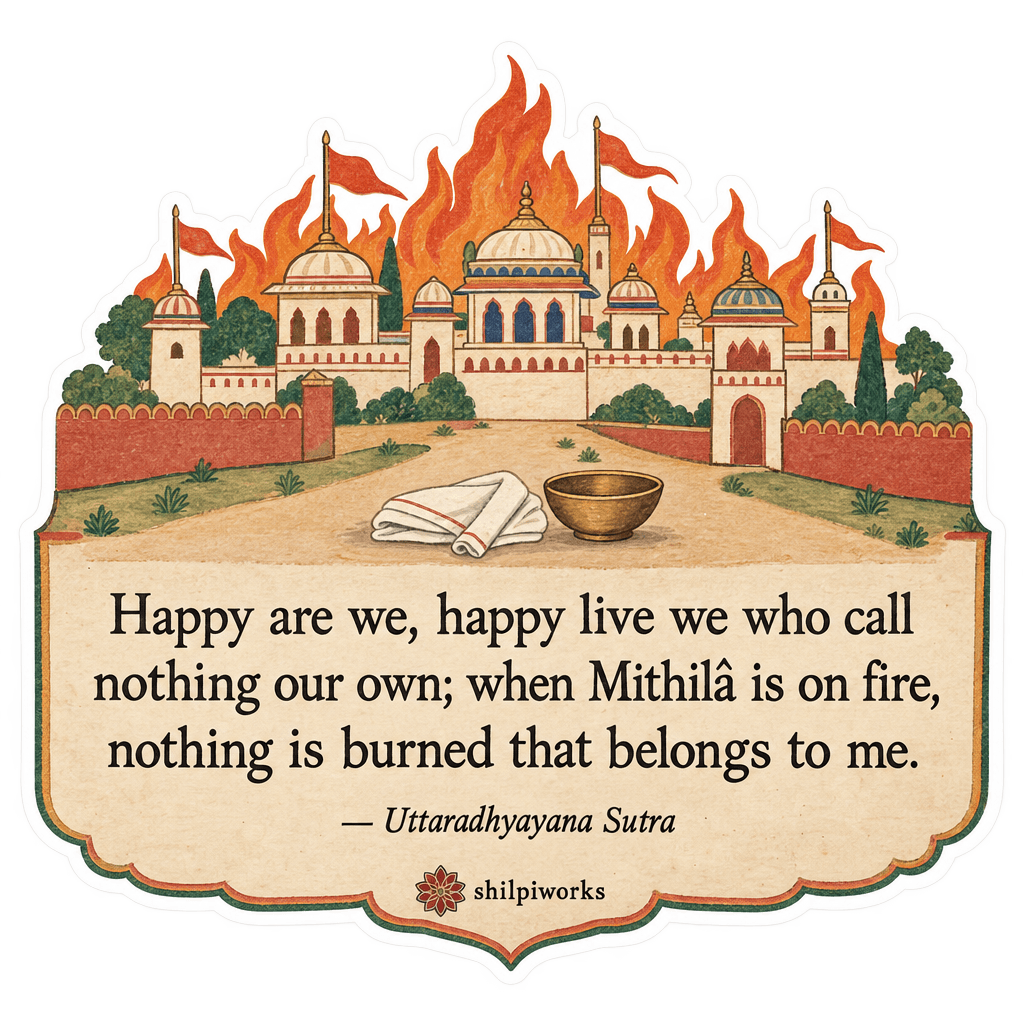
pairs with
Sacred Detachment Jain Wisdom
King Nami lives out this definition when his palace burns.

extends to
Three Jewels Path to Liberation
The first sentence of the same text, which lays out the whole path.

contrasts with
Soul Companion Jain Wisdom
Looking inward for strength instead of clinging to what you own.