The Wolf in Sheep's Clothing
The fable
A wolf found that hunting sheep openly earned him nothing but the shepherd's dogs. So he draped himself in a fleece and slipped in among the flock. The sheep took him for one of their own; even the shepherd was fooled. Each day the disguised wolf led some lamb quietly away from the rest, and no one suspected the sheep-shaped shadow in their midst. He fattened on the flock from the inside — the danger no one guarded against, because it looked exactly like what it fed on.
The moral: Appearances can deceive.
The same moment, today
You get a text from your delivery service. Your package is delayed and you need to confirm the address. The link has the right logo and the same brown color. The page even shows yesterday’s order number. There is a tiny padlock in the browser bar. You type your card again because it says the old one failed. An hour later your bank calls about new charges in a city you do not live in. You look back at the link and notice one letter off in the web address.
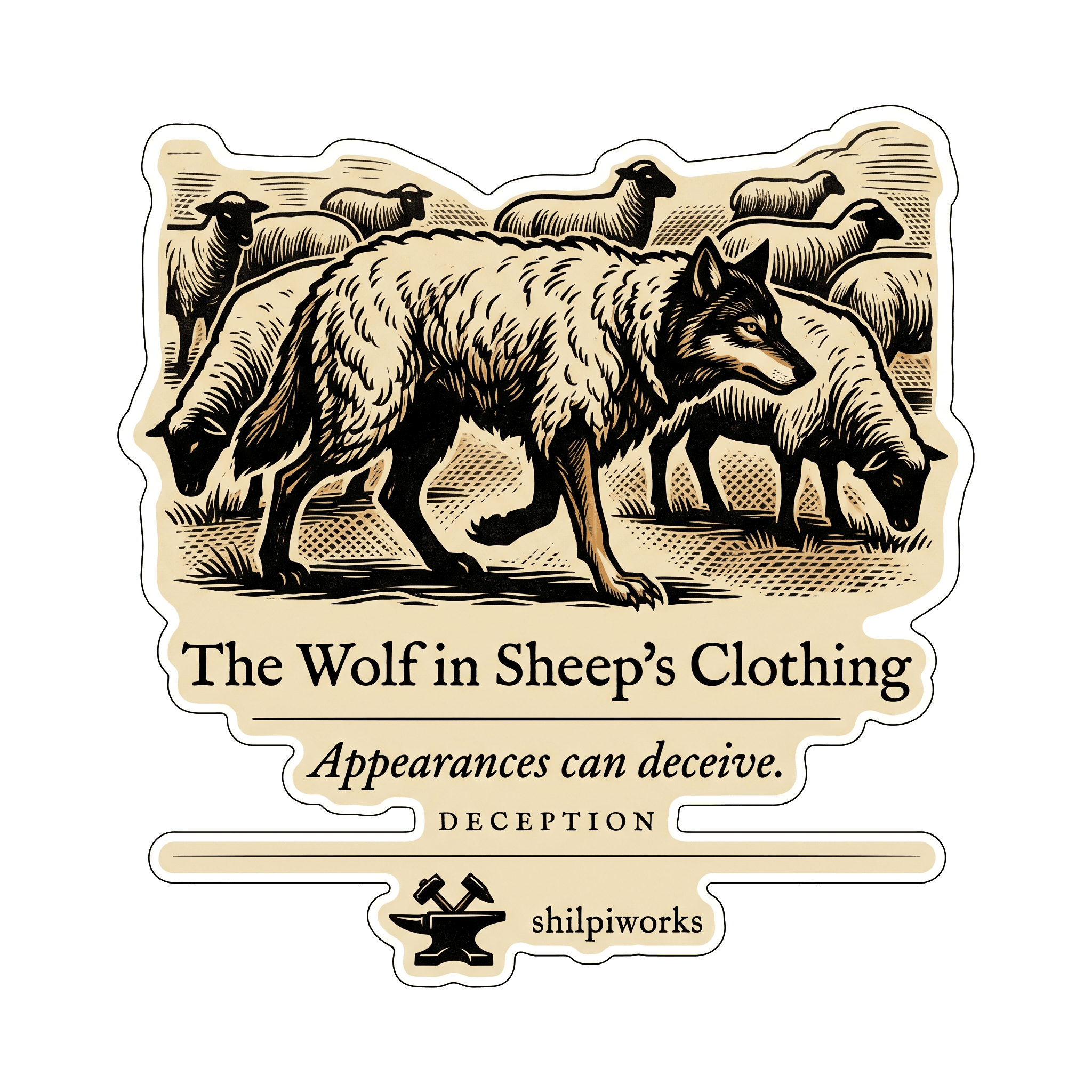
Deception works because we decide fast from surface cues. We see the right logo, a friendly tone, or a shared contact, and we stop checking. Predators know this and borrow those cues. The cover looks soft, but the face is wrong if you look from the side, and a claw slips out where a hoof should be. The problem is not that you are foolish. It is that trust is cheap to fake and you are busy.
The lesson
Slow down and check the edges. Look for one thing that does not fit, and verify through a channel you already trust.
Science has measured this
Bond and DePaulo, 2006
In 2006, psychologists Charles Bond and Bella DePaulo pooled 206 experiments on lie detection from around the world. More than 24,000 people watched or listened to strangers who were telling truths or lies. On average, they were right only 54 percent of the time, which is barely better than a coin flip. Training and confidence did not help much. People kept using signs like shifty eyes, fidgeting, or a smooth voice, but those signs did not track lying. Liars often looked you straight in the eye. Truth tellers often hesitated. What looked like a sure tell was usually just wool.
A small reminder, on a badge or a login screen, that wool can hide yellow eyes and a slipped claw is a cue to pause.
$3.50
2.5 inches vinyl · weatherproof · ships in 1–3 days
Mix & save: 3 for $9 · 5 for $14 · 10 for $25· free shipping at ten
- Weatherproof vinyl
- Ships from Wayzata in 1–3 business days
- Secure checkout
If anything is wrong, we'll refund or replace it. Read the policy
The artwork is made with AI image tools, by agents we design and check. Each sticker is then printed on vinyl and die-cut to order.
More fables
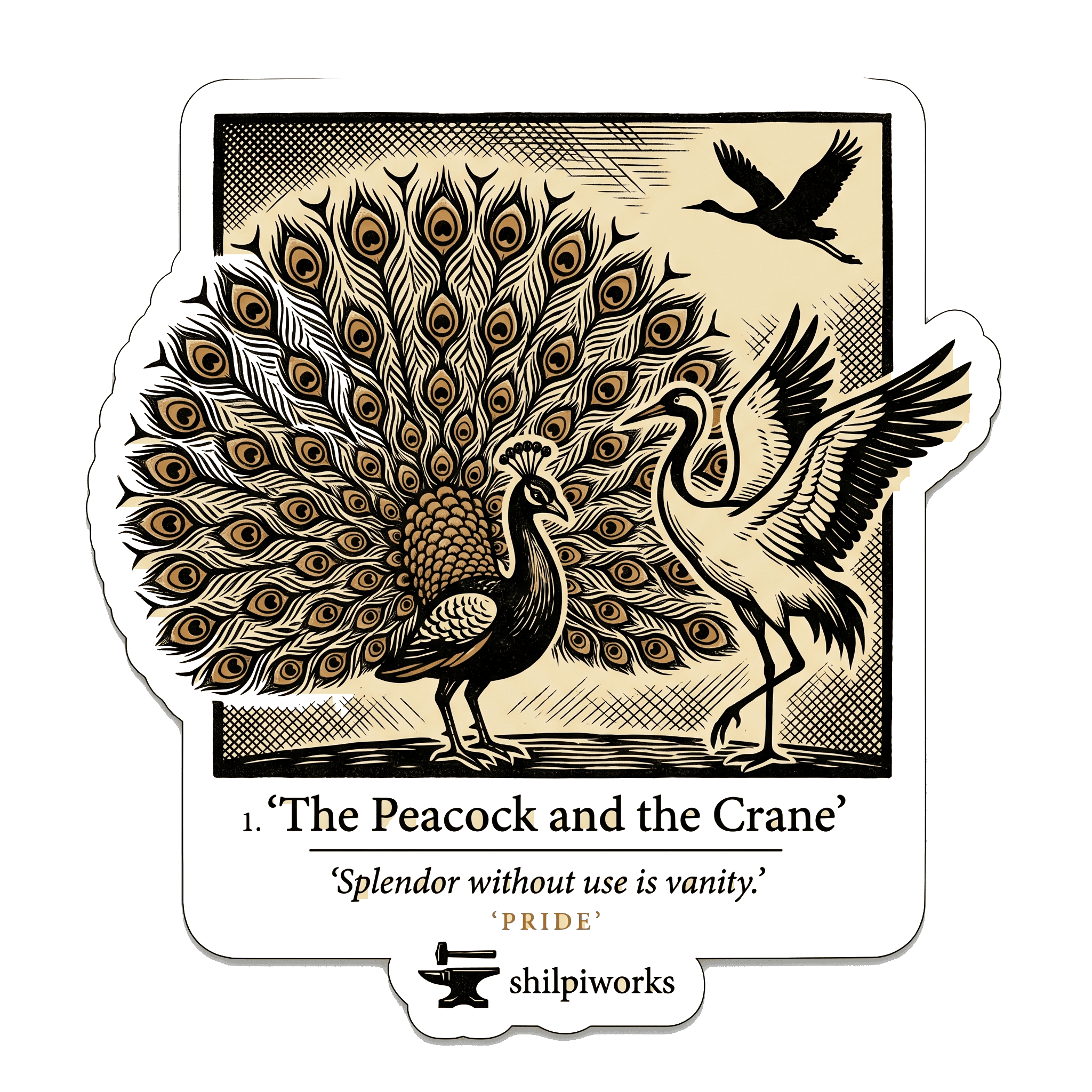
pairs with
Peacock and Crane Fable: Splendor vs. Utility
Both warn against trusting show over substance.
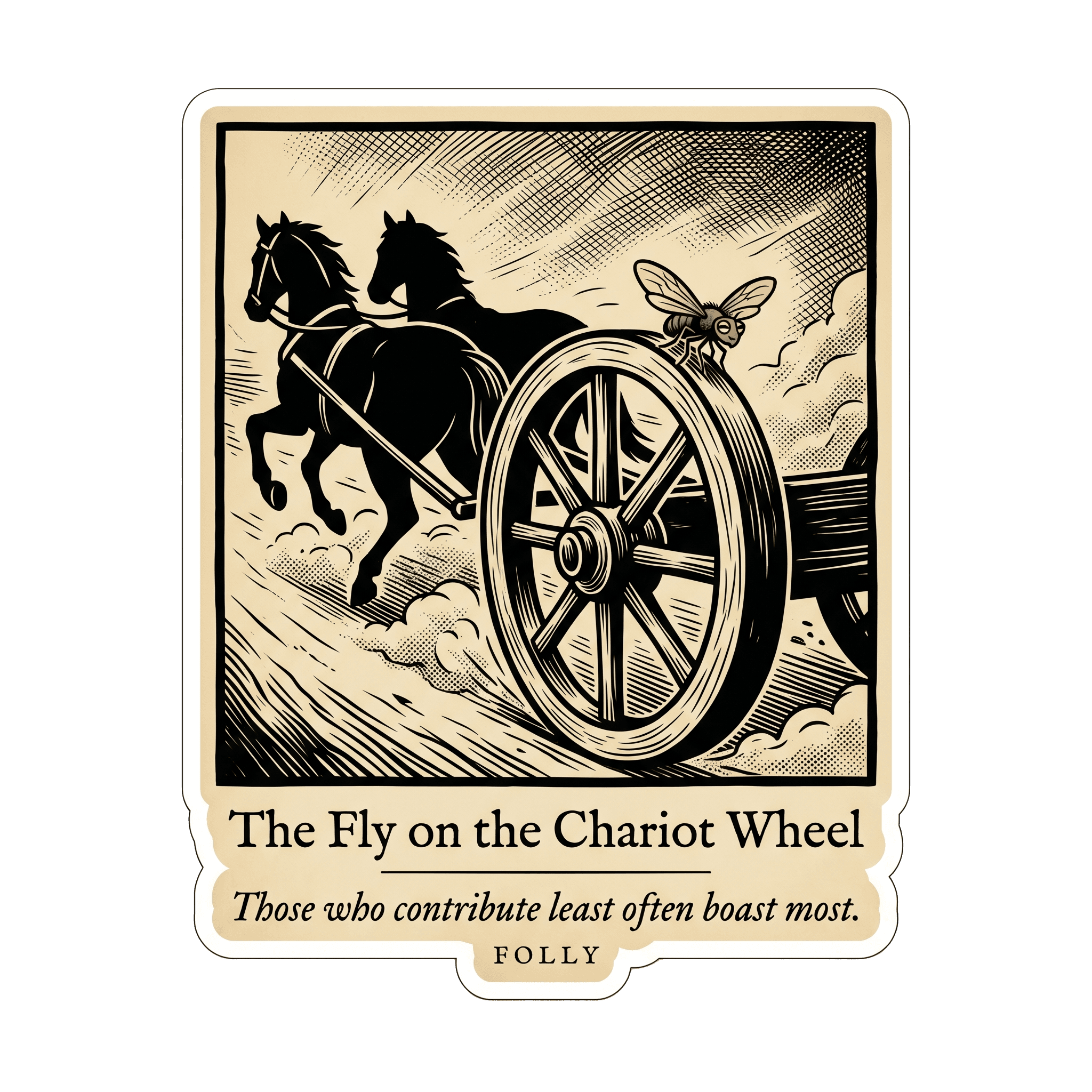
contrasts with
The Fly on the Chariot Wheel Fable Wisdom
The braggart exposes himself; the disguised threat hides.
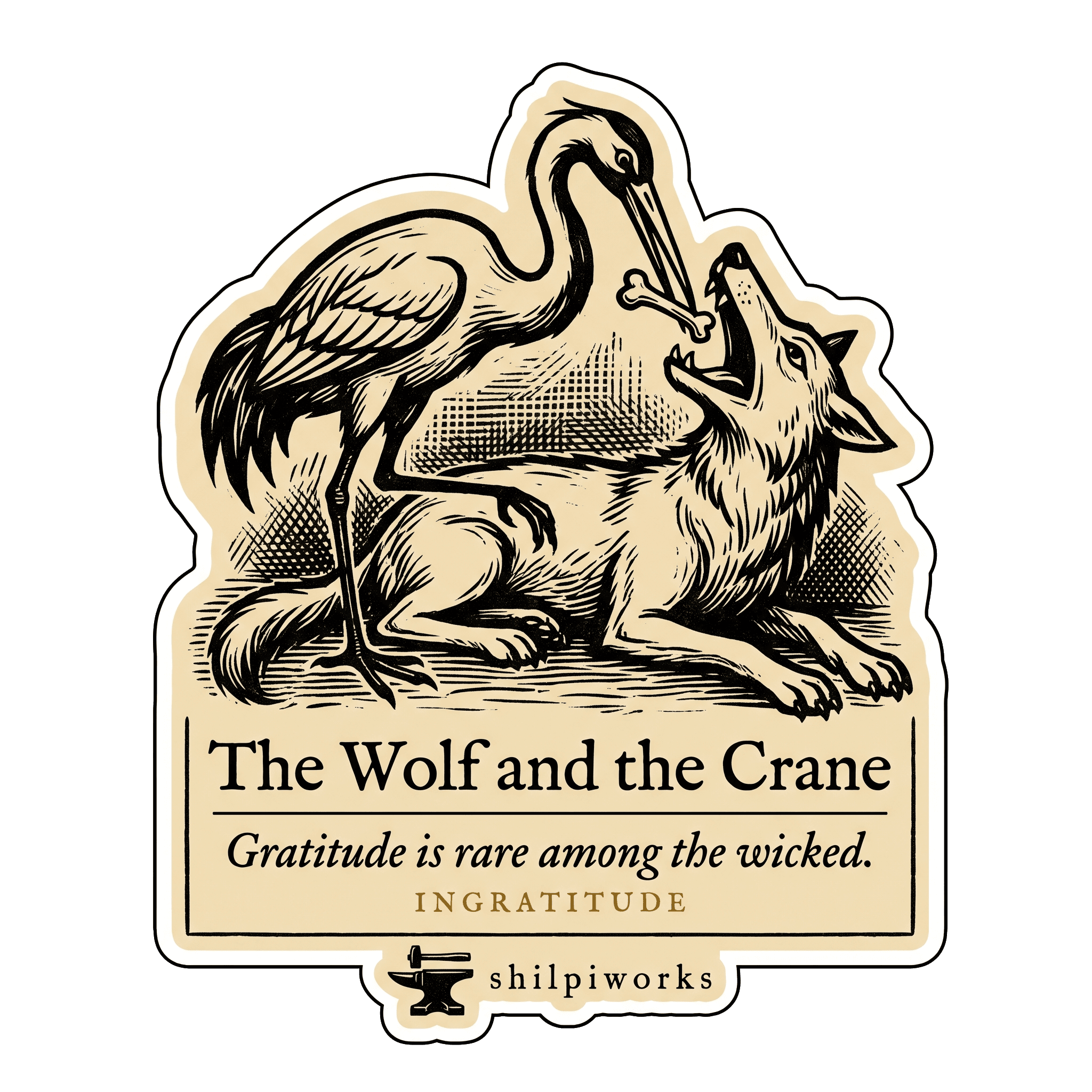
extends to
Fable of Wolf & Crane: Gratitude's Lesson
Trust given to the wicked ends in harm.