The Wolf and the Crane
The fable
A wolf got a bone stuck fast in his throat and, in pain, promised a rich reward to anyone who would remove it. Only the crane dared: she put her long neck down the wolf's gullet, worked the bone loose, and drew it out. Then she asked for the promised reward. The wolf grinned. "Reward? You put your head inside a wolf's mouth and took it out again in one piece. That is your reward — and more thanks than you will ever get from my kind again."
The moral: Gratitude is rare among the wicked.
The same moment, today
You get a message at 11 p.m. A client file is corrupt and will not open. Your coworker is stuck and the meeting is at 8. You log in, recover the file, and rebuild the slides. You send it back at 1:40 a.m. They present it in the morning, and the sale goes through. At lunch they nod and point out a font they had to fix. They do not say thank you. You feel the heat rise in your chest, and you wonder why you bothered.
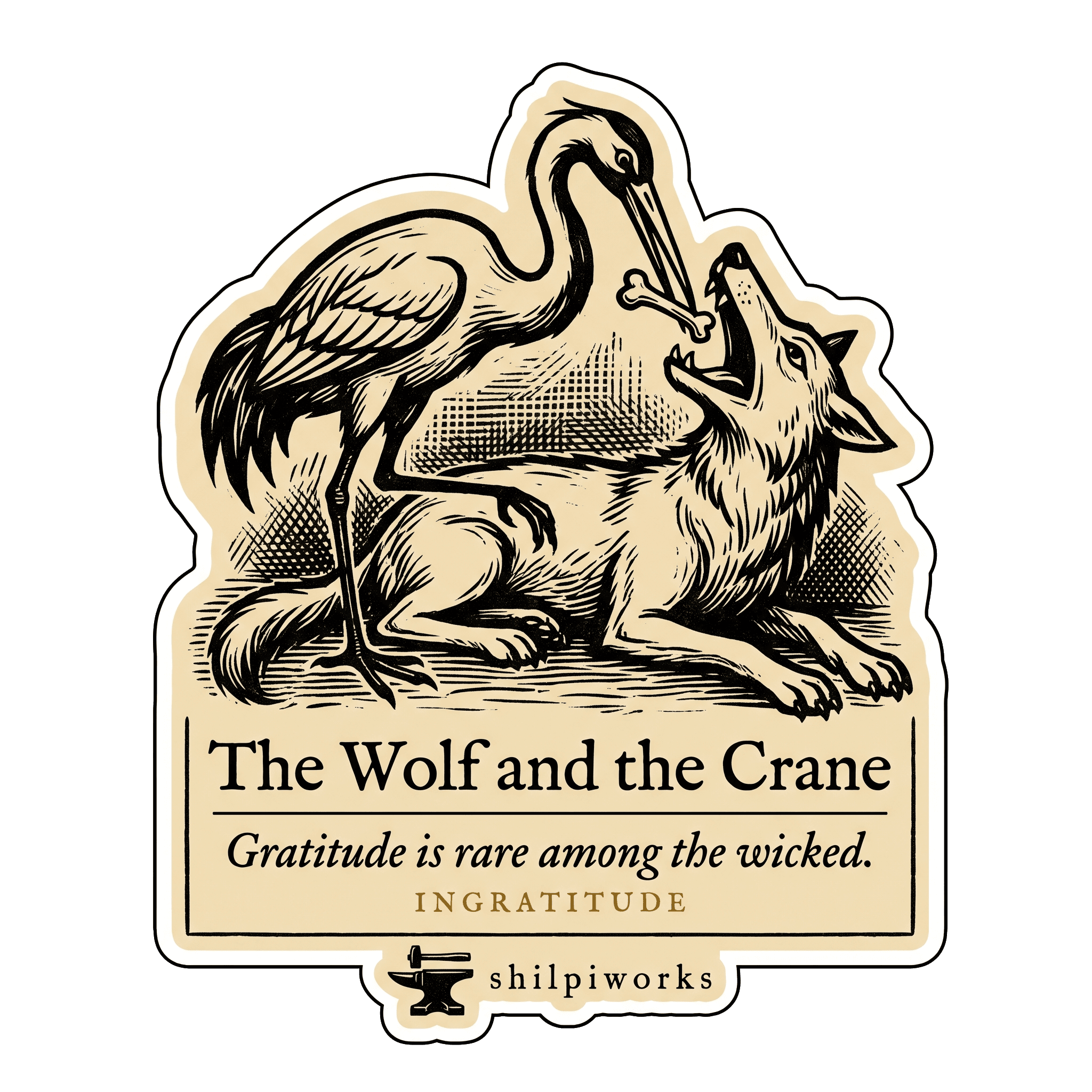
The wolf gets a bone stuck in his throat and begs for help. The crane slides its long beak deep into his open mouth and pulls the bone free. The bone is still wet in the beak, and his face already looks bored. He says the crane should feel lucky to leave with a whole head. People like that think help is owed to them. Thanking you would mean they were small for a moment, and they cannot stand that.
The lesson
When you help someone who treats others badly, do not expect thanks. Set your terms before you start. If you cannot, keep a safe distance.
Science has measured this
Grant and Gino, 2010
In 2010 at the University of Pennsylvania and North Carolina, organizational psychologists Adam Grant and Francesca Gino ran a simple test. They asked students to give feedback on a stranger’s resume. A day later the same stranger asked for more help. Some students got a short thank-you email. Others got a neutral note. About two thirds of the thanked students agreed to help again. Barely a third of the unthanked students did. In another version, a lab manager asked for help. When the manager said thanks, people were twice as likely to assist again. The point was clear to anyone who has stayed up late to fix a mess. Gratitude keeps help flowing, and its absence dries it up.
A small reminder, on a laptop lid or a desk drawer, that some jaws forget the beak that just saved them and will snap shut without thanks.
$3.50
2.5 inches vinyl · weatherproof · ships in 1–3 days
Mix & save: 3 for $9 · 5 for $14 · 10 for $25· free shipping at ten
- Weatherproof vinyl
- Ships from Wayzata in 1–3 business days
- Secure checkout
If anything is wrong, we'll refund or replace it. Read the policy
The artwork is made with AI image tools, by agents we design and check. Each sticker is then printed on vinyl and die-cut to order.
More fables
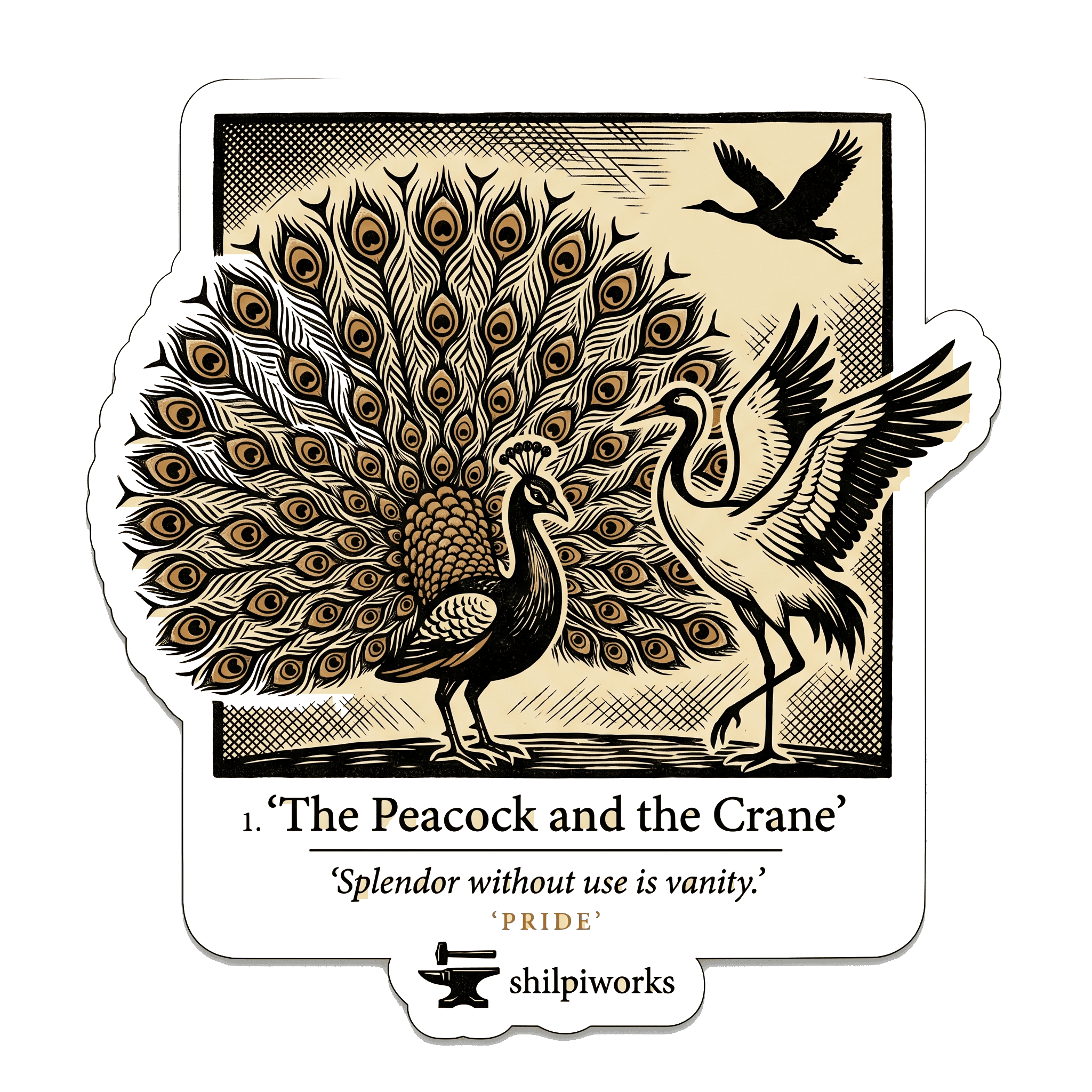
pairs with
Peacock and Crane Fable: Splendor vs. Utility
Use over show — value the worker, not the plume.
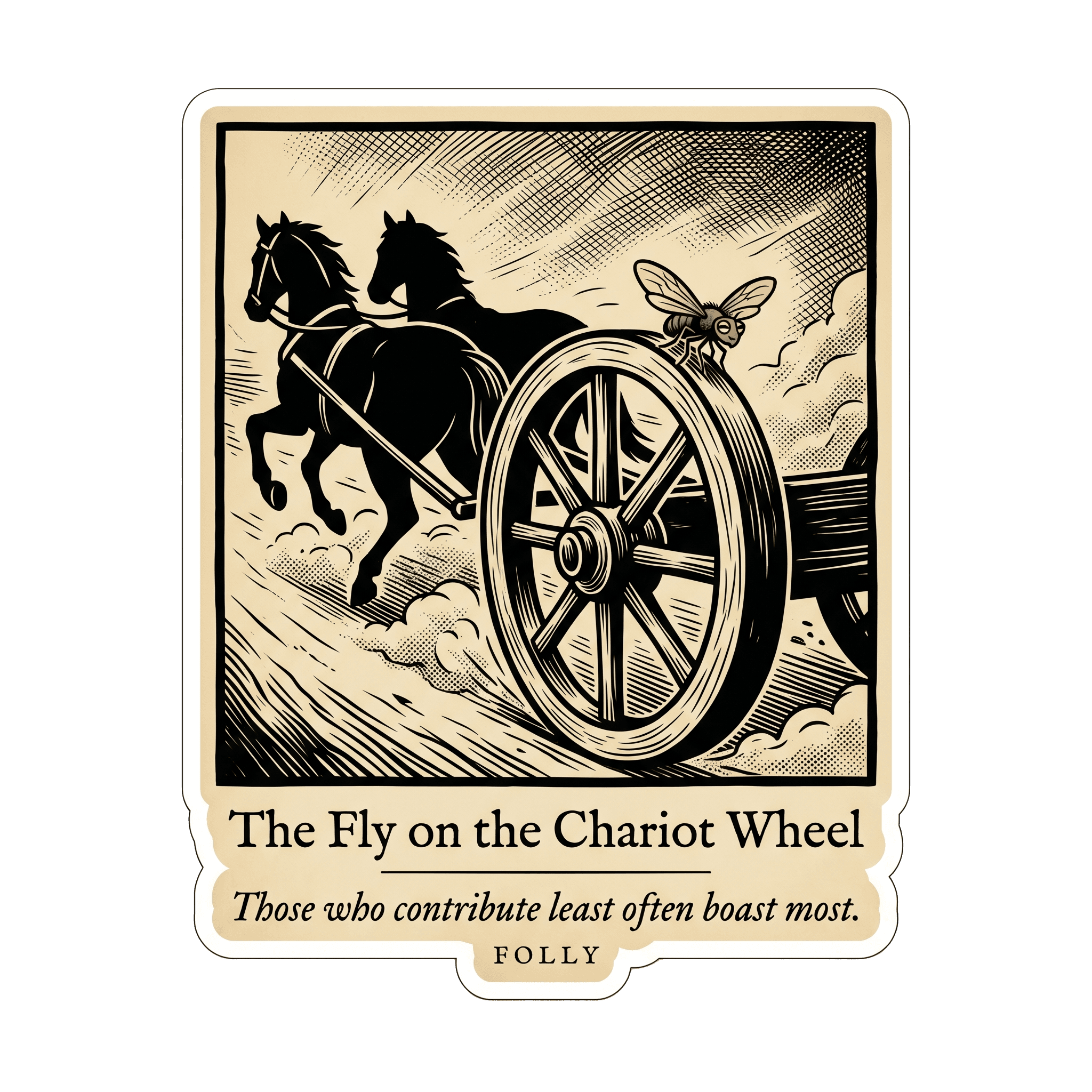
contrasts with
The Fly on the Chariot Wheel Fable Wisdom
Boasting without earning vs withholding thanks from real help.
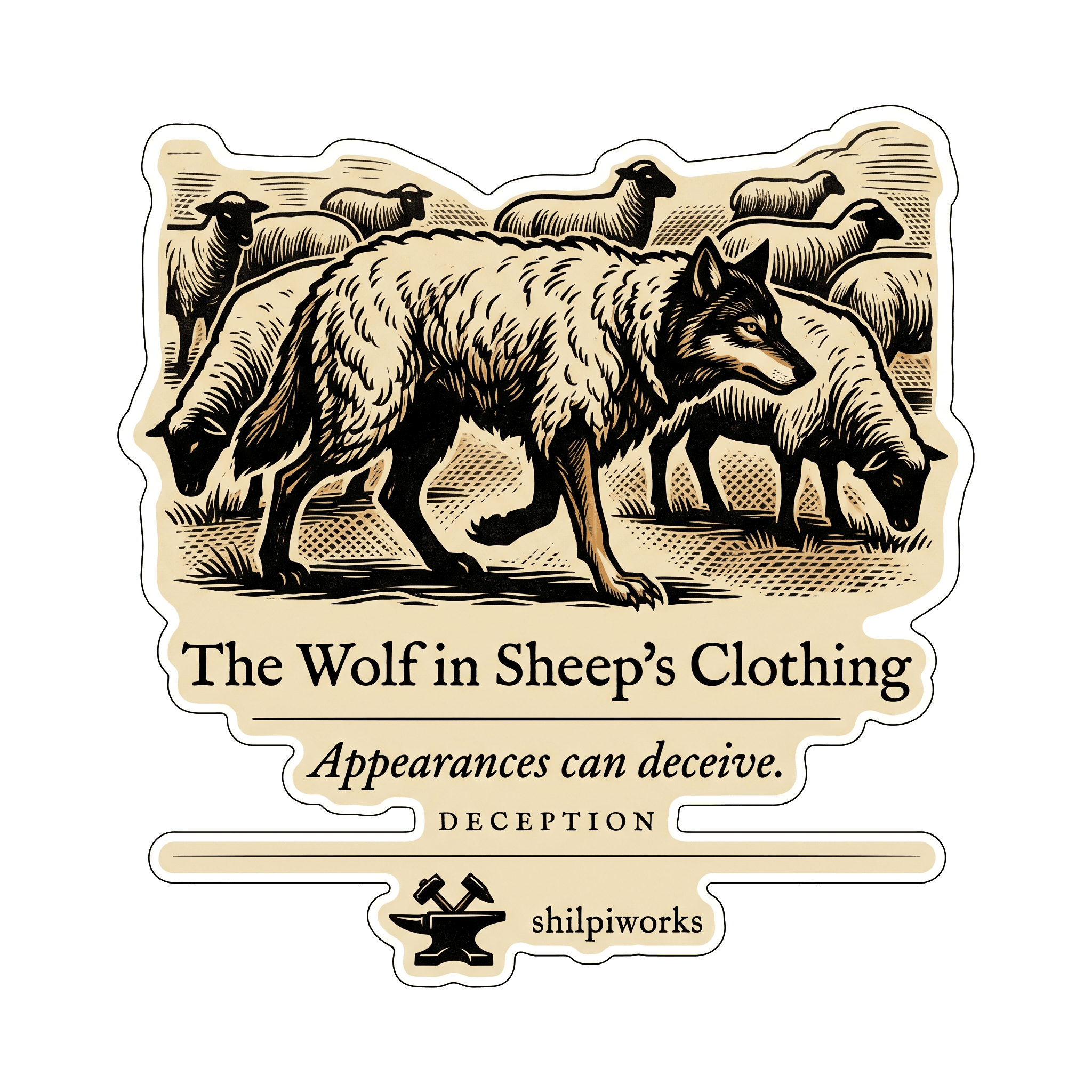
extends to
Wolf in Sheep's Clothing Fable
Do not expect fairness from predators who smile first.