The Fly on the Chariot Wheel
The fable
A chariot thundered down a dusty road, horses straining, wheels pounding, a great cloud of dust boiling up behind it. On the rim of one wheel rode a fly. She looked back at the churning cloud that stretched to the horizon, spread her wings a little wider, and marveled aloud: "What a dust I raise!" The horses sweated. The wheels roared. The fly rode on, thoroughly impressed with her work.
The moral: Those who contribute least often boast most.
The same moment, today
You just wrapped a product launch after two weeks of late nights. You wrote docs, fixed bugs, and ran tests. During the all-hands, a coworker who joined one meeting posts in chat first: "We nailed it," and says he "steered the key decisions." You remember one email from him, and how he left early most days. People reply with clapping emojis, and your boss forwards his note to the VP. You are tired and you do not want a fight. Credit keeps drifting to the loudest person.
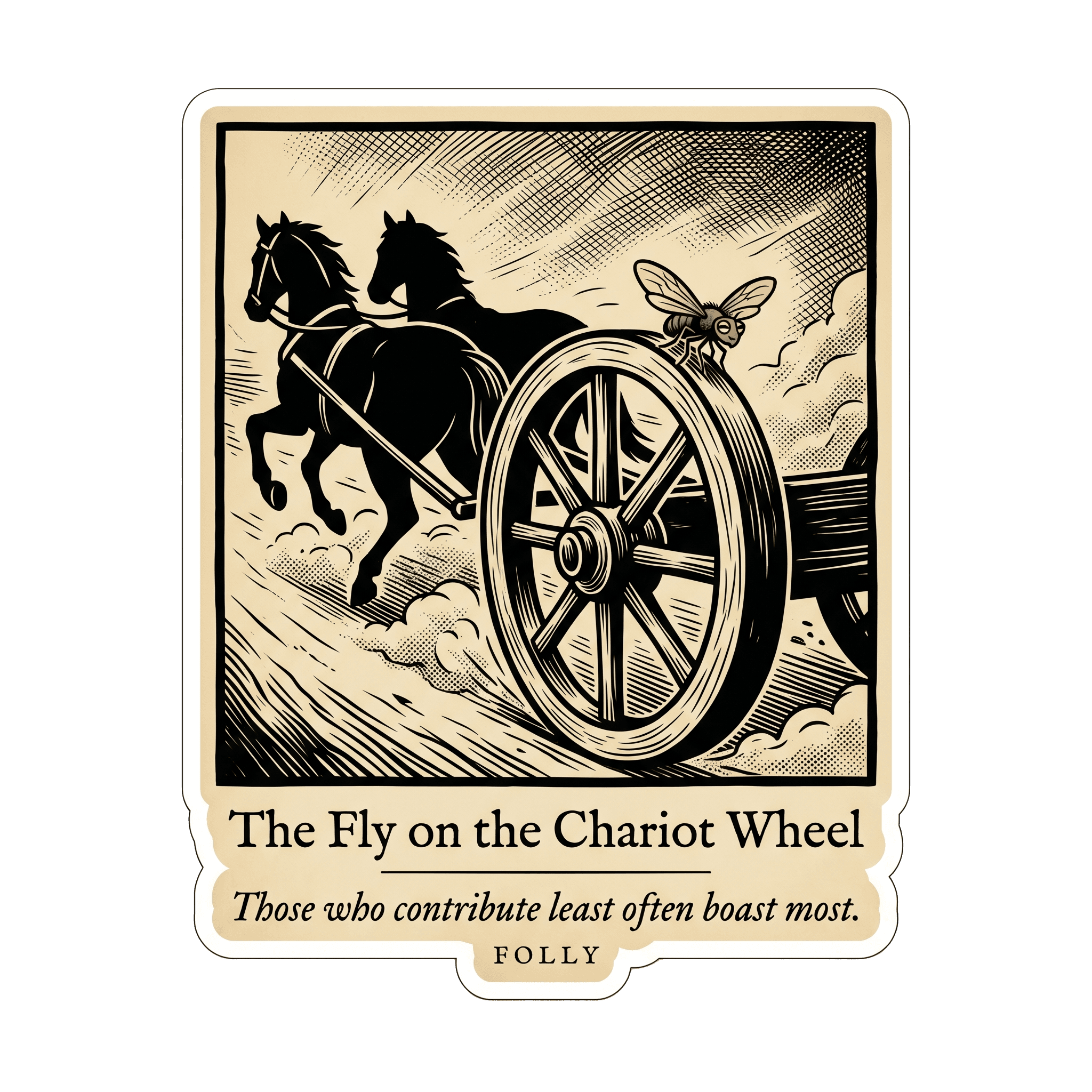
A fly rides on a wheel, sees the dust, and thinks it made it. The wheel turns because the horses pull, not because a rider clung to the hub. People make the same mistake. We confuse being near big work with causing it, and praise feeds that confusion. The least engaged often boast most because talk is easy and measurement is hard. Real work takes time, and noisy claims arrive first.
The lesson
Before you take credit, write down the tasks you finished and the hours. If your list is thin, point to the people who pulled and say thank you.
Science has measured this
Kruger and Dunning, 1999
In 1999 at Cornell University, psychologists Justin Kruger and David Dunning ran a simple set of tests. They asked students to answer questions on grammar, logic, and humor. Then they asked each student how well they thought they had done. The worst performers thought they had scored well above average. They were wrong by a lot, because the skills that produce good work are the same skills needed to judge good work. Without those skills, you cannot see your own misses. Kruger and Dunning published the result, and the pattern has held up across jobs and tasks since.
A small reminder, on a team laptop or a project binder, that a cloud of dust proves motion, not who pulled the load.
$3.50
2.5 inches vinyl · weatherproof · ships in 1–3 days
Mix & save: 3 for $9 · 5 for $14 · 10 for $25· free shipping at ten
- Weatherproof vinyl
- Ships from Wayzata in 1–3 business days
- Secure checkout
If anything is wrong, we'll refund or replace it. Read the policy
The artwork is made with AI image tools, by agents we design and check. Each sticker is then printed on vinyl and die-cut to order.
More fables
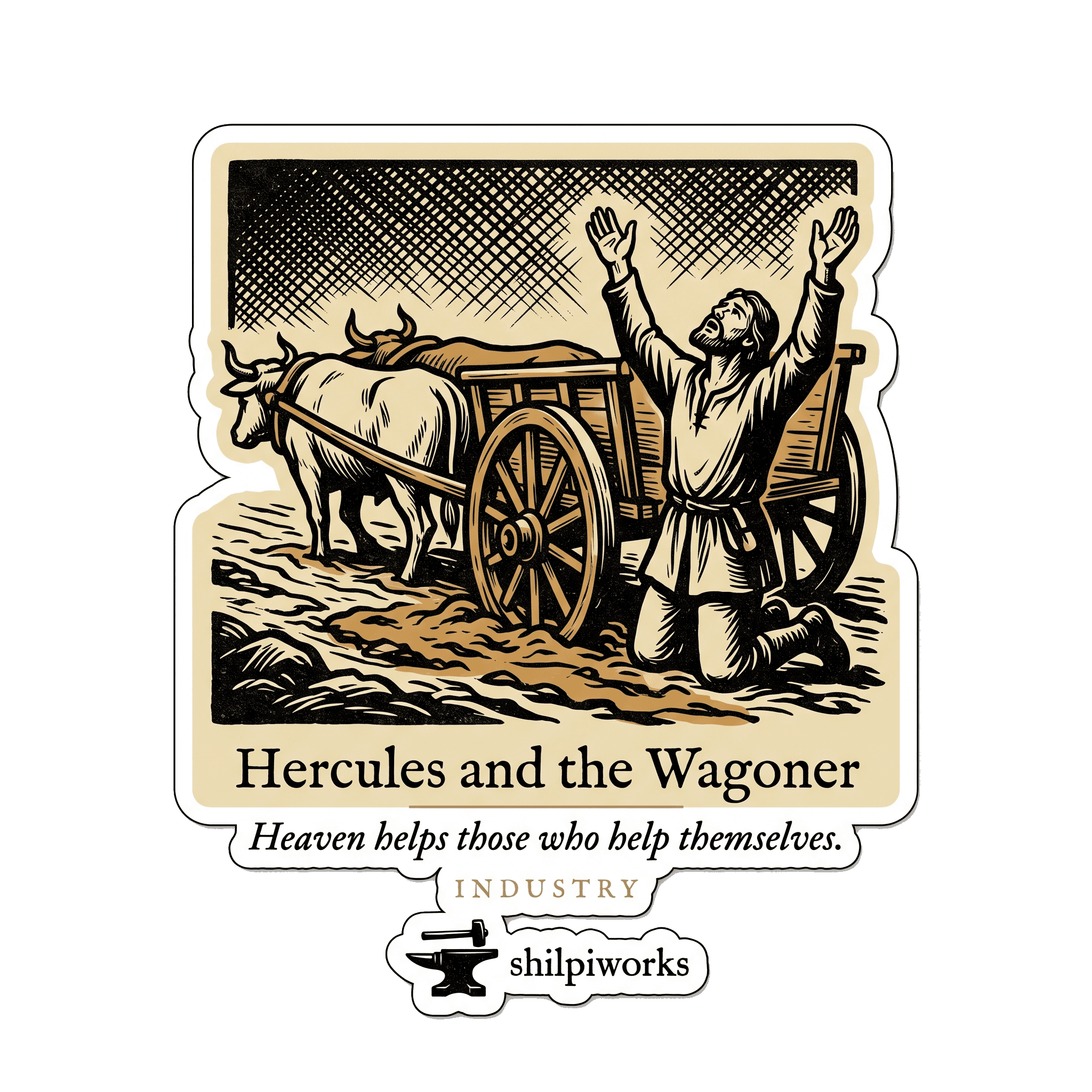
contrasts with
The Fable of Hercules and the Wagoner
Real help follows effort; not from a rider at the hub.
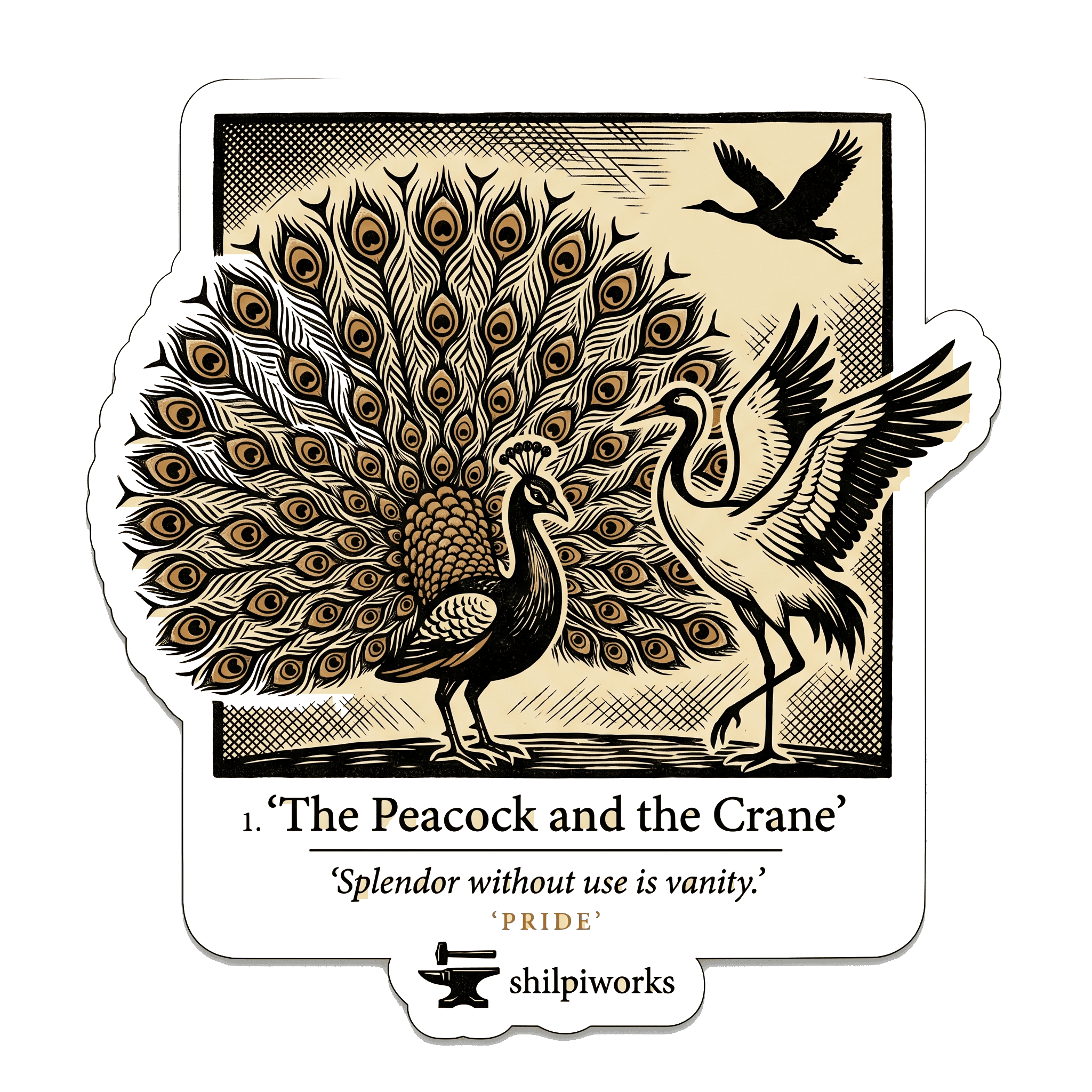
pairs with
Peacock and Crane Fable: Splendor vs. Utility
Show without use mirrors boast without work.
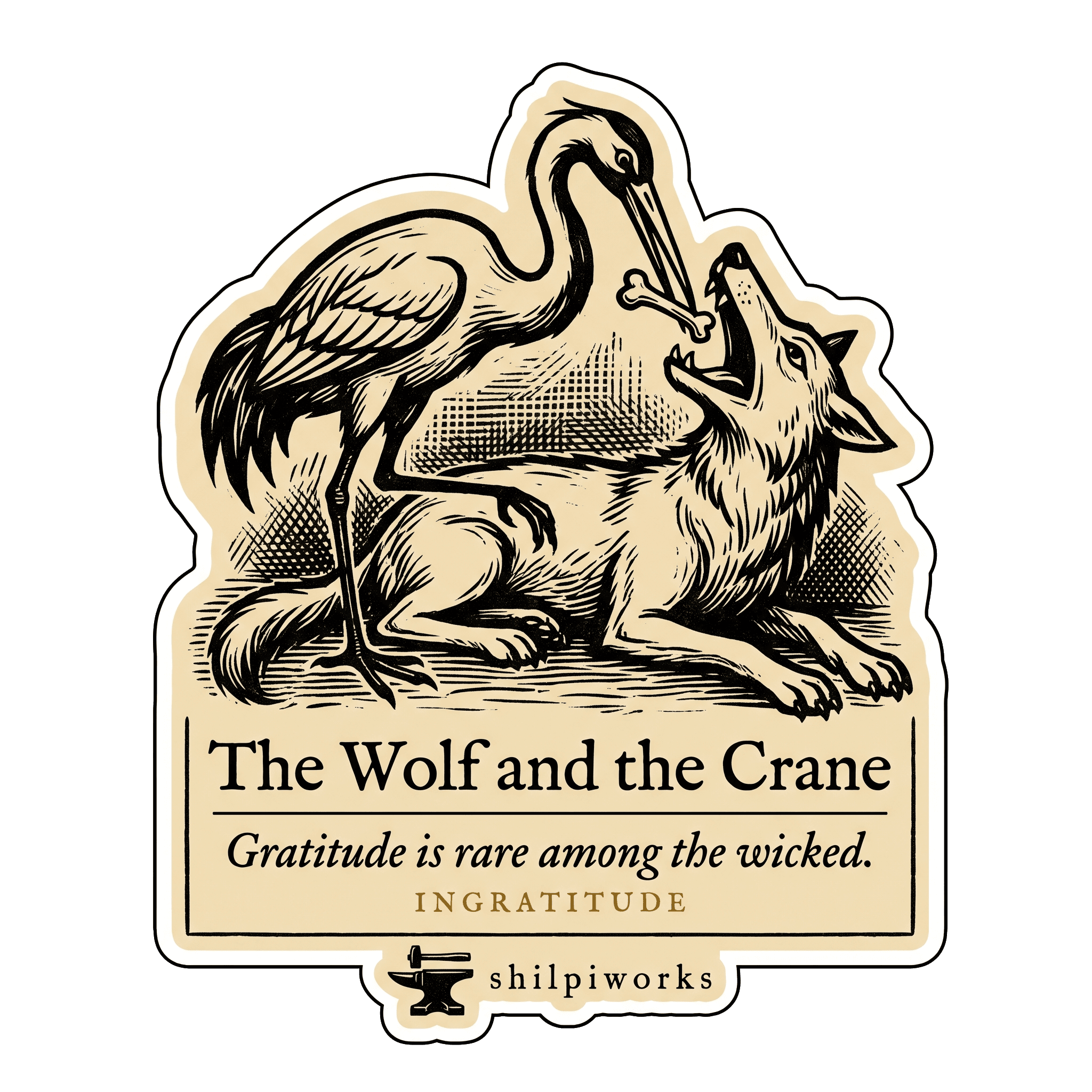
extends to
Fable of Wolf & Crane: Gratitude's Lesson
Real helpers often go unthanked; miscredit turns into ingratitude.