Marginal Utility
You come home late and find a plate of fresh cookies on the counter. You take the first one and it tastes strong. The butter and salt hit hard. You reach for a second without thinking. It still tastes good, but not like the first. By the third you start to slow down. The fourth sits in your hand for a while. The fifth looks fine, but you are full and a little tired of sweet. Your want dropped in steps as the plate emptied.
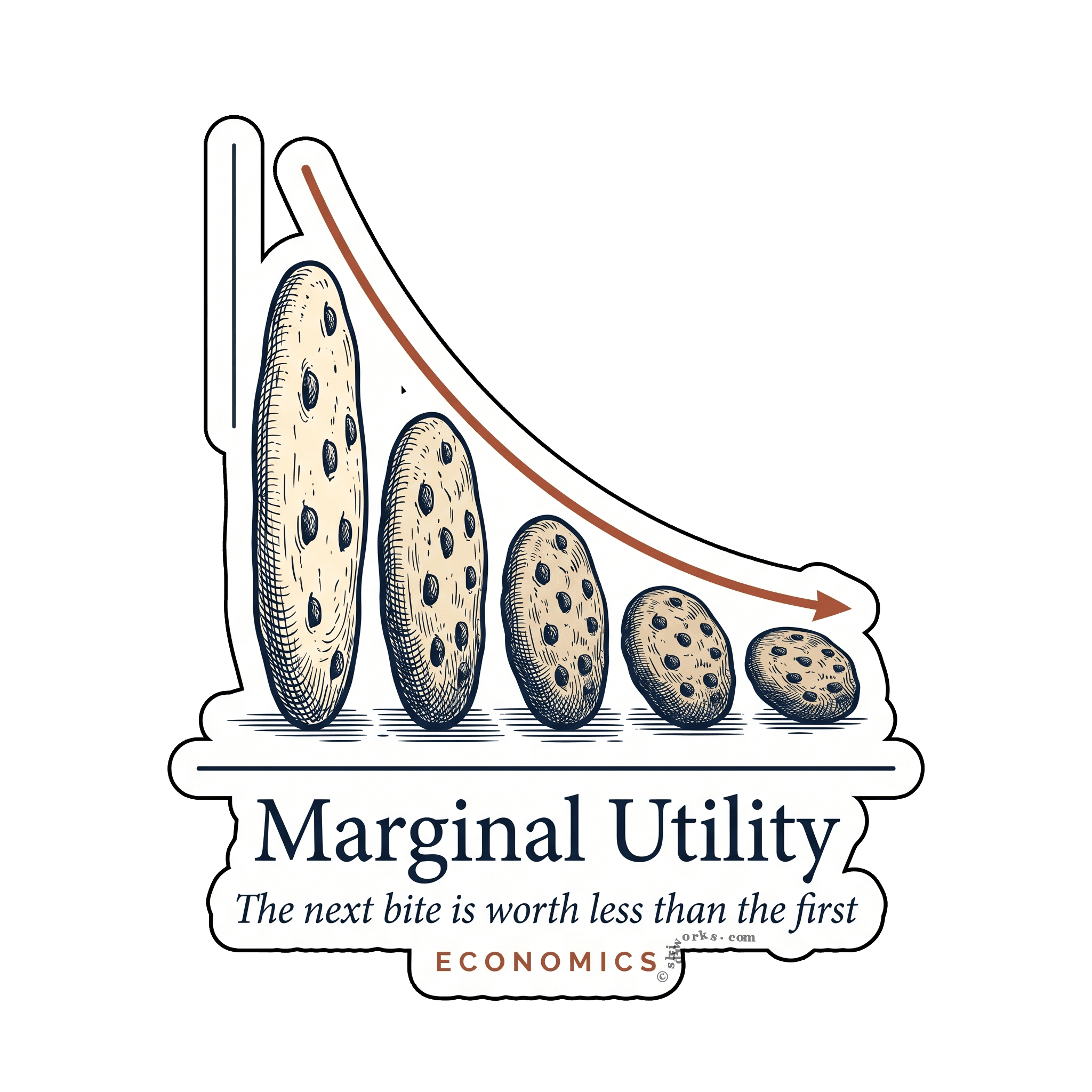
That drop has a pattern. The next unit of a thing is worth less to you than the last one. The first glass of water after a run is heaven, and the fourth is just wet. The first hour off your inbox feels free, and the fifth feels like stalling. The first hundred dollars means more to someone broke than to someone rich. Your mind files value on a curve, not a straight line.
Therefore
When you plan spending, time, or food, stop when the next unit will not change much. Move to the next need, where the first unit still matters.
Kahneman & Tversky, 1979
Daniel Kahneman and Amos Tversky published Prospect Theory in 1979. They gave people choices like this: take a sure $3,000, or an 80% chance at $4,000. Most people took the sure $3,000. Then they flipped the signs: lose $3,000 for sure, or take an 80% chance to lose $4,000. Most people now gambled. The pattern only makes sense if each extra dollar is felt less than the last, and losses sting more than gains. Draw the value on a graph and it bends: steep at first, then it flattens. Their study put math to a feeling you know from a second cookie.
A small reminder, on the pantry door or a budget spreadsheet, that the first unit helps most, and the next one is worth less.
$3.50
2.5 inches vinyl · weatherproof · ships in 1–3 days
Mix & save: 3 for $9 · 5 for $14 · 10 for $25· free shipping at ten
- Weatherproof vinyl
- Ships from Wayzata in 1–3 business days
- Secure checkout
If anything is wrong, we'll refund or replace it. Read the policy
Related patterns

pairs with
Opportunity Cost Decision Path
Switch to the best alternative when marginal value drops.
extends to
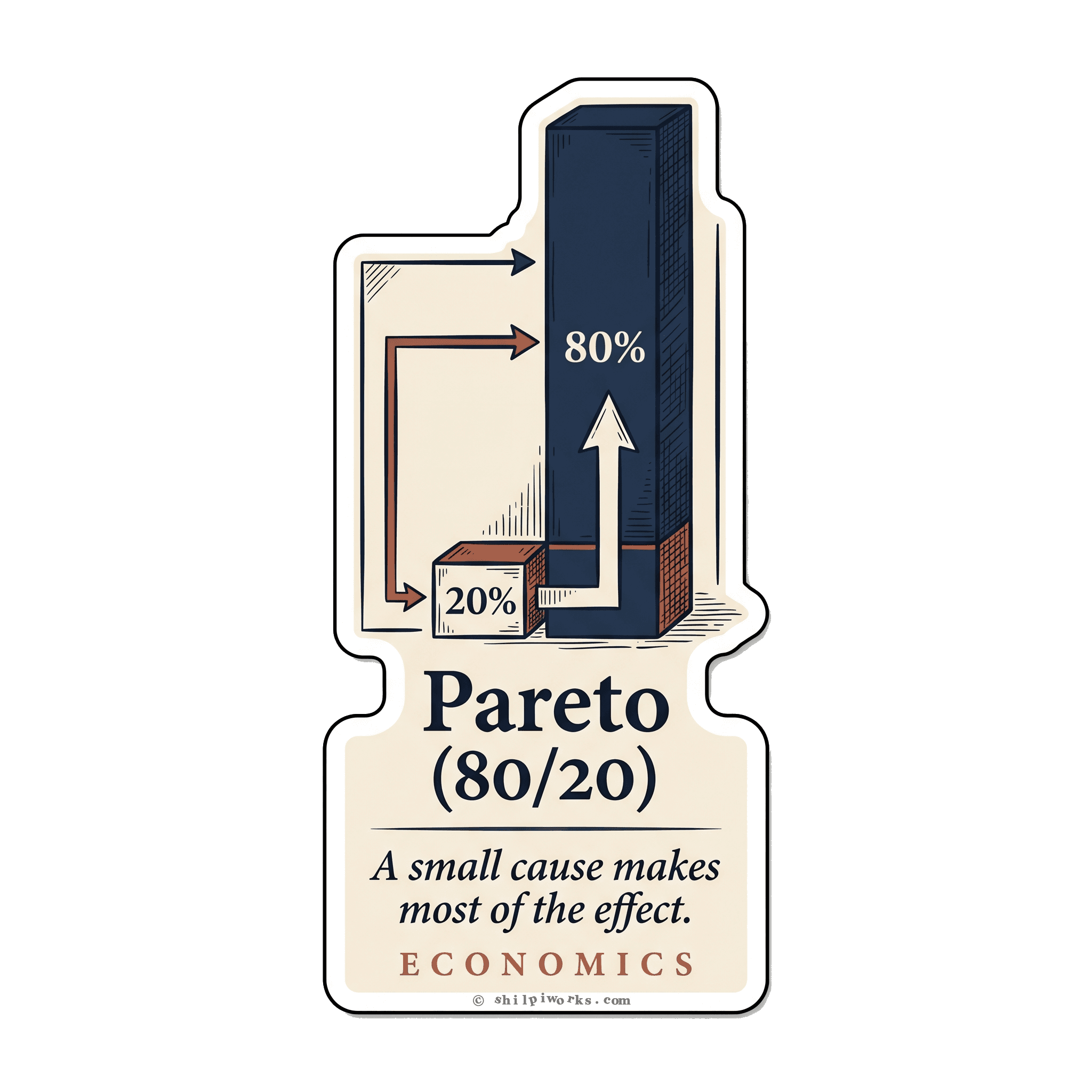
Pareto Principle 80/20 Rule Economics Diagram
First efforts yield most value; later efforts return less.
contrasts with
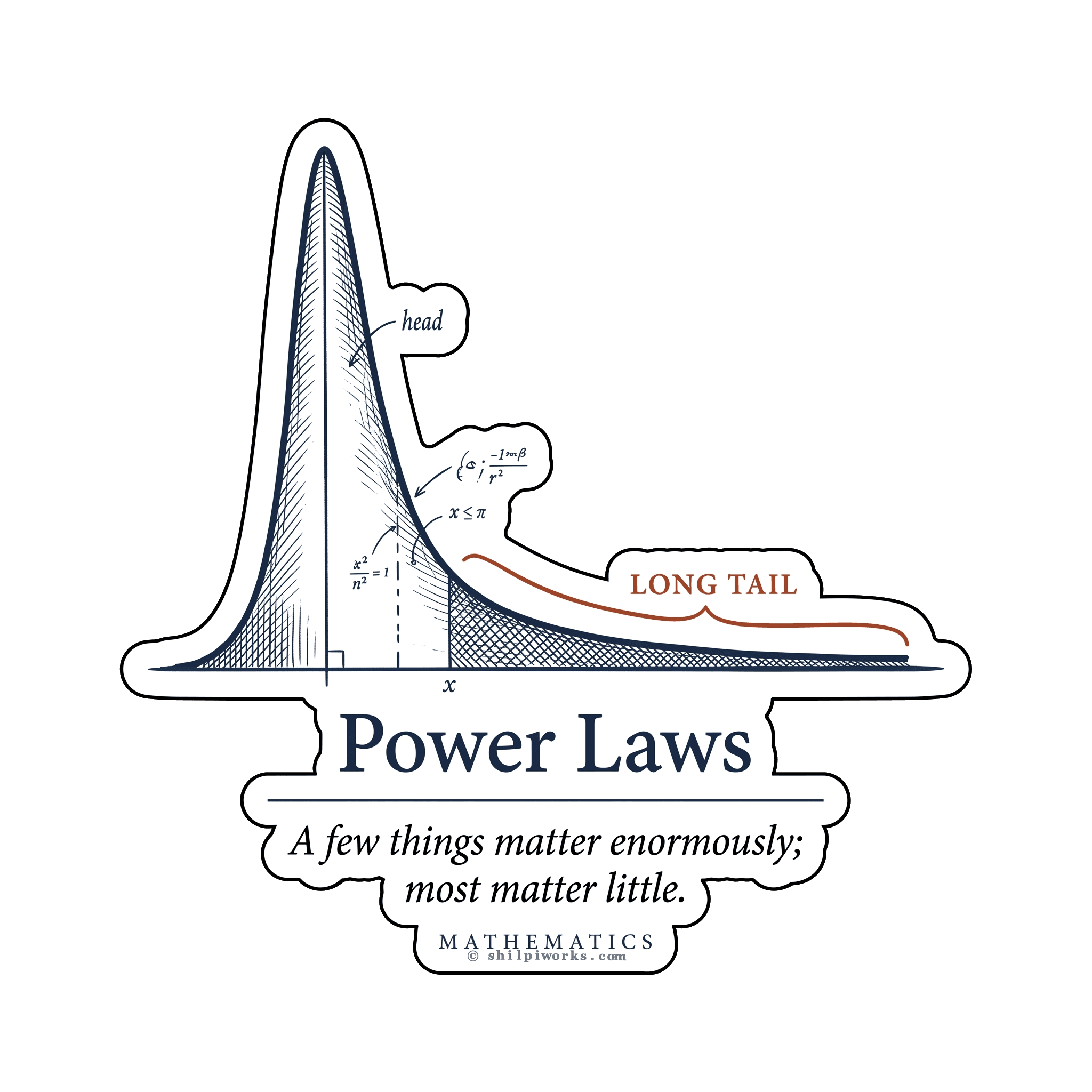
Power Laws: The Few That Matter Most
Sometimes each extra unit brings outsized gains instead.