Hercules and the Wagoner
The fable
A wagoner's cart sank axle-deep in a muddy lane. The driver climbed down, looked at the stuck wheel, and did nothing but kneel and pray: "Hercules, mighty Hercules, come lift my wagon free!" A voice answered from the clouds: "Get up, man. Put your shoulder to the wheel. Goad your oxen. Push." The wagoner pushed; the oxen strained; the wheel rolled up out of the rut. "Pray to me all you like," said Hercules, "but pray with your shoulder against the wheel."
The moral: Heaven helps those who help themselves.
The same moment, today
You get a flat at night on a side street. You sit with the hazard lights on and call roadside assistance. The hold music plays. You scroll while you wait. Your trunk has a spare and a jack, but you do not open it. You post in the group chat that you are stuck. Someone replies with a prayer-hands emoji. Ten minutes pass, and nothing has changed except the battery level on your phone.
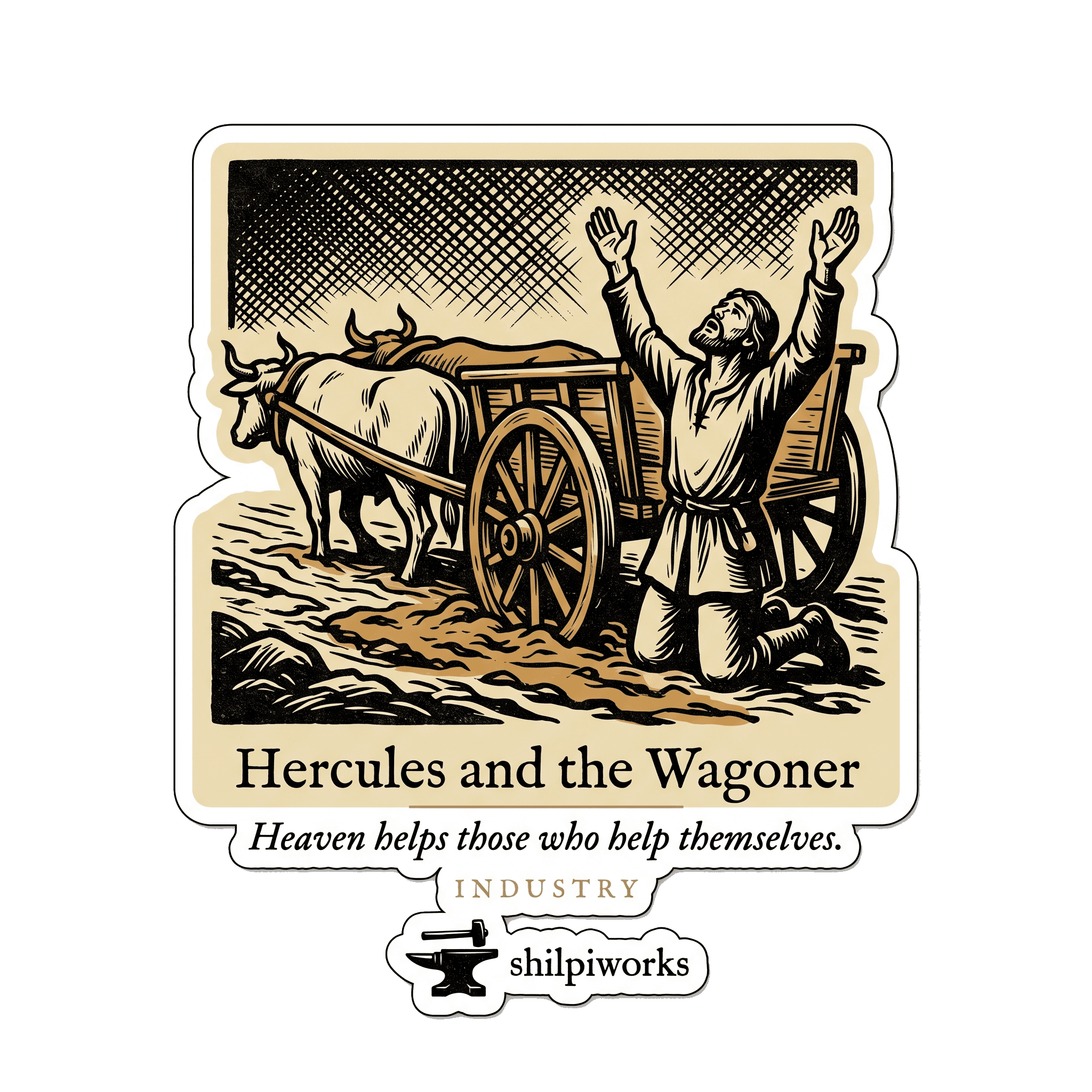
The wheel is sunk to the hub and the oxen strain, but the driver kneels with his hands up. Asking the sky feels like action, and it does not get mud on your hands. We send an email, open a ticket, or wait for approval, and we call that progress. But a stuck thing stays stuck until someone puts a shoulder to it. Help shows up faster when you start moving, because your first push tells others where to push.
The lesson
Before you ask for help, do the first plain thing you can do. Rock the load, dig a path, lay boards, or start the draft.
Science has measured this
Latané and Darley, 1968
In 1968 at Columbia University, psychologists Bibb Latané and John Darley put students in a small room to fill out a survey. As they worked, smoke began to leak from a vent. Students who sat alone usually got up within a minute and reported it. Students who sat with two other people who stayed calm did almost nothing, and many let the room fill with smoke for six full minutes. The students were not lazy. They were taking a cue from the still faces around them and waiting for someone else to act. When no one moved first, nothing happened.
A small reminder, on a glovebox lid or a workbench, that the wheel will not rise until your hands are on it.
$3.50
2.5 inches vinyl · weatherproof · ships in 1–3 days
Mix & save: 3 for $9 · 5 for $14 · 10 for $25· free shipping at ten
- Weatherproof vinyl
- Ships from Wayzata in 1–3 business days
- Secure checkout
If anything is wrong, we'll refund or replace it. Read the policy
The artwork is made with AI image tools, by agents we design and check. Each sticker is then printed on vinyl and die-cut to order.
More fables
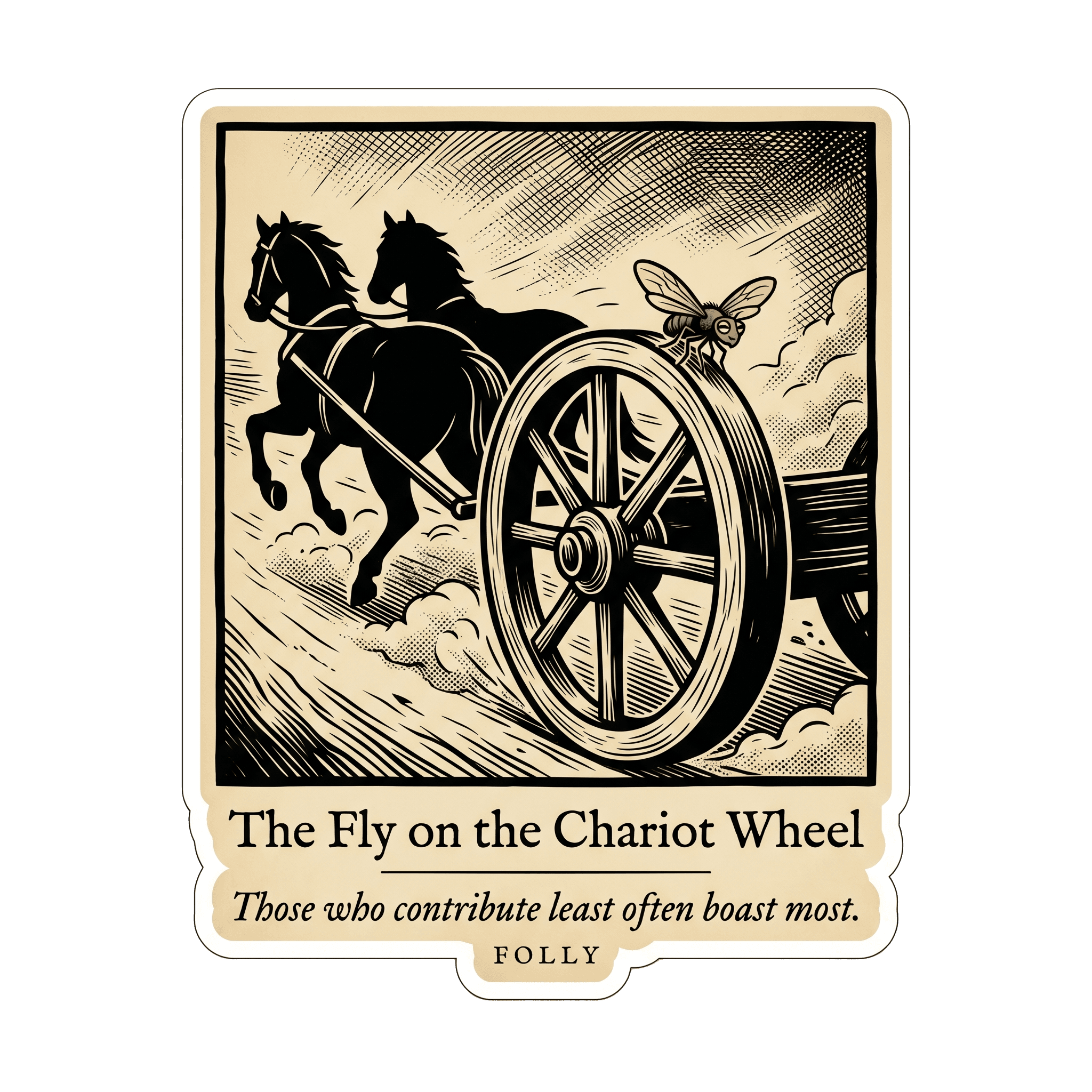
pairs with
The Fly on the Chariot Wheel Fable Wisdom
Credit belongs to pushers, not spectators.
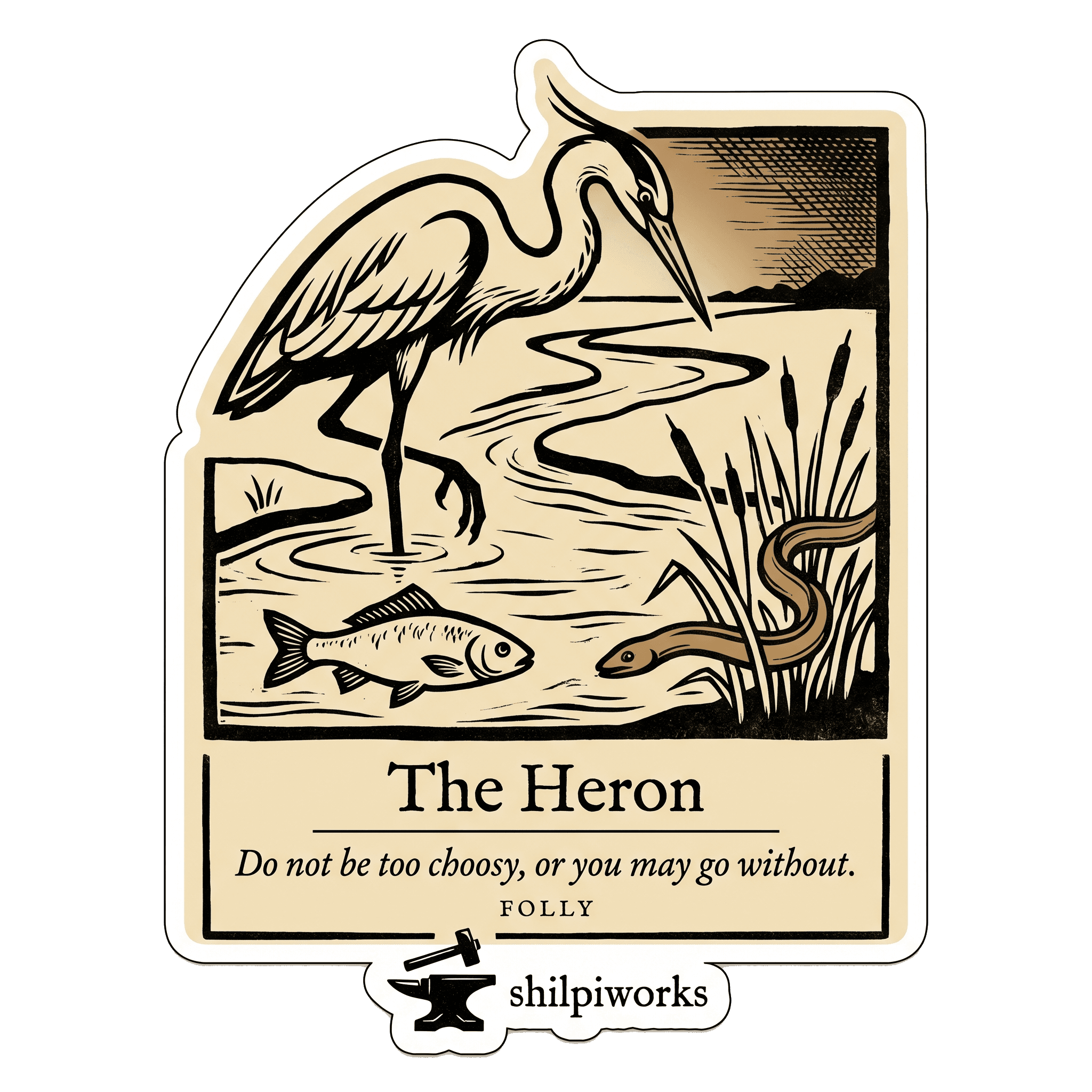
extends to
Heron's Fable: Do Not Be Too Choosy
Waiting for perfect conditions keeps you stuck.
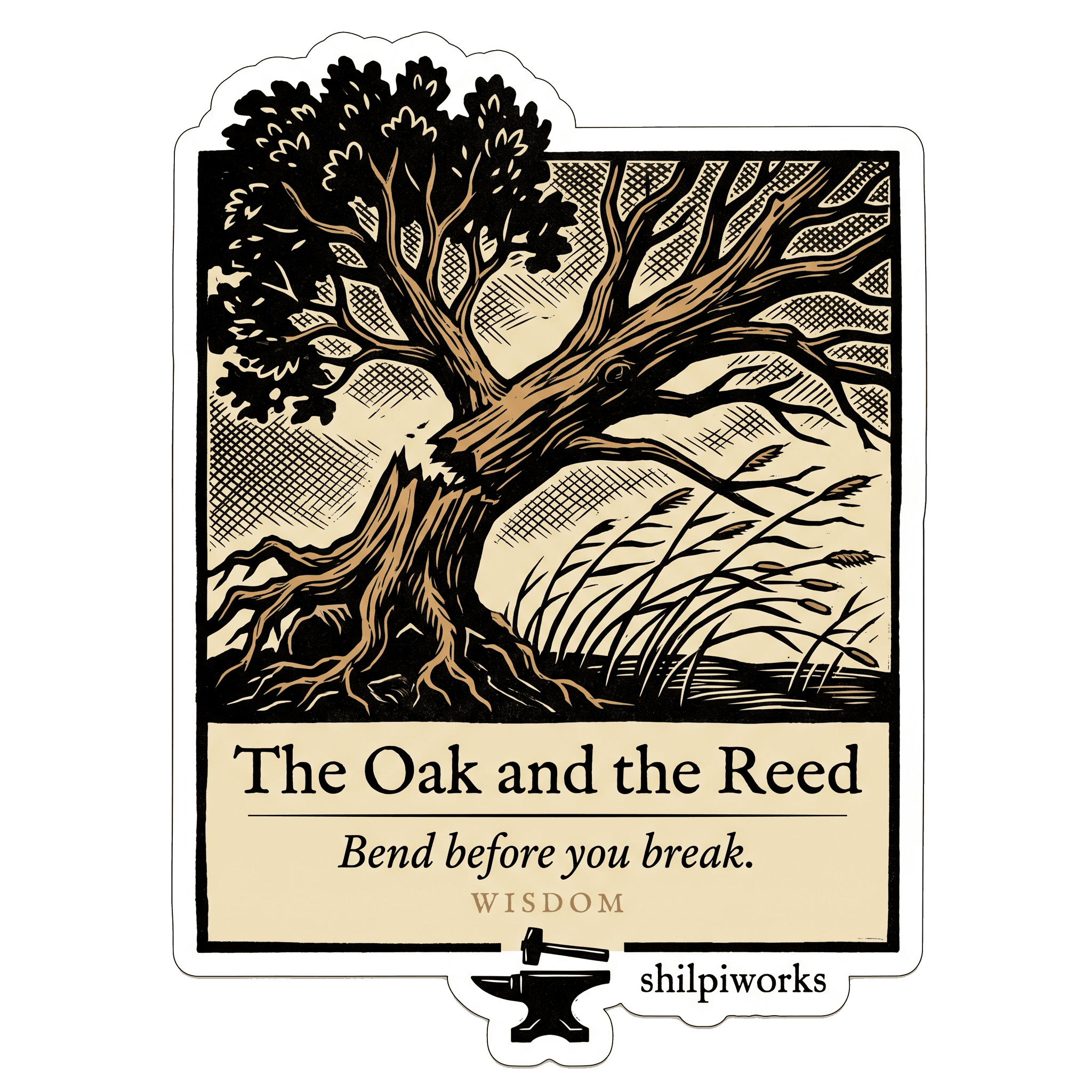
contrasts with
The Oak and the Reed: Bend Before You Break Wisdom
Sometimes adjust your plan instead of pushing harder.