Nucleus
A thick cookbook sits on a kitchen shelf. Nobody takes the heavy book over to the messy stove where sauce is boiling. Instead, someone writes the recipe on a scrap of paper and carries the paper to the counter. The book stays clean and safe on its shelf, while the cooking happens around it. If the slip of paper gets stained or torn, the big book still has the original.
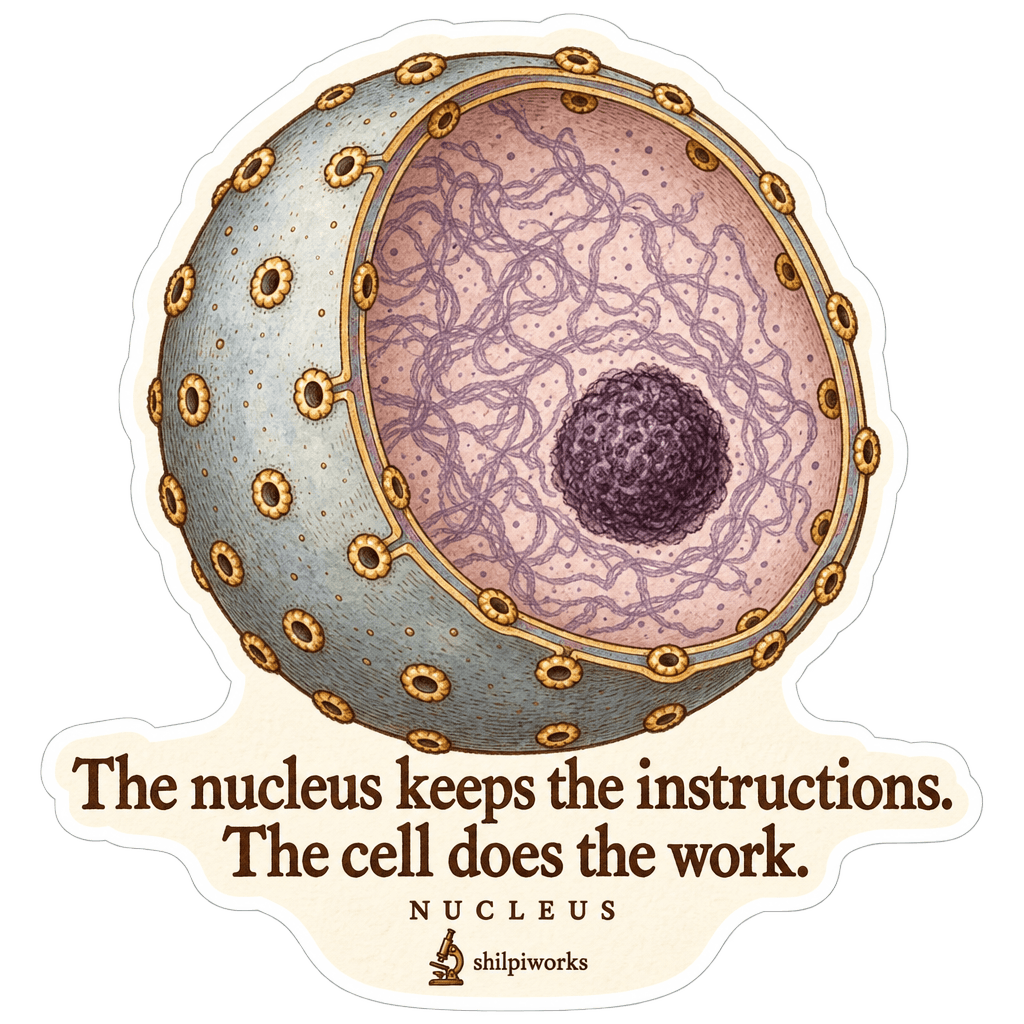
Inside almost every cell, the nucleus works like that safe shelf. It holds the cell's DNA, which contains the instructions for building its proteins. Working copies of these instructions, called messenger RNA, leave through tiny pores in the double membrane to be read. But the memory line makes it sound like a central boss giving orders. The nucleus doesn't control the cell that way. Signals from outside tell it which instructions to copy, and mature red blood cells push their nucleus out entirely.
Therefore
Don't look at the nucleus as the commander of the cell. Watch instead for how messages from the outside ask for the recipes they need.
Robert Brown, 1831
Robert Brown was a Scottish botanist studying plant fertilization. In 1831, he looked through a microscope at the surface layer of orchid leaves. Inside each cell, he saw an opaque circular spot that earlier scientists had overlooked. He called it the nucleus, using the Latin word for a little kernel. Brown read his paper to the Linnean Society of London that November. He showed that this circular spot wasn't just a quirk of orchids, but a regular part of plant cells everywhere.
A small reminder, on a laptop sleeve or a notebook, that the master instructions stay safe while the rest of the cell does the work.
$3.50
2.5 inches vinyl · weatherproof · ships in 1–3 days
Mix & save: 3 for $9 · 5 for $14 · 10 for $25· free shipping at ten
- Weatherproof vinyl
- Ships from Wayzata in 1–3 business days
- Secure checkout
If anything is wrong, we'll refund or replace it. Read the policy
Related patterns
pairs with
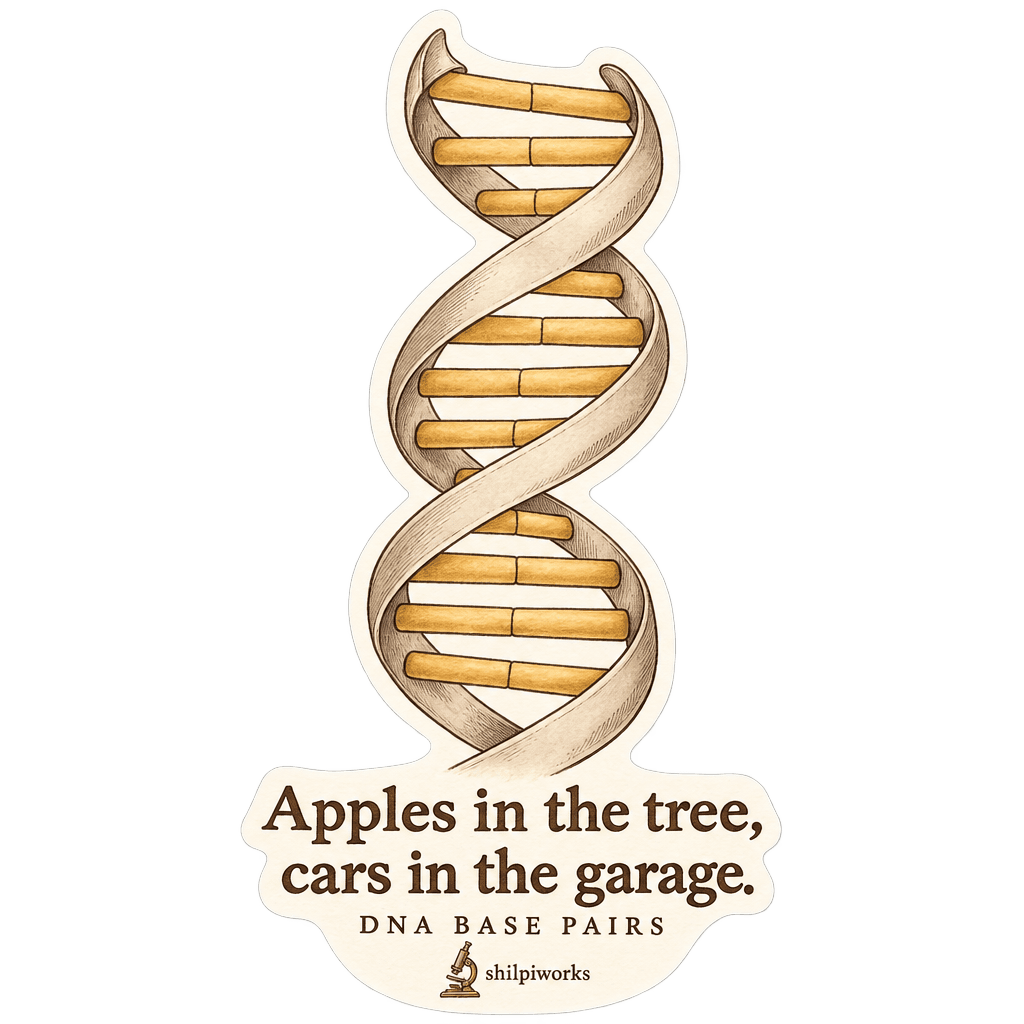
DNA Base Pairs — Apples in the Tree, Cars in the Garage
The nucleus holds and protects the cell's library of DNA base pairs.
extends to
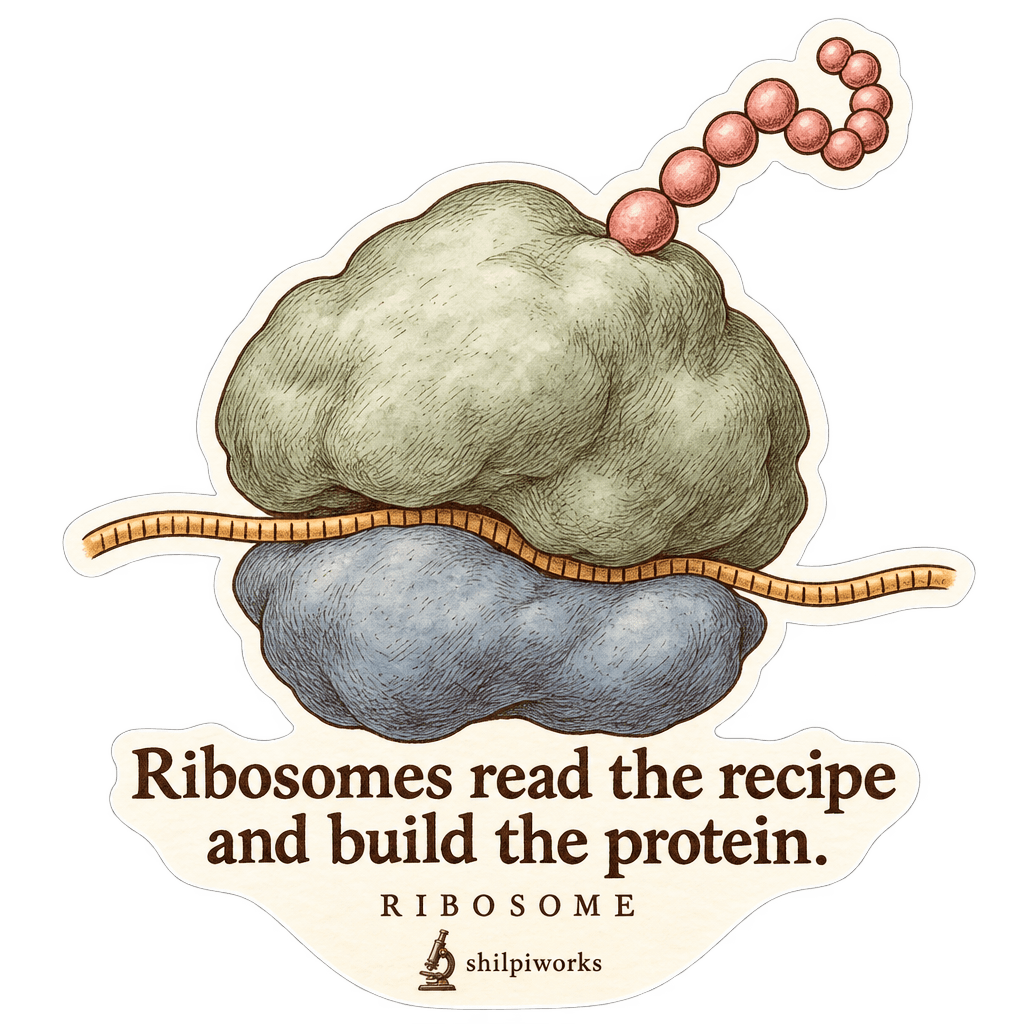
Ribosome — Read the Recipe, Build the Protein
Ribosomes read the messenger copies sent out of the nucleus to make proteins.
contrasts with
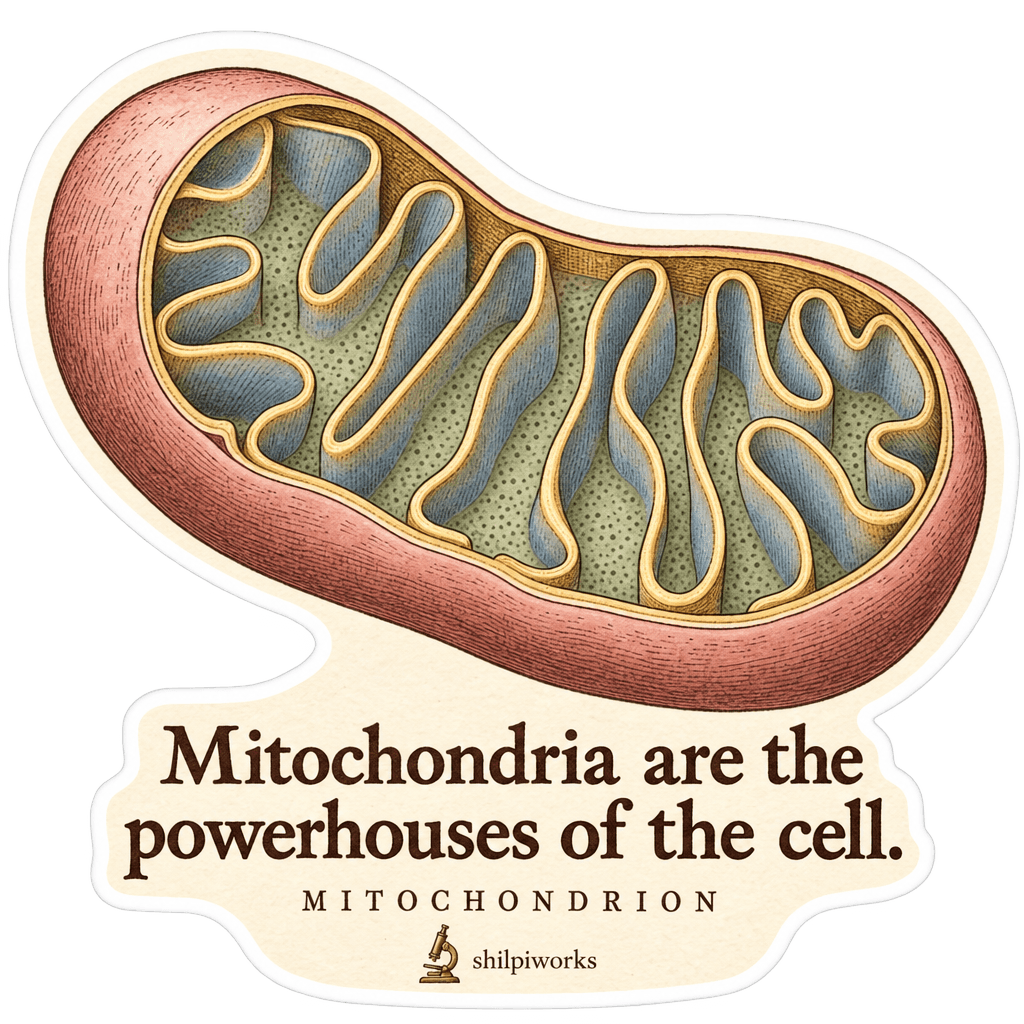
Mitochondrion — Powerhouse of the Cell
Mitochondria carry a small loop of their own DNA outside the nucleus.