Mitochondrion
A warm bowl of oatmeal on a cold morning fills your stomach. An hour later, your legs carry you briskly up three flights of stairs without stopping. The oatmeal didn't push your shoes up the steps on its own. Your body broke down the oats into simple sugars, and your blood carried those sugars straight to your muscles. Inside every working muscle cell, tiny structures take that fuel, combine it with the oxygen you breathe, and turn it into usable motion.
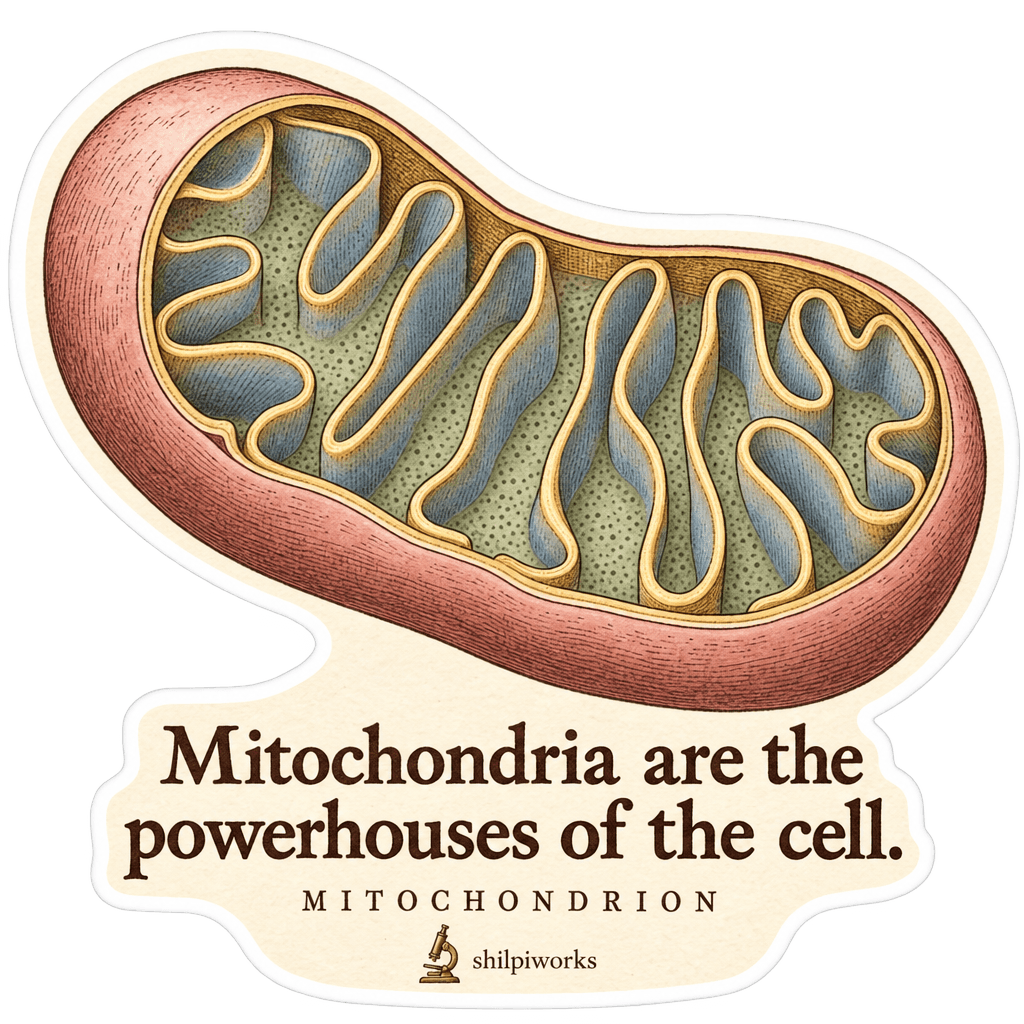
Inside each cell, mitochondria take the chemical energy stored in food and, using oxygen, convert it into ATP, a small molecule the rest of the cell spends to do its work. The inner membrane folds back and forth into ridges, which gives that conversion a large surface to happen on. A hard-working muscle cell can hold thousands of them to keep up with daily effort. People often teach that "Mitochondria are the powerhouses of the cell." But a power plant doesn't generate power out of thin air, and a mitochondrion doesn't make energy out of nothing. It converts the energy already stored in food into a form the cell can use, and some of it is lost as heat on the way. It also carries a small DNA of its own, thirty-seven genes, which you inherit only from your mother.
Therefore
When you hear a catchy label for a cell part, check what it actually takes in and what it gives off. Cells don't create anything from scratch; they simply trade and reshape what enters them.
Philip Siekevitz, 1957
Philip Siekevitz was a cell biologist at the Rockefeller Institute in New York. In July 1957, he published an article in Scientific American titled 'Powerhouse of the Cell.' Earlier biochemists had just proven that isolated mitochondria carry out respiration and make ATP, but the chemistry was difficult to picture. Siekevitz wanted everyday readers to grasp how the cell powered its daily work. His nickname stuck so firmly that science classes still teach it today. The name mitochondrion was already old by then. Carl Benda coined it in Berlin in 1898, putting together the Greek words for thread and grain after the shapes he saw under his microscope.
A small reminder, on a gym locker or a water bottle, that every movement runs on tiny cellular engines passed down from your mother.
$3.50
2.5 inches vinyl · weatherproof · ships in 1–3 days
Mix & save: 3 for $9 · 5 for $14 · 10 for $25· free shipping at ten
- Weatherproof vinyl
- Ships from Wayzata in 1–3 business days
- Secure checkout
If anything is wrong, we'll refund or replace it. Read the policy
Related patterns
extends to
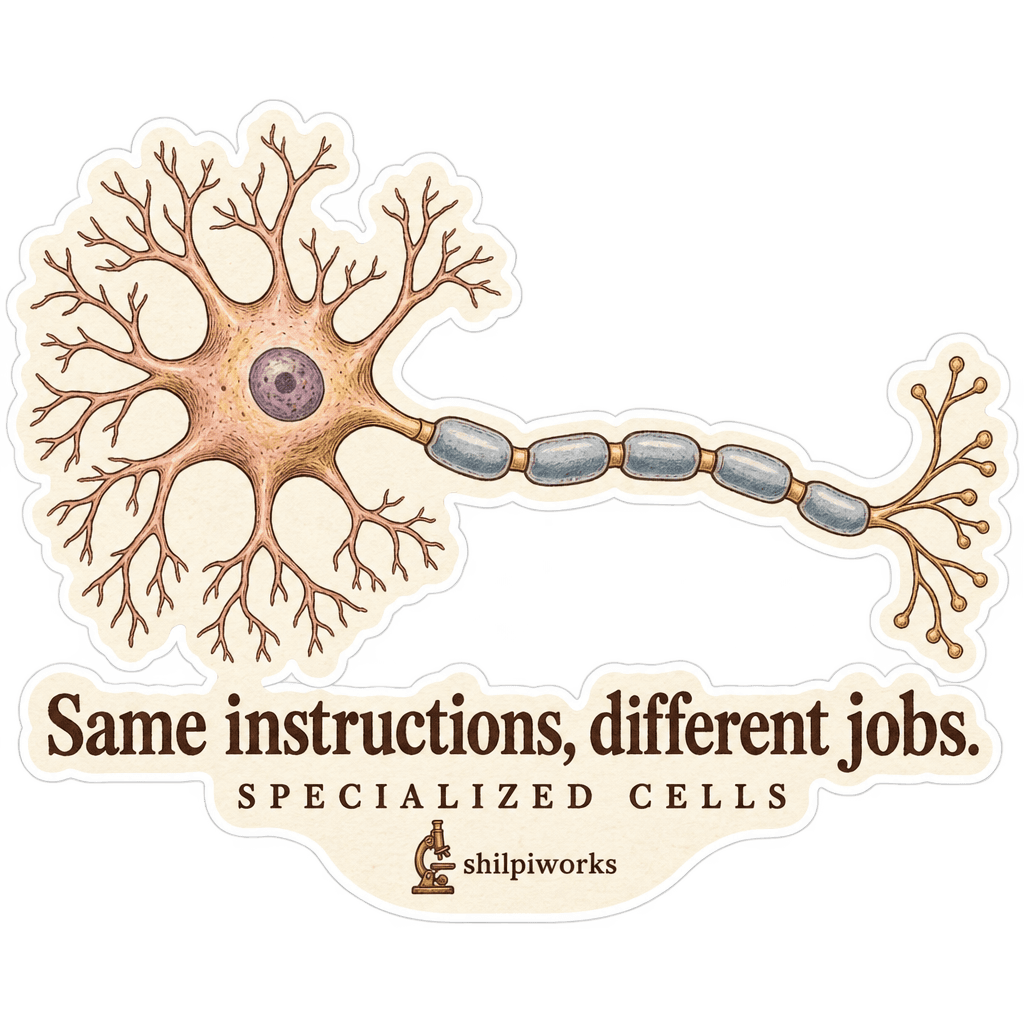
Specialized Cells — Same Instructions, Different Jobs
Muscle cells pack in thousands of mitochondria, while cells with light duties hold far fewer.
contrasts with
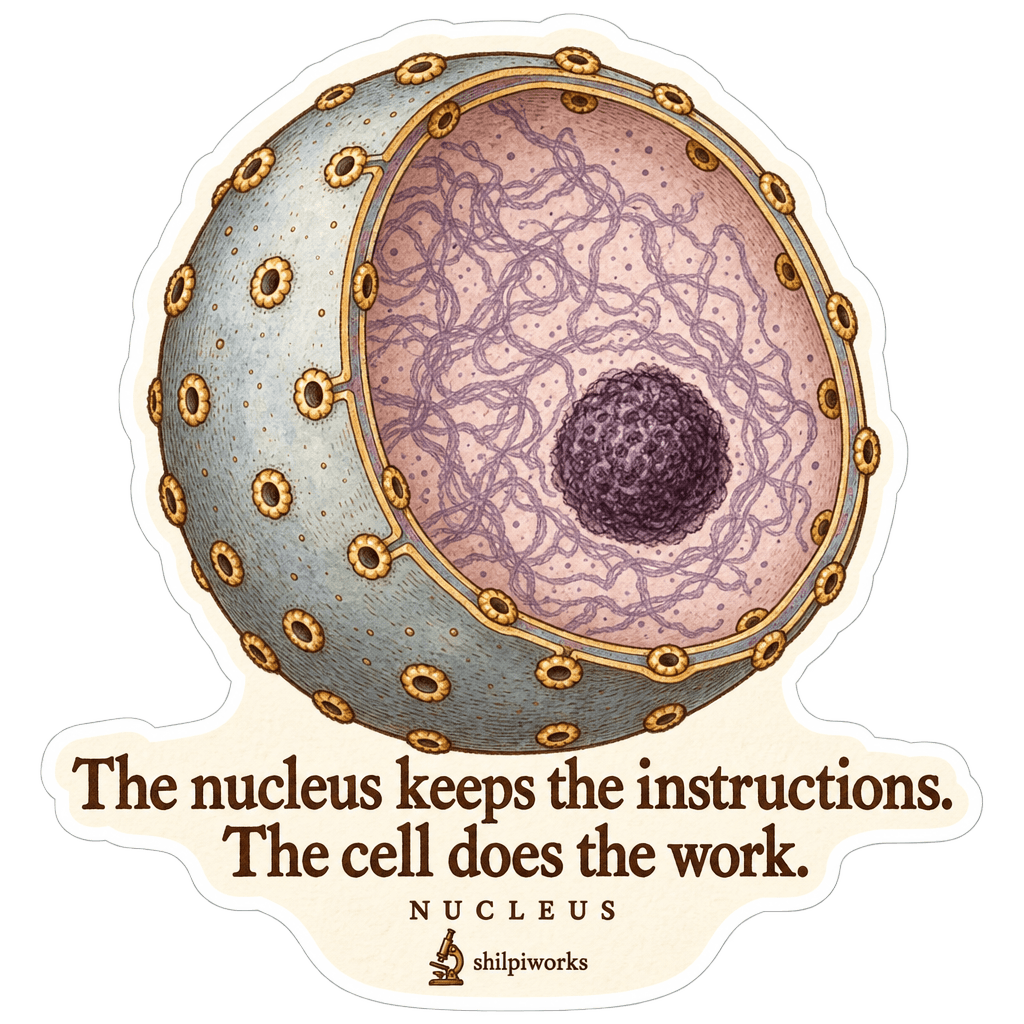
Nucleus — Where the Instructions Are Kept
The nucleus holds your main genome, but mitochondria carry thirty-seven maternal genes of their own.
pairs with
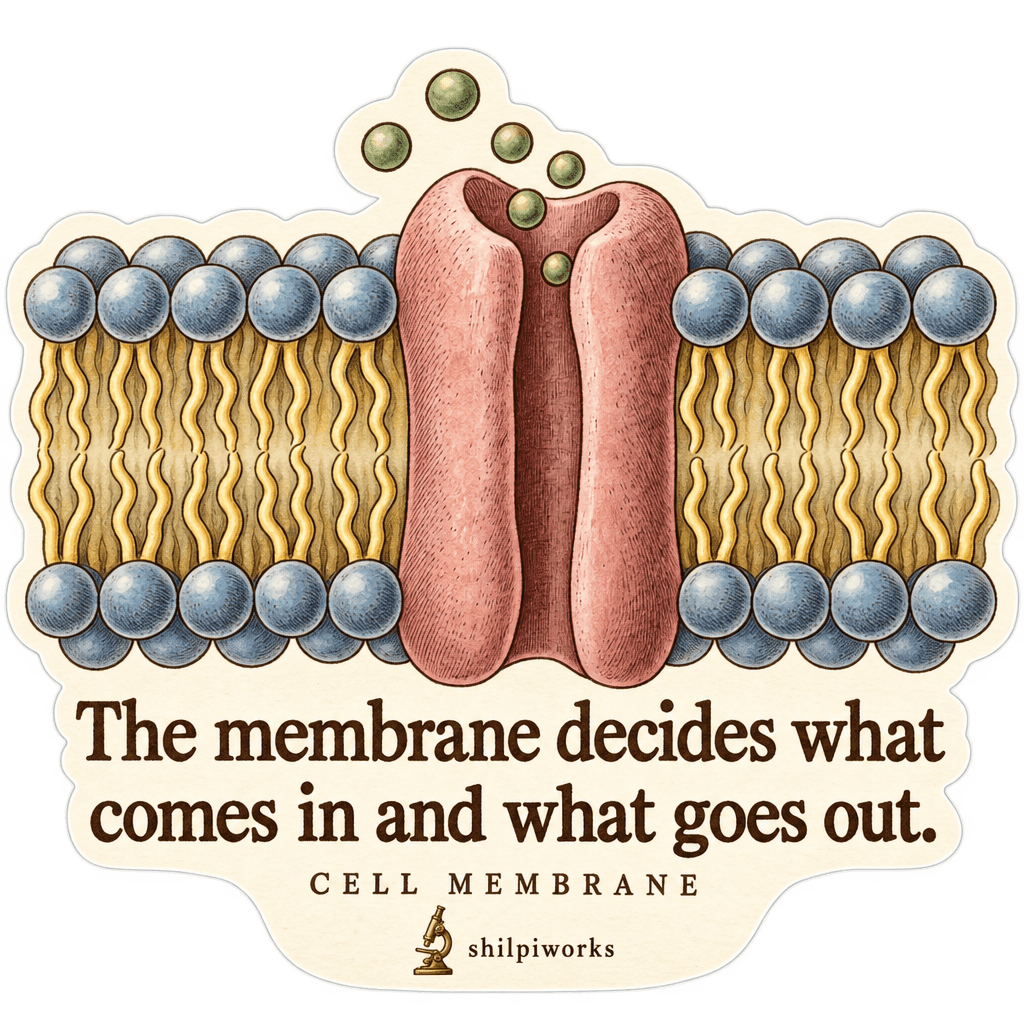
Cell Membrane — What Comes In and What Goes Out
Oxygen and food molecules must cross the outer cell membrane before mitochondria can use them.