Cell Biology · Lesson 10 of 12
Lysosome
A compost bin in the garden turns food scraps into dark soil. Apple cores and dry leaves go in, and over time they break down into basic nutrients. The pile gets warm, and the tough skins fall apart until nothing from the kitchen is recognizable. Inside your body, cells run a clean-up job every minute of the day. Old cell parts wear out and stop working. The cell can't just throw them away into your blood, so it breaks them down indoors.
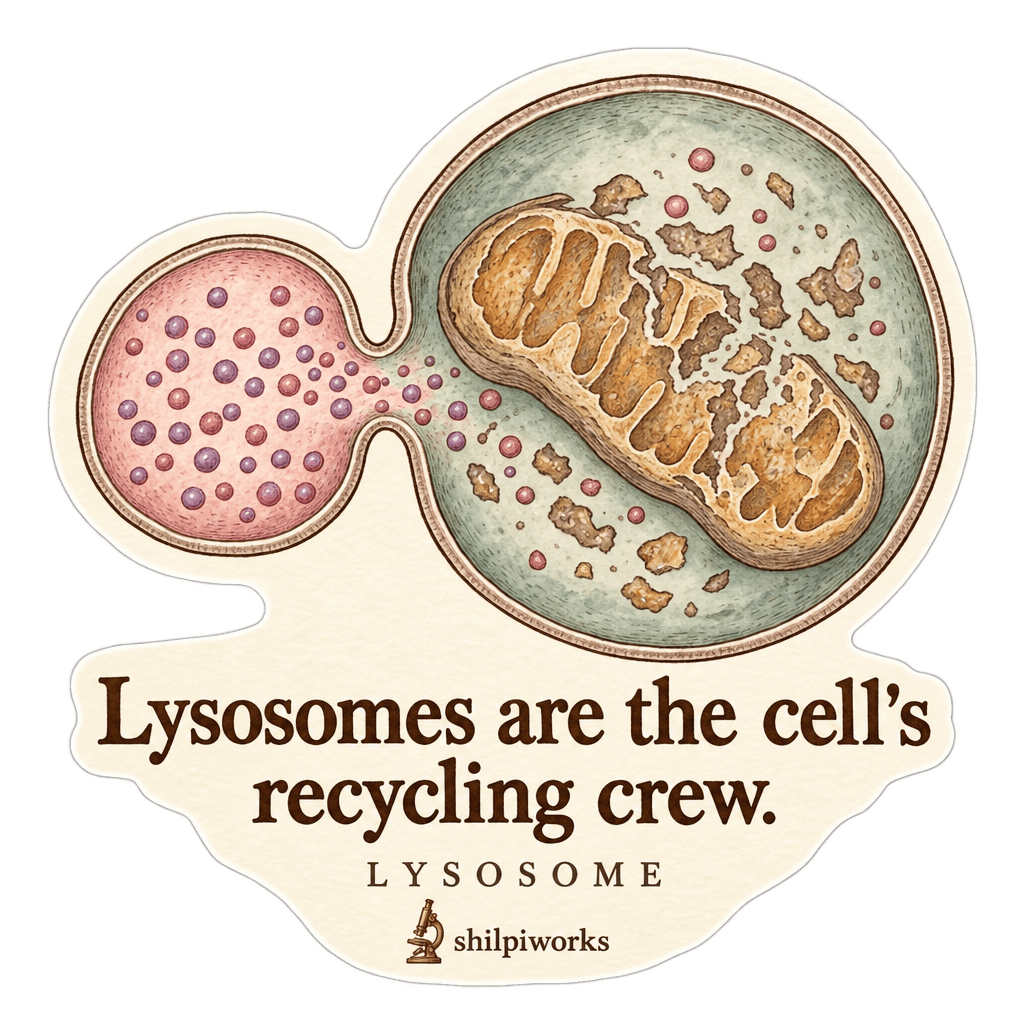
Lysosomes are tiny sacs filled with digestive enzymes, which are proteins that chop up chemical bonds. They break down worn-out cell parts and swallowed food into simple building blocks like amino acids and sugars. The inside of a lysosome is kept acidic, because its enzymes work best in acid. People say that "Lysosomes are the cell's recycling crew." But a human recycling crew sorts out bottles or cans so you can reuse them whole. A lysosome doesn't save anything whole. It tears parts apart completely, and the cell builds fresh parts from the raw pieces. When one enzyme is missing, as in Tay-Sachs disease, waste builds up and harms the cell.
Therefore
Watch for how a cell reuses what it already has. Breaking things down isn't waste; it's how new parts get made.
Christian de Duve, 1949
Christian de Duve ran a laboratory in Louvain, Belgium. In December 1949, he was studying how insulin acts on liver tissue. His team tested an enzyme called acid phosphatase as a control. Fresh samples showed very little activity. Then the team left some samples in a refrigerator for five days over a weekend. When they tested them again, the enzyme was active. De Duve realized the enzymes had been locked inside tiny sacs, and the sacs slowly broke open in the cold. In 1955, he named these sacs lysosomes. In 1974, he shared the Nobel Prize for his discovery.
A small reminder, on a lunchbox or a notebook, that cleaning up is really just gathering the pieces to build something new.
$3.50
2.5 inches vinyl · weatherproof · ships in 1–3 days
Mix & save: 3 for $9 · 5 for $14 · 10 for $25· free shipping at ten
- Weatherproof vinyl
- Ships from Wayzata in 1–3 business days
- Secure checkout
If anything is wrong, we'll refund or replace it. Read the policy
Related patterns

pairs with
Golgi Apparatus — Wraps the Parcels, Adds the Address
The Golgi apparatus wraps digestive enzymes and sends them to the lysosomes.
contrasts with
Ribosome — Read the Recipe, Build the Protein
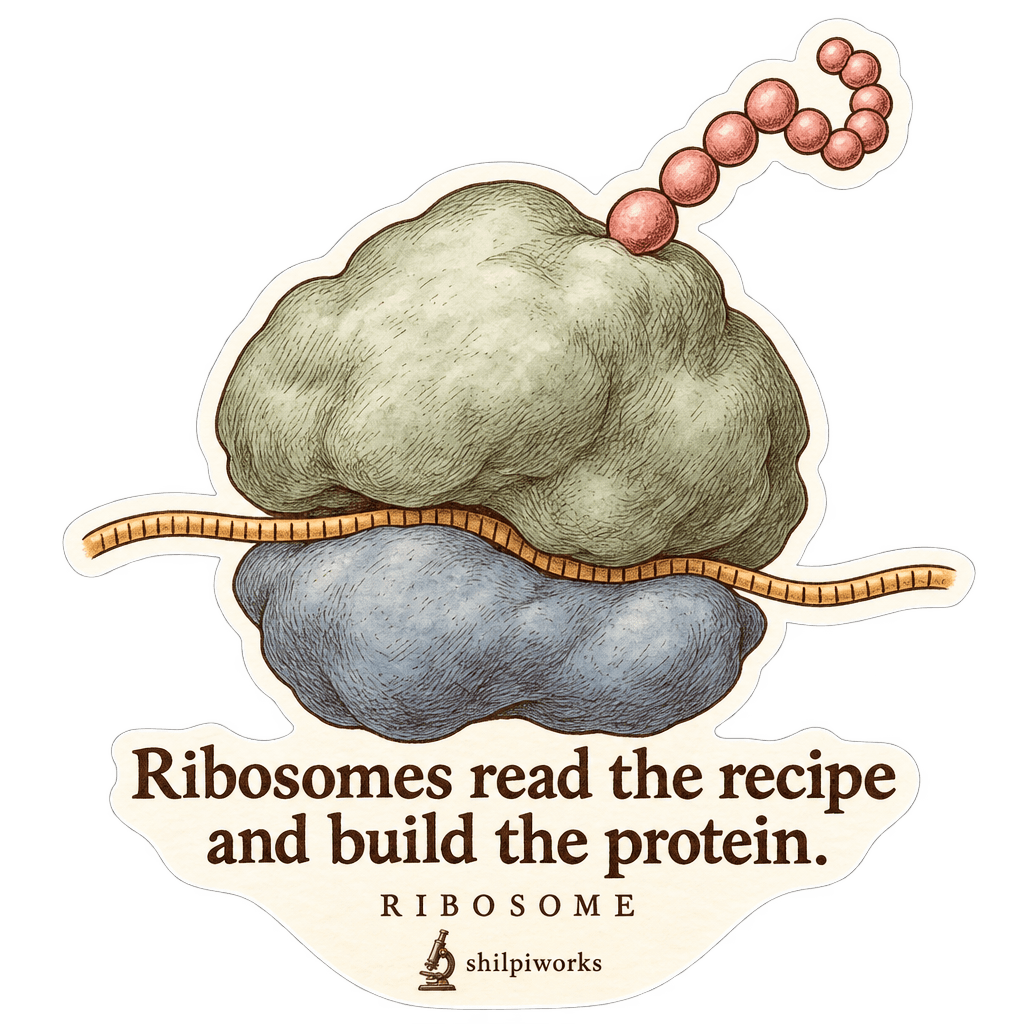
Ribosomes build new protein chains while lysosomes take old ones apart.
pairs with
Mitochondrion — Powerhouse of the Cell
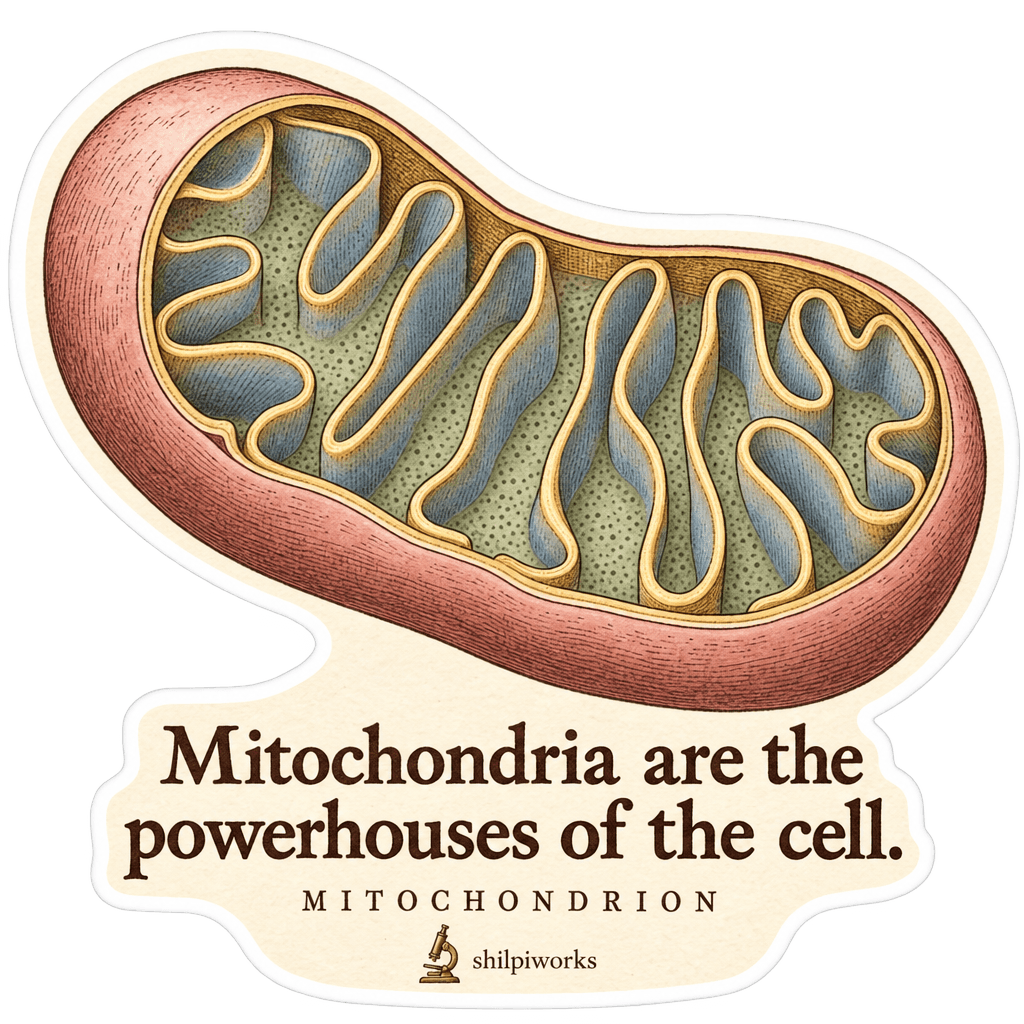
Worn-out mitochondria are delivered to lysosomes to be dismantled and recycled.