Lindy Effect
You sign up for a new app that friends rave about. It feels fresh and it fixes a small annoyance. A few months later, the company folds and your data sits behind a dead login. You still cook dinner in the cast‑iron pan your grandmother used, and it works the same every night. The paperback on your nightstand comes from a print run older than you, and it still reads fine. Some things burn out fast, like a candle. Some last years, like a book. A few outlast us, like stone.
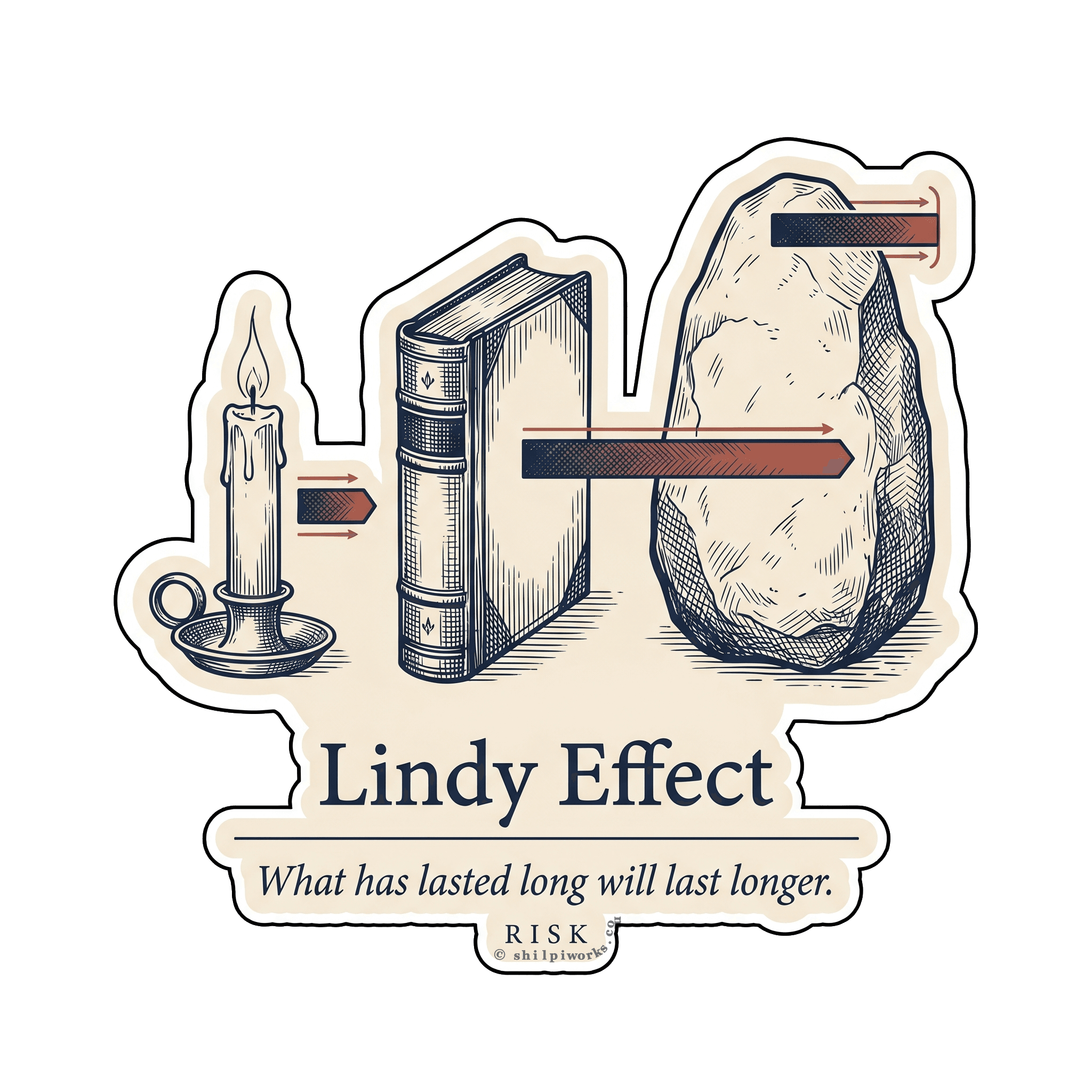
With some things, age is not decay. It is information. If a song, a recipe, or a tool has survived for a long time, it has passed many chances to die. That survival suggests it will keep surviving. This only applies to things that do not wear out like bodies or bearings. A book in print for fifty years will likely outlast one from last fall, and a two‑year‑old app is likelier to vanish than email.
Therefore
When you are unsure between options, give a small edge to the older one. Ask whether the thing decays; if not, treat age as a forecast, not a guarantee.
Mandelbrot, 1982
In 1982, Benoit Mandelbrot at IBM in Yorktown Heights wrote about a Broadway rule he heard from comics at Lindy’s. Long‑running shows tended to keep running. New ones closed fast. He gave it a clean frame: for things that do not decay like people do — books, ideas, technologies — the expected remaining life grows with their age. A book in print for fifty years can expect another fifty. One from last month may vanish by next year. Decades later, Nassim Taleb popularized the name Lindy effect and used it to think about risk.
A small reminder, on a laptop lid or a bookshelf, that age can be a forecast when the thing does not rot, rust, or run out.
$3.50
2.5 inches vinyl · weatherproof · ships in 1–3 days
Mix & save: 3 for $9 · 5 for $14 · 10 for $25· free shipping at ten
- Weatherproof vinyl
- Ships from Wayzata in 1–3 business days
- Secure checkout
If anything is wrong, we'll refund or replace it. Read the policy
Related patterns

pairs with
Chesterton's Fence Principle: Thoughtful Inquiry
Old things survived reasons; ask before cutting them.

contrasts with
Creative Destruction: The Cycle of Innovation
Sometimes the new rightly pushes the old out.
extends to
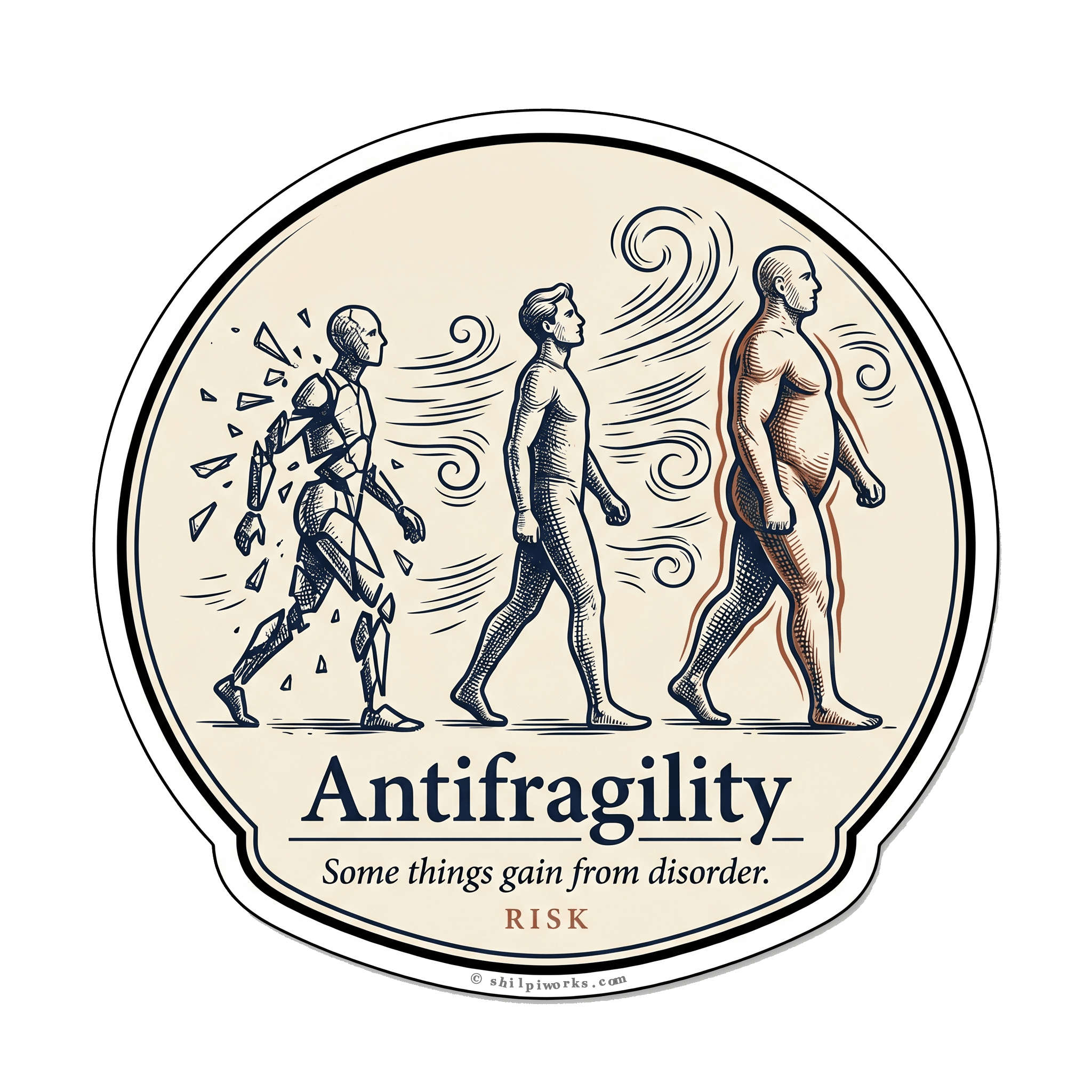
Antifragility: Strength from Adversity
Long life often means shocks have made it stronger.