"The Doctrine of the Sword", in his weekly paper Young India, 11 August 1920
The Law of Our Species
In August 1920, Mahatma Gandhi was travelling south from Bombay toward Madras. Ten days earlier, on 1 August, Bal Gangadhar Tilak had died in Bombay. On that same day, Gandhiji had launched the non-cooperation movement across India. People were still furious about the massacre at Jallianwala Bagh in Amritsar, where British troops under General Dyer fired on an unarmed crowd. Many critics in the Congress said that refusing to fight back was cowardice. On 11 August 1920, he published an essay titled "The Doctrine of the Sword" in his weekly paper, Young India, to answer them directly.

The essay did not ignore their anger. Gandhiji wrote that if the only choice were cowardice or violence, he would choose violence. Then he showed that another choice existed. He wrote, "Non-violence is the law of our species as violence is the law of the brute." Animals settle disputes with physical force because they know no other way. Human beings can make a deliberate decision to hold back. Restraining yourself when an opponent hurts you takes more stamina than striking back. It is not fear. It is a decision to absorb an insult without returning a blow.
Therefore
When someone provokes you, do not confuse restraint with weakness. Walking away from a fight because you choose to is strength, but running away because you are afraid is not.
Young India, Ahmedabad, 1920
Many leaders in the Indian National Congress believed that ordinary people could never resist an empire without weapons. They thought the public would either surrender or riot in the streets. At a special session in Calcutta in September 1920, skeptics argued against the non-cooperation plan. Yet the Congress delegates voted to back Gandhiji. Over the next year, thousands of lawyers left the courts, students walked out of state schools, and families took up hand spinning. The method worked until February 1922, when an angry mob killed policemen at Chauri Chaura. Gandhiji immediately stopped the national campaign. He showed that keeping the discipline mattered more than winning an immediate political fight.
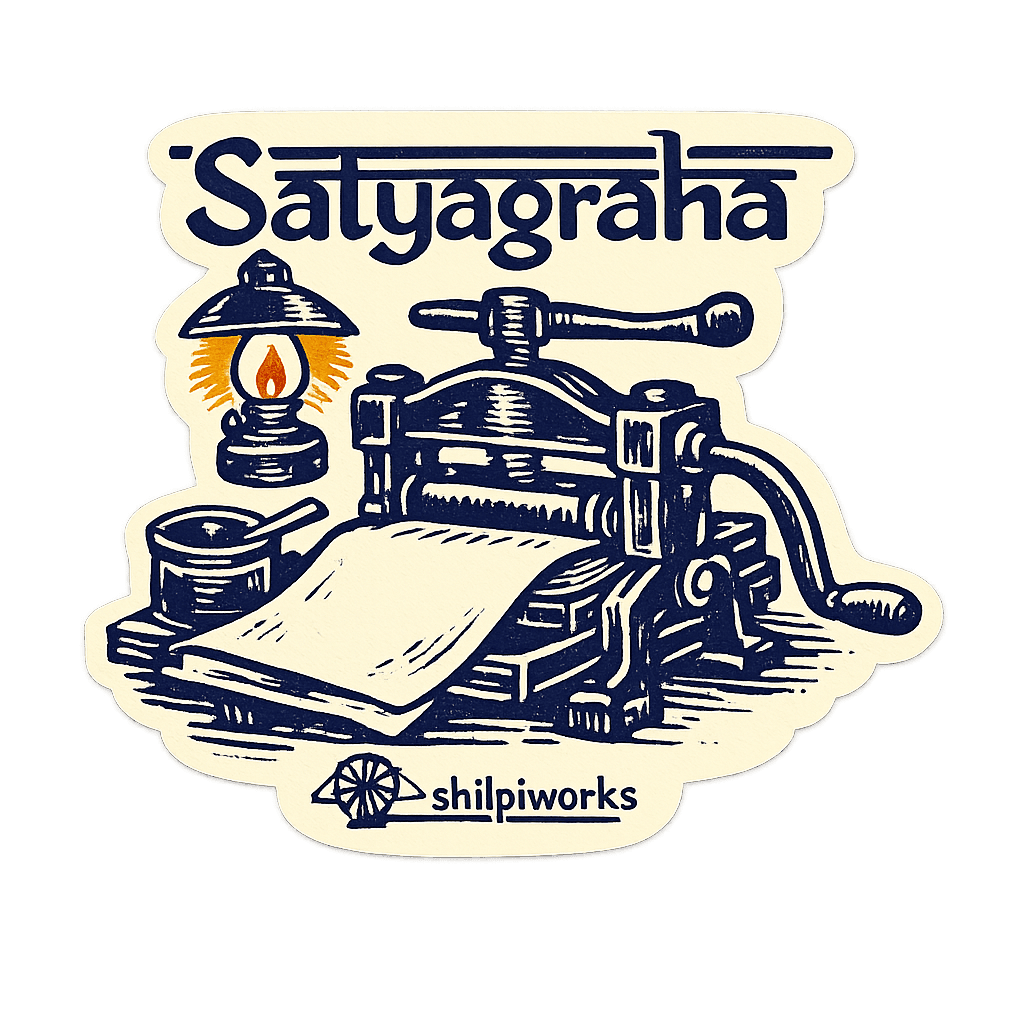
A small reminder, on the desk or the notebook, that choosing not to strike back takes more courage than throwing a punch.
$3.50
2.5 inches vinyl · weatherproof · ships in 1–3 days
Mix & save: 3 for $9 · 5 for $14 · 10 for $25· free shipping at ten
- Weatherproof vinyl
- Ships from Wayzata in 1–3 business days
- Secure checkout
If anything is wrong, we'll refund or replace it. Read the policy