Golgi Apparatus
You order a replacement cable for your phone online, and two days later a small cardboard box sits on your doorstep. Inside, the cable is wrapped in plastic. A worker in a warehouse packed the cable and taped the box shut. Then a machine glued a shipping label to the outside. Without that label, the box would sit in a pile with thousands of others. Every cell in your body handles deliveries too, but it does the job without any workers.
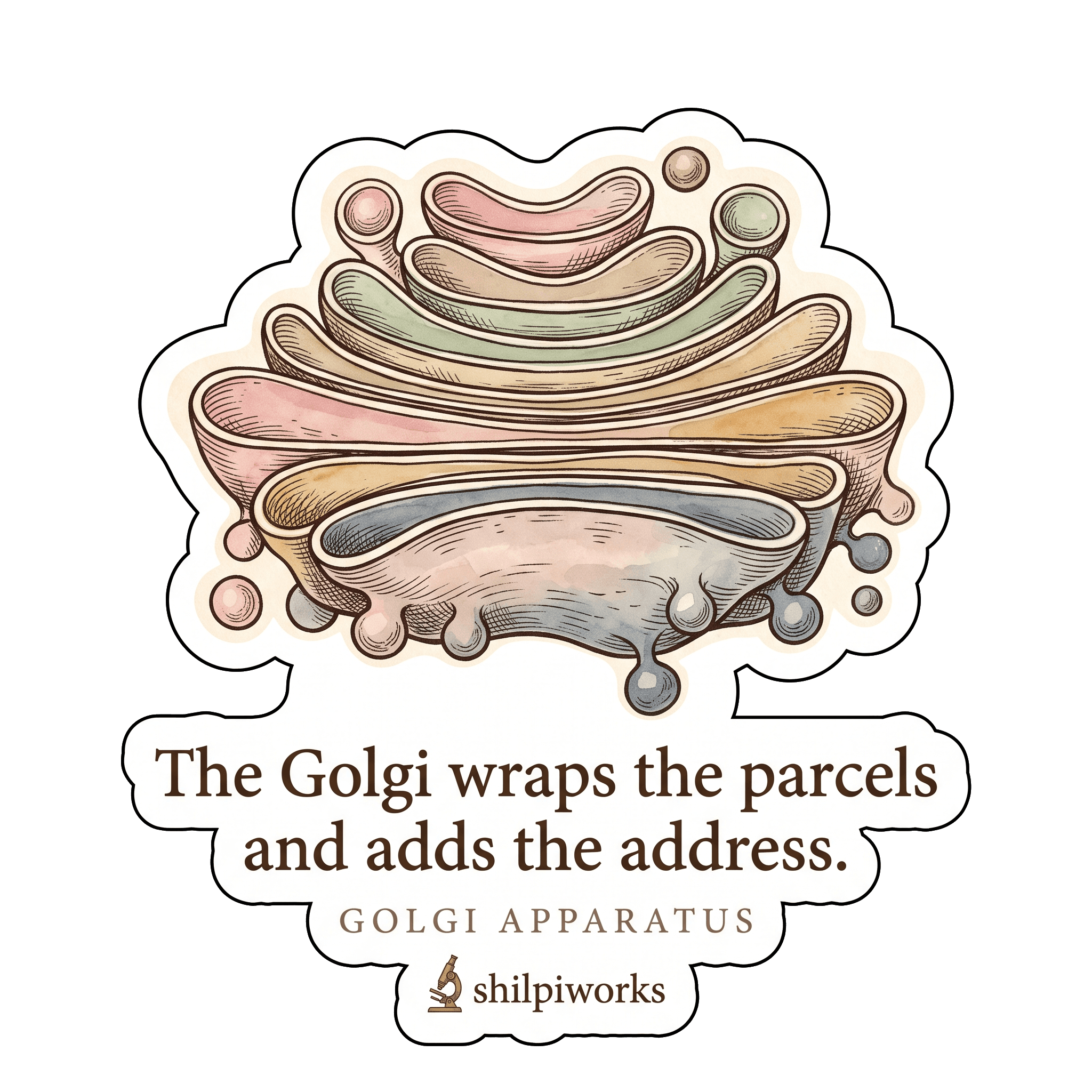
Proteins made on the rough ER travel to a stack of flattened sacs called the Golgi apparatus. The Golgi finishes each protein, often by adding sugar chains, and wraps it inside a bubble of membrane called a vesicle. A memory line says, "The Golgi wraps the parcels and adds the address." This is where the memory line stops being true, because nobody reads the address. The address is only a chemical tag, and receiving proteins happen to fit its shape. A protein with no special tag moves straight to the cell surface by default.
Therefore
When you hear about shipping labels in a cell, look for the physical fit instead. Molecules move where their shapes happen to latch together.
Camillo Golgi, 1898
In 1898, the Italian doctor Camillo Golgi was working in Pavia. He used a silver stain he had invented to study nerve cells from an owl under his microscope. Inside the cells, he saw a dark web of threads and called it the internal reticular apparatus. Other scientists doubted his findings for over fifty years. Many argued that the metal in his stain created a smudge on the glass. In 1954, Albert Dalton and Marie Felix used an electron microscope to examine the cells. Their pictures showed the stacked membranes clearly, and the long debate ended.
A small reminder, on the lunchbox or the notebook, that your cells wrap and sort thousands of proteins every minute through chemical shapes alone.
$3.50
2.5 inches vinyl · weatherproof · ships in 1–3 days
Mix & save: 3 for $9 · 5 for $14 · 10 for $25· free shipping at ten
- Weatherproof vinyl
- Ships from Wayzata in 1–3 business days
- Secure checkout
If anything is wrong, we'll refund or replace it. Read the policy
Related patterns
pairs with
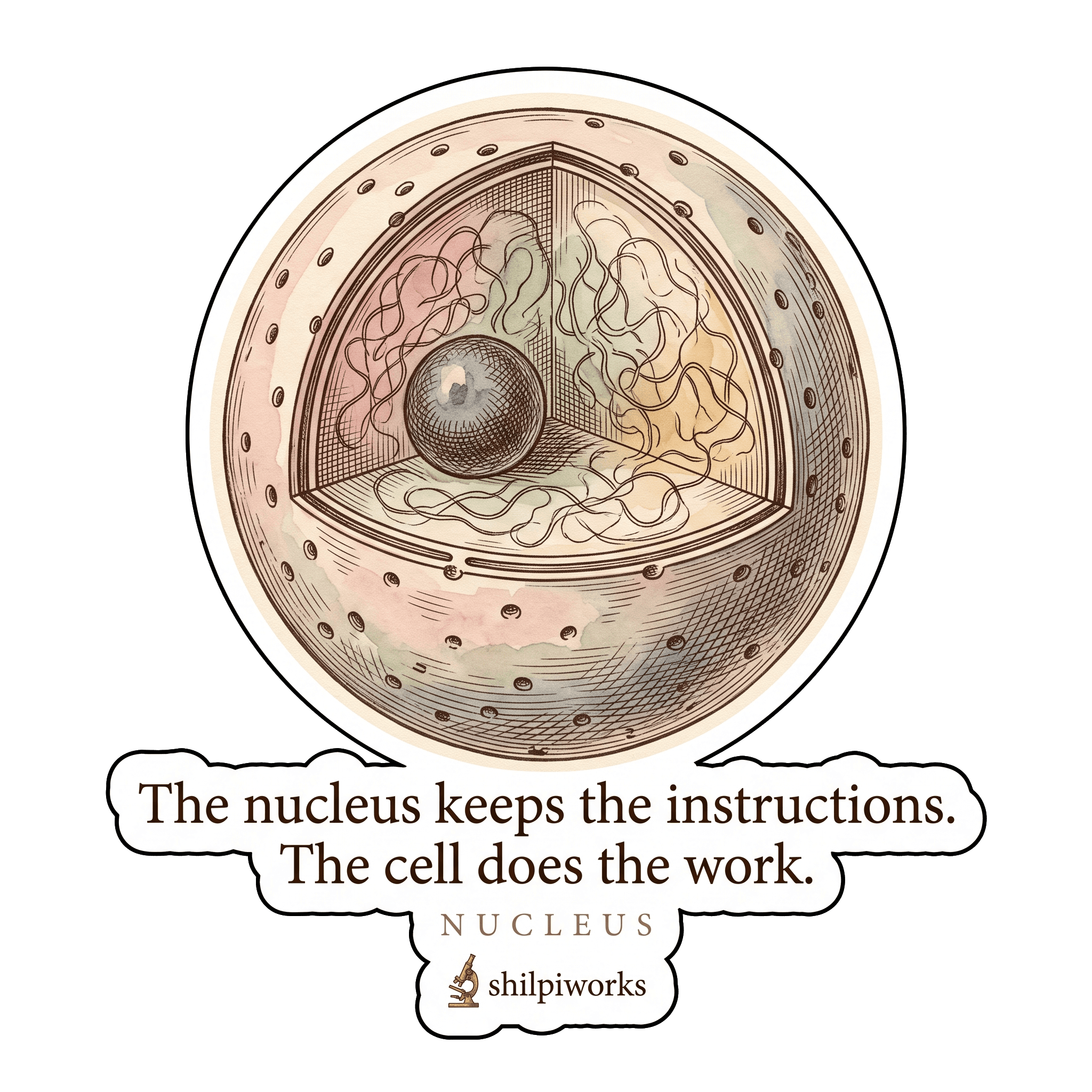
Nucleus — Where the Instructions Are Kept
The nucleus holds the instructions for the proteins that the Golgi finishes.
extends to
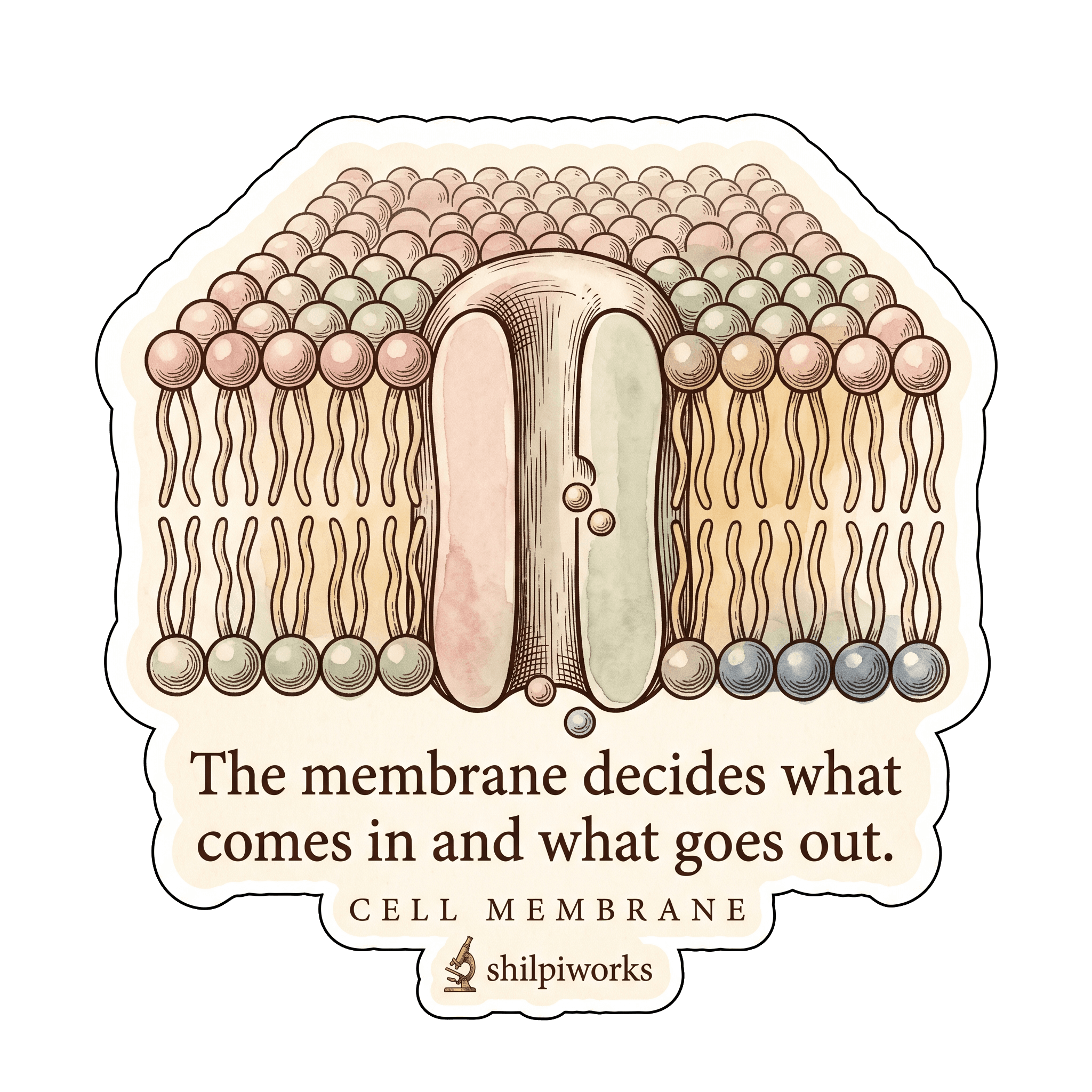
Cell Membrane — What Comes In and What Goes Out
Many vesicles from the Golgi fuse directly into the outer membrane.
contrasts with
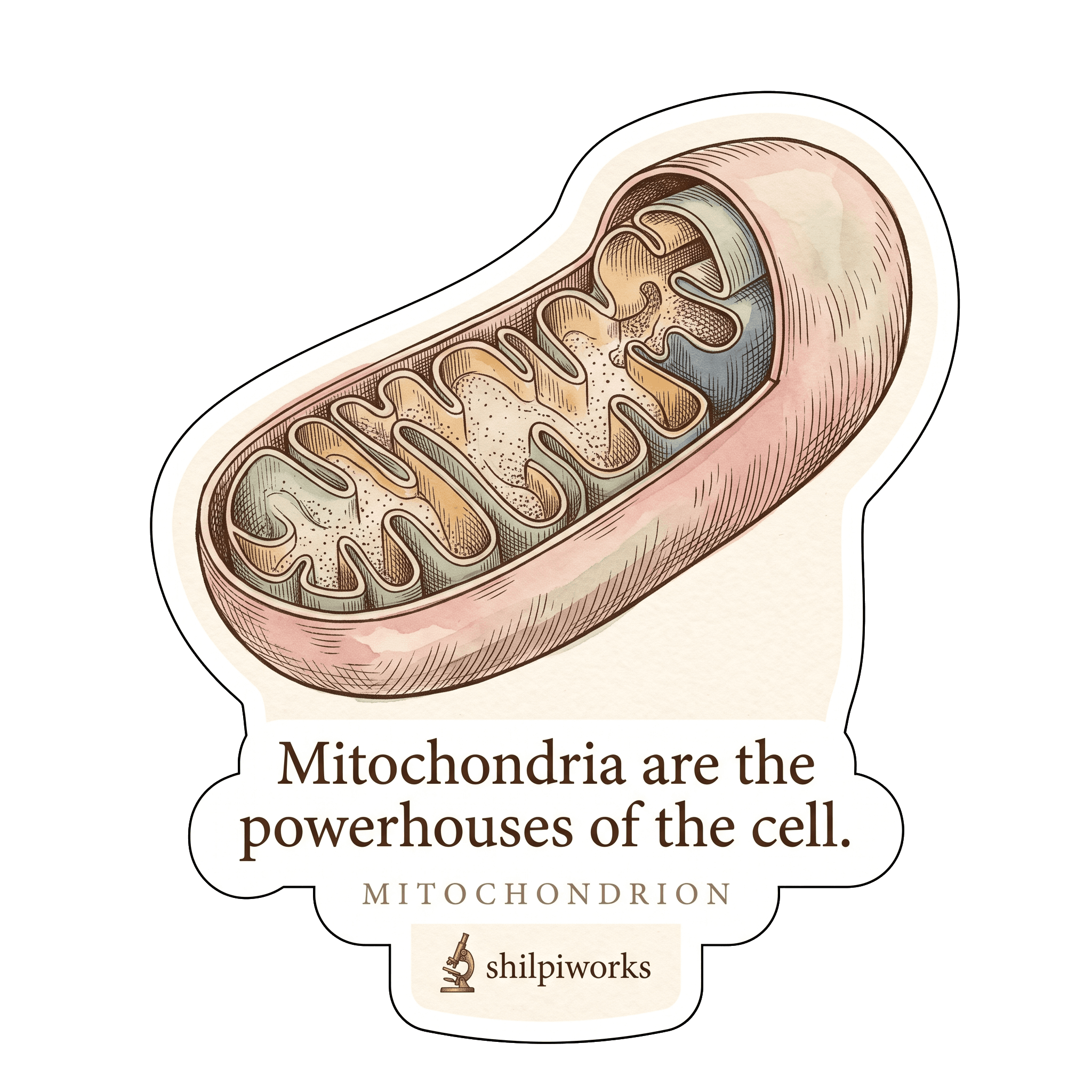
Mitochondrion — Powerhouse of the Cell
Mitochondria produce fuel instead of packaging and shipping proteins.