Hind Swaraj (1909), chapter XVII
The Reverse of Arms
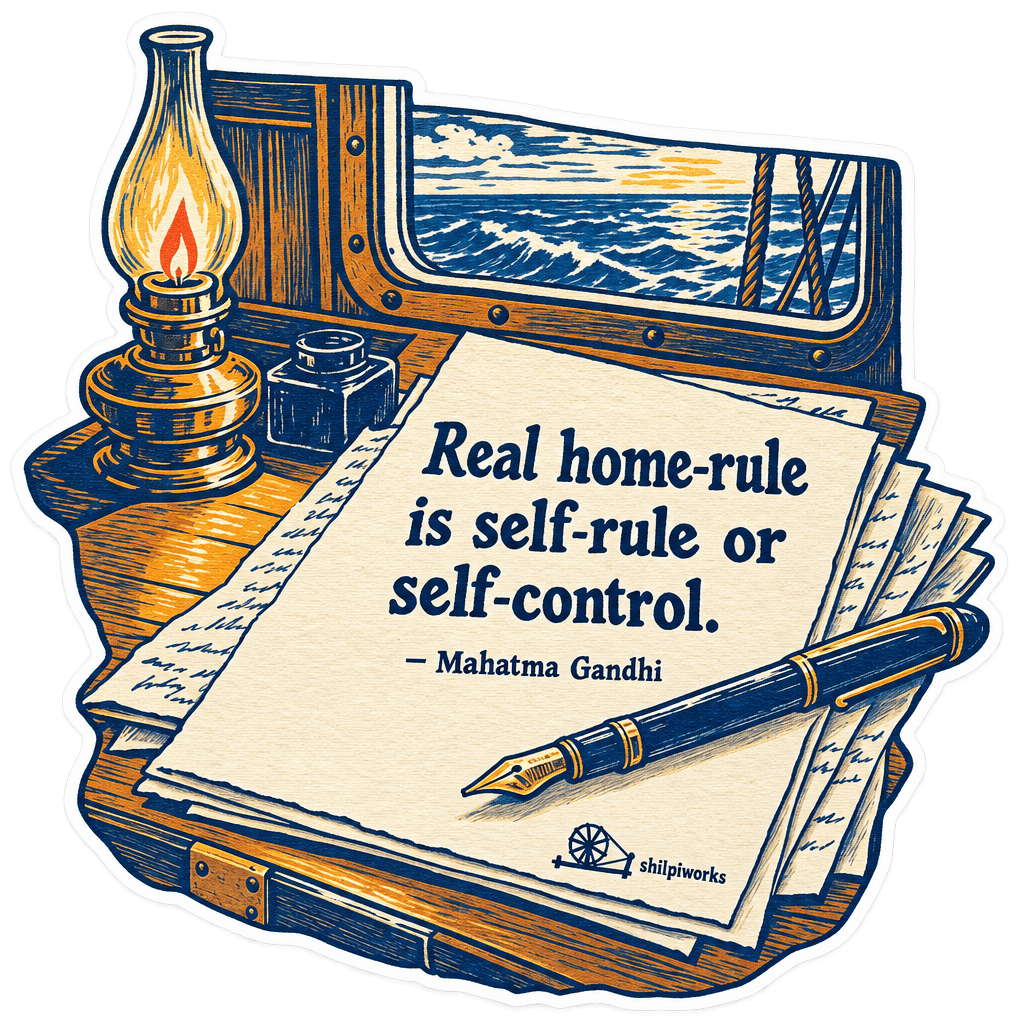
In November 1909 Mahatma Gandhi was on the steamship Kildonan Castle, sailing from Southampton to South Africa. He had spent four months in London trying to stop anti-Indian laws in the Transvaal, and the trip had failed. His fellow delegate Hajee Habib was on the ship with him. While in London, Gandhiji had argued with young Indian nationalists who believed in bombs and assassinations. He wanted to give them an answer before they took to arms. He sat down with ship stationery and wrote a book in Gujarati titled Hind Swaraj, which means Indian home-rule. When his right hand grew tired, he wrote with his left.
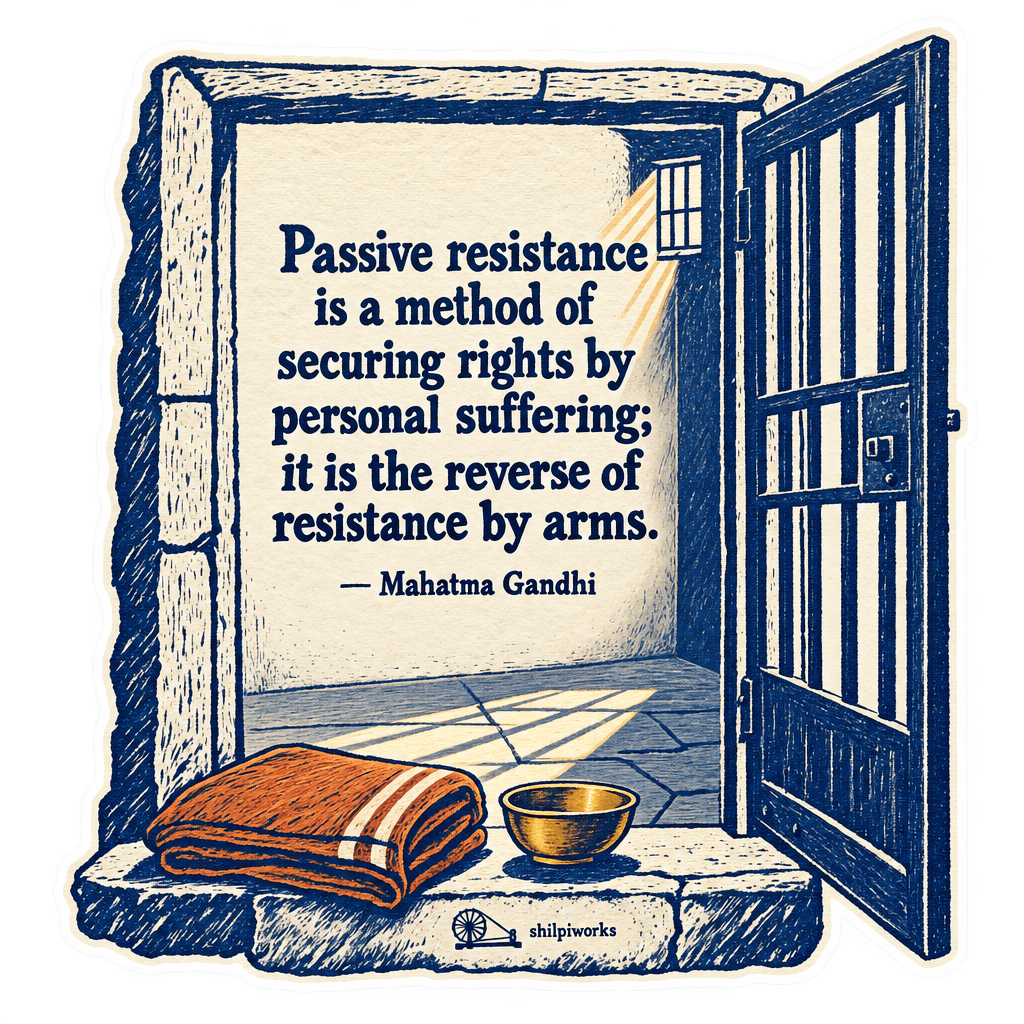
In chapter XVII of Hind Swaraj, he gave his definition: "Passive resistance is a method of securing rights by personal suffering; it is the reverse of resistance by arms." The distinction is simple. An armed fighter makes the other side suffer until it yields. A resister takes the suffering on himself, breaks the bad rule, and yields nothing. This method needs no weapons and no vote, so anyone can use it. It takes more courage than striking back. It also checks itself, because nobody will go to jail for a cause they do not care about.
Therefore
When you oppose an unfair rule, test your aim by what you are willing to lose for it. If you want the other person to hurt instead of you, you are fighting for power rather than what is right.
Indian Opinion, December 1909
Gandhiji reached South Africa in late November 1909 and printed the text in Indian Opinion, his weekly paper in South Africa. British officials in India soon read it, and they made a mistake. They assumed any talk of resisting laws meant violent revolt. In March 1910, the Bombay government banned the Gujarati edition and seized the copies. Gandhiji did not fight them in court. He translated the booklet into English himself so officials could read every word. The translation showed that he rejected all bloodshed. He answered the ban by accepting the trouble and showing that his method used no weapons.
A small reminder, on the desk or the notebook, that courage means taking the cost on yourself instead of passing it on.
$3.50
2.5 inches vinyl · weatherproof · ships in 1–3 days
Mix & save: 3 for $9 · 5 for $14 · 10 for $25· free shipping at ten
- Weatherproof vinyl
- Ships from Wayzata in 1–3 business days
- Secure checkout
If anything is wrong, we'll refund or replace it. Read the policy
Related patterns

pairs with
Mahatma Gandhi Seed and Tree Quote
Suffering is the seed that shapes the result.

contrasts with
Mahatma Gandhi Satyagraha Printing Press
He replaced passive resistance because the words sounded weak.
extends to
Mahatma Gandhi Self-Rule Quote
The same book argues that free people govern themselves first.