Folly
The Heron
Late light slicks the pond like old brass. A heron stands on one leg, pin poised, watching ripples widen from its own ankle. A fat fish noses by, scales flashing pewter; the bird tilts, declines. Another follows, lazy with certainty, and is waved past with the same slow hauteur. From the reeds a thin eel writes a cursive S and slips across open water. Clouds crowd the horizon. Mosquitoes begin their thin music. The bird finally jabs and misses; the ring it makes unravels into the dark.
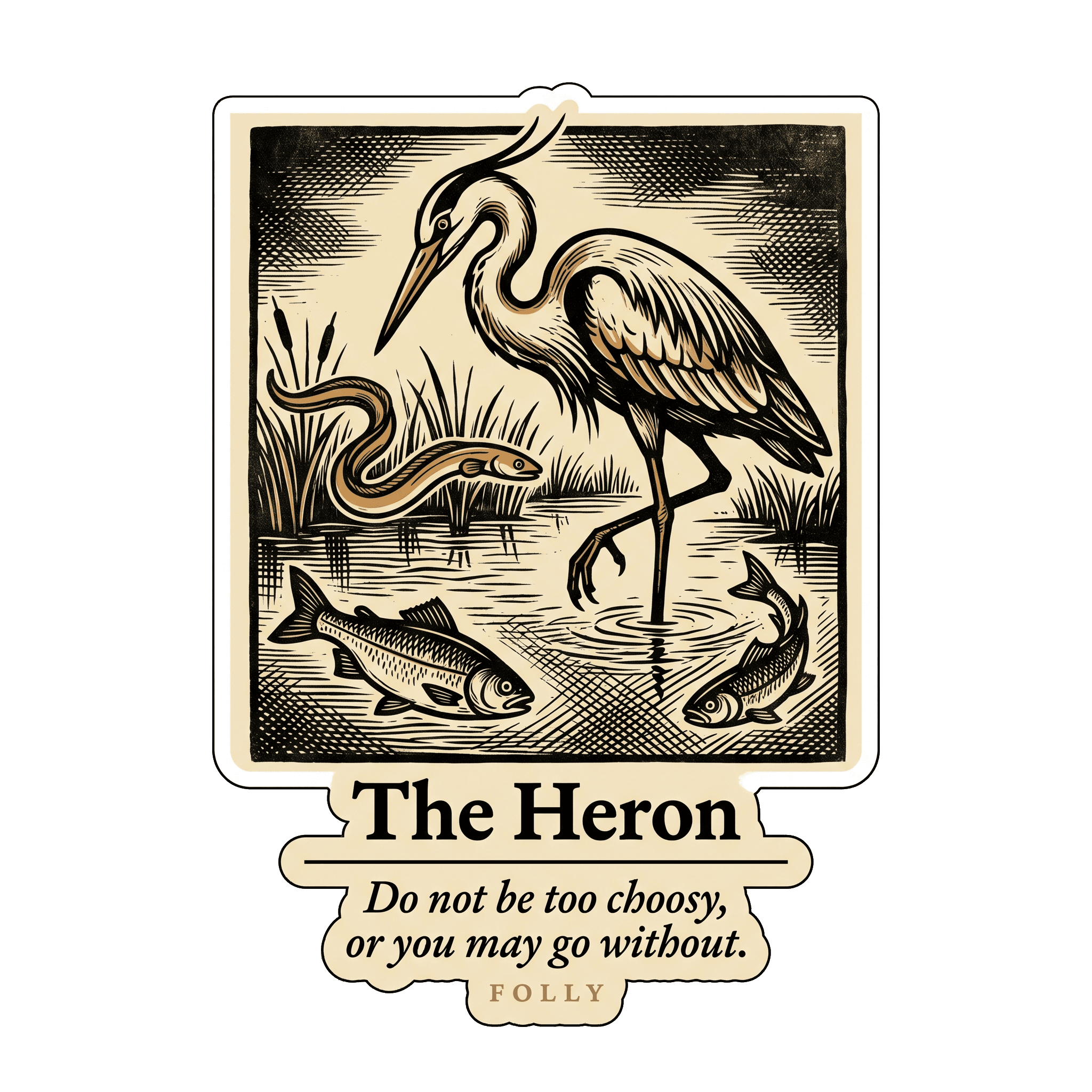
We pass on the good while waiting for the gleaming. You say no to the sturdy candidate because a star might walk in tomorrow. You scroll past solid apartments, chasing southern light and crown molding, then sign nowhere. Lunch waits while you read menus; the shop closes. A decent partner, a passable draft, an edible pear: taken in time, they feed a day. Let hunger stretch and it hardens into pride; the bird stays elegant, the stomach argues.
Therefore
Set your threshold beforehand, and when an option clears it, take it.
Iyengar and Lepper, 2000
At Draeger's Market in Menlo Park in 1999, Sheena Iyengar and Mark Lepper rolled out tasting tables of jam. Some days offered twenty‑four flavors, a jeweled parade; other days, just six. The big display drew more tasters — about sixty percent of shoppers stopped — but almost no buyers: three percent purchased. The small display drew fewer gawkers, yet thirty percent bought a jar to take home. Published in 2000 in the Journal of Personality and Social Psychology, their result was plain: too much searching turns appetite into spectatorship. People left with nothing, though plenty had passed within reach.
Related patterns
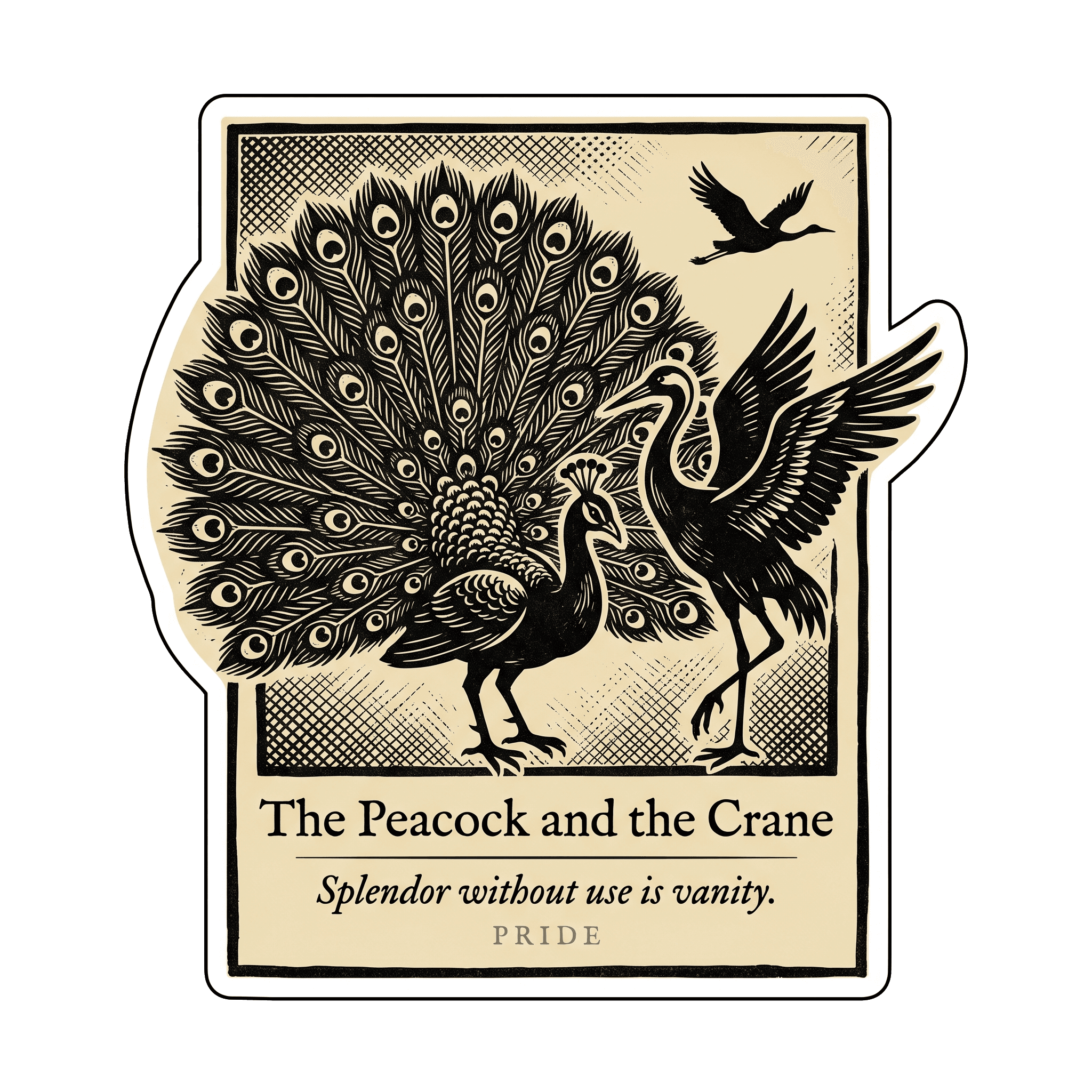
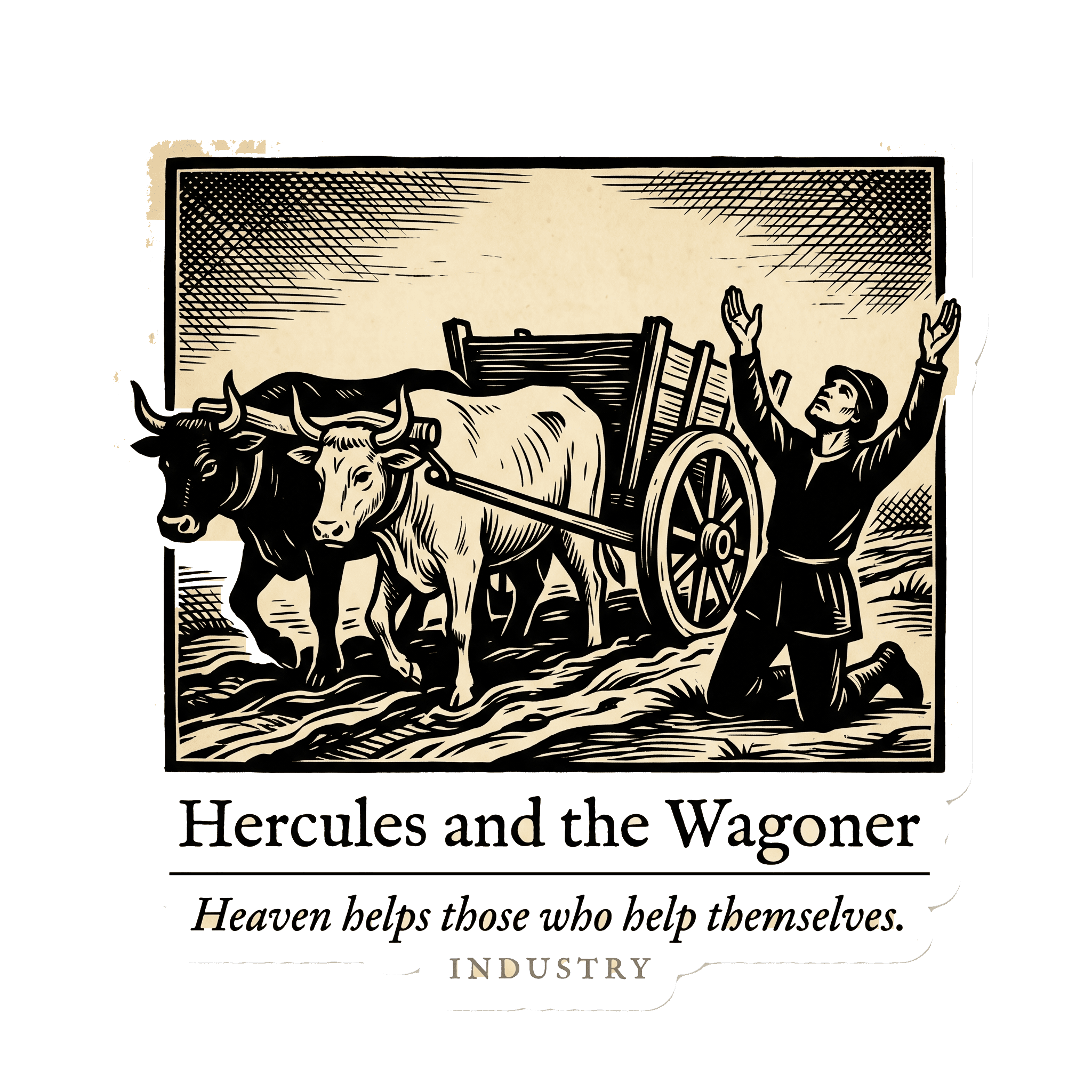

A small reminder, on the edge of a lunchbox or the corner of a desk, that good-enough now beats perfect later, and dinner grows thin after sunset.
$3.50
2.5 inches vinyl · weatherproof · ships in 1–3 days