Row of Lamps
दीपावली
dīpāvali
The festival name itself: dīpa (lamp) + āvali (row)
You set tea lights along a windowsill before friends come over. You move them so the gaps are even. You wipe a small ring of wax from the sill. You step back and look. The line makes the room look ready in a way one big lamp never does. When you light them, a small draft tips every flame the same way. The line holds anyway. People walk in and see it before they see the food, and their shoulders drop a notch.
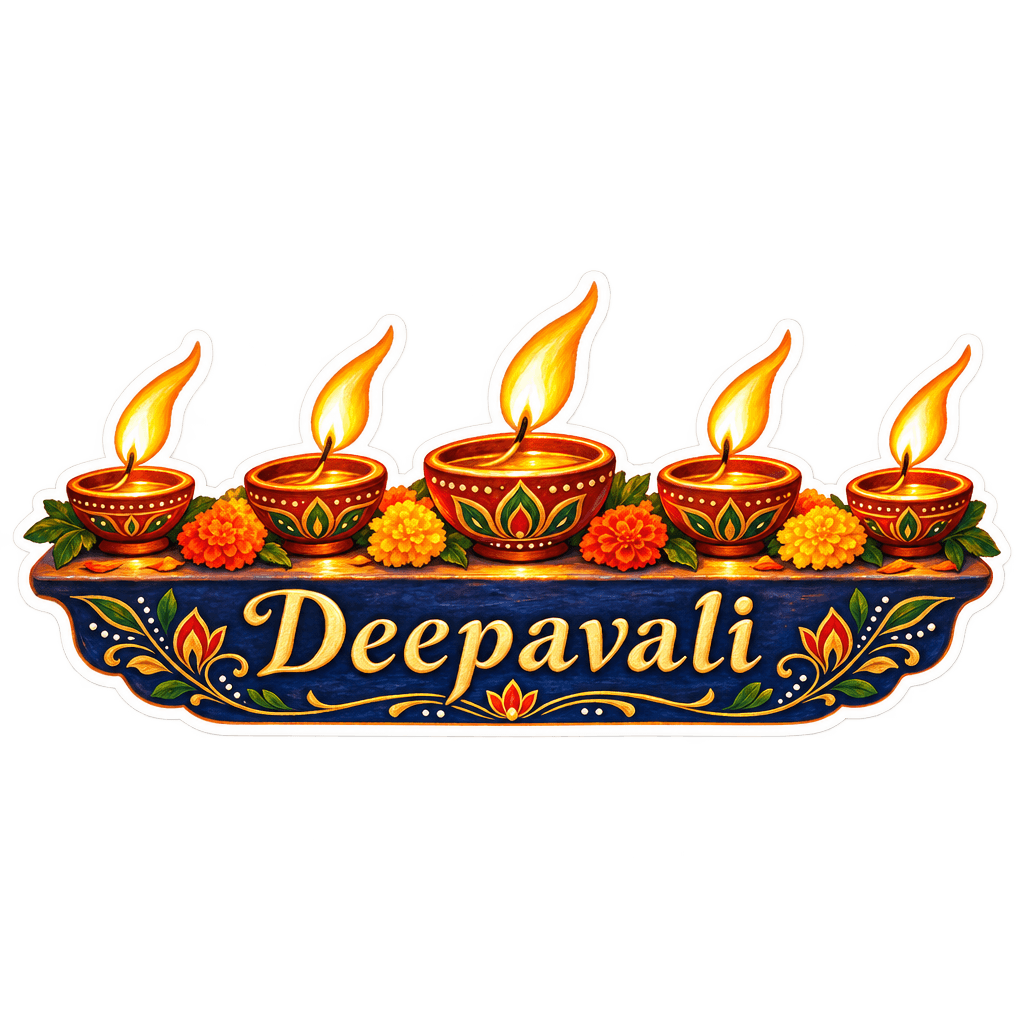
Deepavali is not a title. It is a description. Dipa means lamp, and avali means row. The week is named for setting small lamps in a straight line on a sill or step. The name lasted because people kept doing that act every year. Other meanings like return, good luck, and prayer sit on that plain image of lamps set side by side.
Therefore
When a practice feels vague, name the action and do it in a line. One small act, repeated evenly, makes the idea real.
The word and the row
The word Deepavali appears in many Indian languages, with Diwali as the shorter form. The custom is simple. People place clay oil lamps along ledges, steps, and windowsills on the main night of the week. Each lamp holds oil and a cotton wick, and the wicks are lit from one another. Lamps often sit with marigolds and leaves in between. In cities they appear on balconies; in villages they run along low courtyard walls. Old photos show the same order you see now. The flames lean the same way if there is even a small breeze, and the line still reads as one path. However you frame the why, the row stays.
A small reminder, on the ledge or the step, that meaning holds when small acts stand in a row and face the same wind.
$3.50
2.5 inches vinyl · weatherproof · ships in 1–3 days
Mix & save: 3 for $9 · 5 for $14 · 10 for $25· free shipping at ten
- Weatherproof vinyl
- Ships from Wayzata in 1–3 business days
- Secure checkout
If anything is wrong, we'll refund or replace it. Read the policy
The artwork is made with AI image tools, by agents we design and check. Each sticker is then printed on vinyl and die-cut to order.