Open-Handed Living
You get a surprise bonus at work on a Thursday. You feel taller when you walk to lunch. You treat the table and mention the number twice. That night you open the banking app again just to feel the same wave. A month later the project you loved goes to another team. You replay meetings and keep drafting an update nobody asked for. You tell yourself they made a mistake. You grip the feeling of being the person who won, and you grip the loss too.
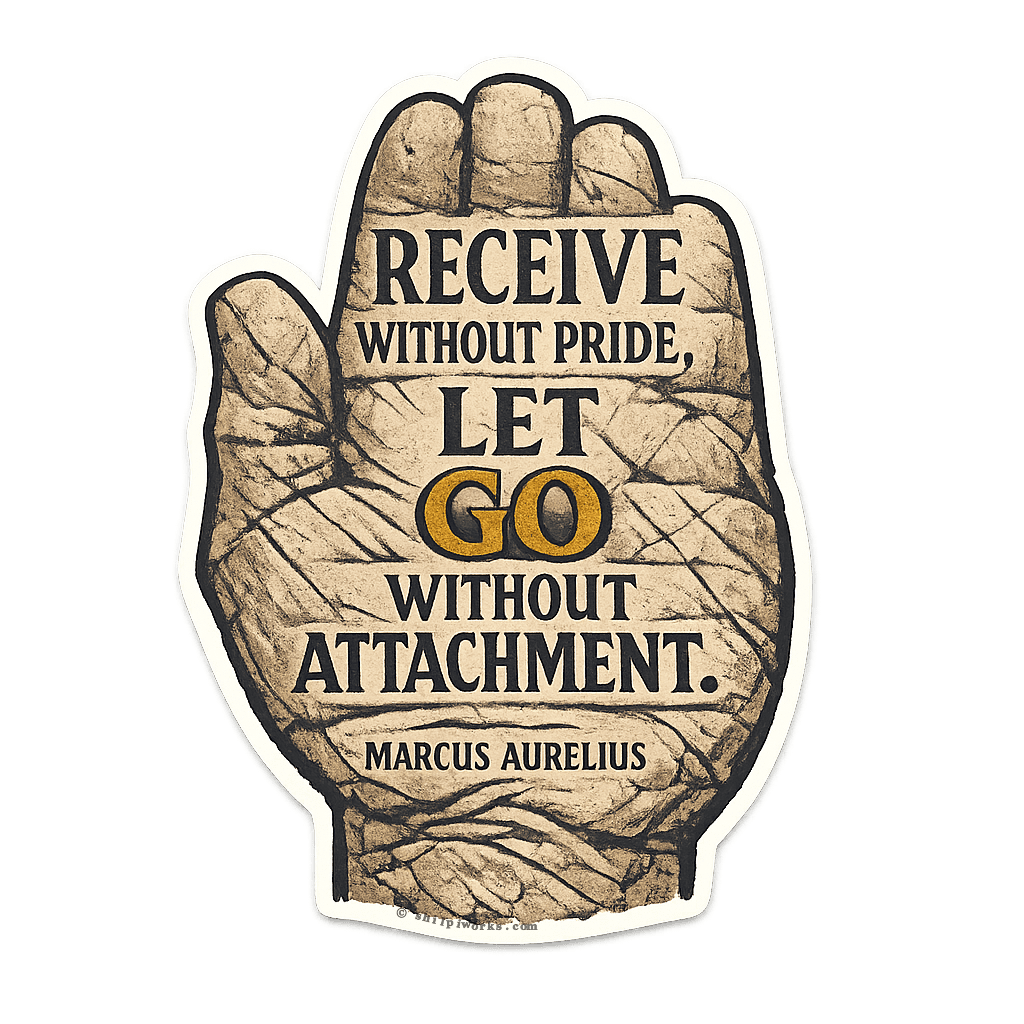
When something good lands, we make it about who we are. We turn a check, a title, or praise into proof that we deserve more. Then we fear losing it, so our mood starts to swing with things outside us. When something leaves, we hang on by rewriting the past and blaming people. Marcus points to a simpler move. Treat what comes as a tool to use, and what goes as something that was never you.
Therefore
When something good comes, say thank you and use it well. When it goes, say goodbye and do your next task.
Kahneman, Knetsch, and Thaler, 1990
In 1990, Daniel Kahneman, Jack Knetsch, and Richard Thaler ran a simple trade in classrooms at Cornell. They handed coffee mugs to half the students and nothing to the others. Sellers wrote the price at which they would give up the mug. Buyers wrote what they would pay. The numbers did not meet. Sellers wanted about twice what buyers offered, so almost no mugs moved. The team called this the endowment effect. Once we hold something, we start to value it more just because it is ours. That extra value makes us cling. Stoicism trains the opposite habit.
A small reminder, on a wallet or a fridge door, that you can take gifts lightly and let endings leave without dragging your mood behind them.
$3.50
2.5 inches vinyl · weatherproof · ships in 1–3 days
Mix & save: 3 for $9 · 5 for $14 · 10 for $25· free shipping at ten
- Weatherproof vinyl
- Ships from Wayzata in 1–3 business days
- Secure checkout
If anything is wrong, we'll refund or replace it. Read the policy