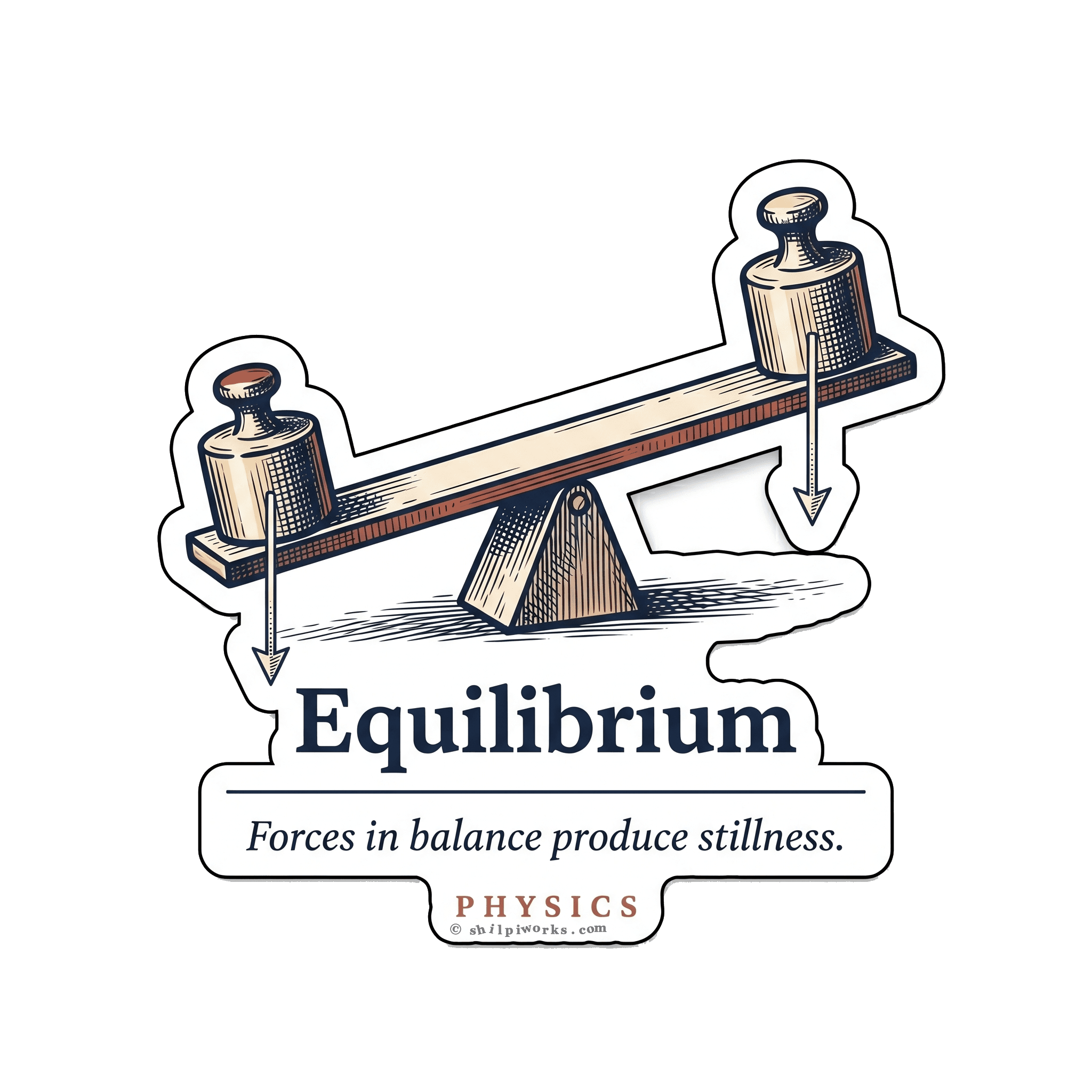
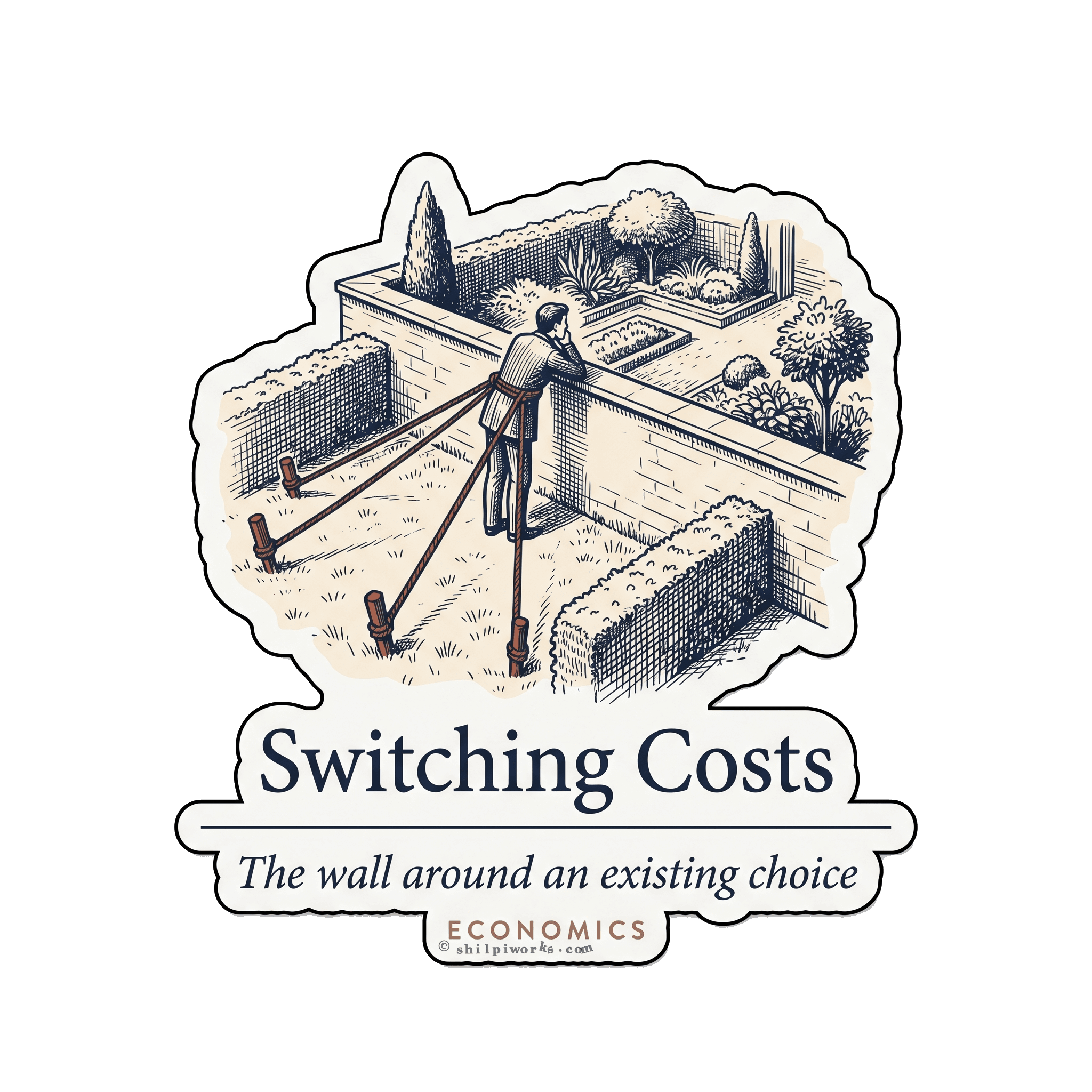
Inertia
You carry a heavy box across a slick lobby. You set it down and nudge it with your knee. It slides farther than you planned, and your hand shoots out before it hits the wall. Later you push the same box over carpet. It barely moves and your shoulder does most of the work. The box did not change. The floor did. On tile it kept moving in the line you gave it. On carpet it kept sitting still.
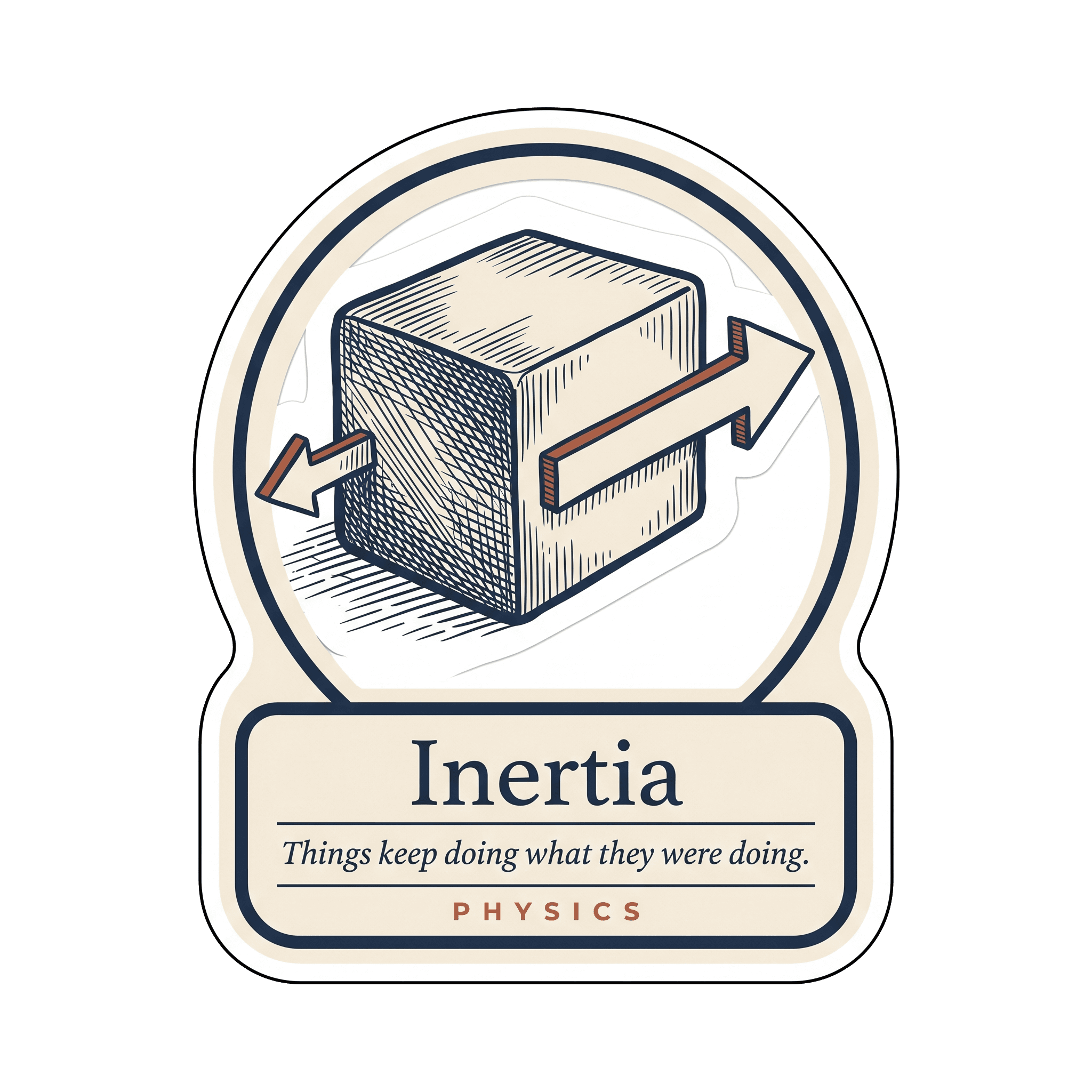
Inertia is an object's habit of staying with its current state. If it is at rest, it tends to keep resting. If it is moving, it tends to keep moving in the same line and speed. Mass measures how stubborn that habit is, which is why a loaded cart takes more push to start or stop than an empty one. Things slow down in daily life because friction and air drag act like small arrows the other way, not because motion runs out on its own.
Therefore
When you try to start or stop something, expect to add or remove more push than feels fair. Reduce friction if you want it to go, and add friction if you want it to stop.
Galileo, 1604
In Padua around 1604, Galileo rolled bronze balls down long, shallow wooden ramps. He could not time them with a clock, so he caught water in a bucket and weighed what poured out between marks. He polished the tracks and saw the balls roll farther before stopping. When he raised a second ramp to match the first, the balls climbed almost back to their starting height. He concluded that if there were no roughness or air, the balls would never slow. They would keep their speed and direction. Newton later turned that idea into the first law of motion.
A small reminder, on a laptop lid or a workshop bench, that big arrows keep their line and tiny ones barely nudge them without help.
$3.50
2.5 inches vinyl · weatherproof · ships in 1–3 days
Mix & save: 3 for $9 · 5 for $14 · 10 for $25· free shipping at ten
- Weatherproof vinyl
- Ships from Wayzata in 1–3 business days
- Secure checkout
If anything is wrong, we'll refund or replace it. Read the policy
The artwork is made with AI image tools, by agents we design and check. Each sticker is then printed on vinyl and die-cut to order.