Industry
Hercules and the Wagoner
The wheel is buried to the rim. Mud folds over the spoke like chocolate icing, and the oxen blow steam into the cool morning, heads low, traces slack. The cart lists, ribs of the sideboards showing, a dark rut running like a rail beneath it. The driver drops to one knee, palms open to the blank sky, mouth forming a name. Nothing answers. The clay holds fast. A length of fence rail lies an arm’s reach away, gray with rain and the weight of use, ignored.
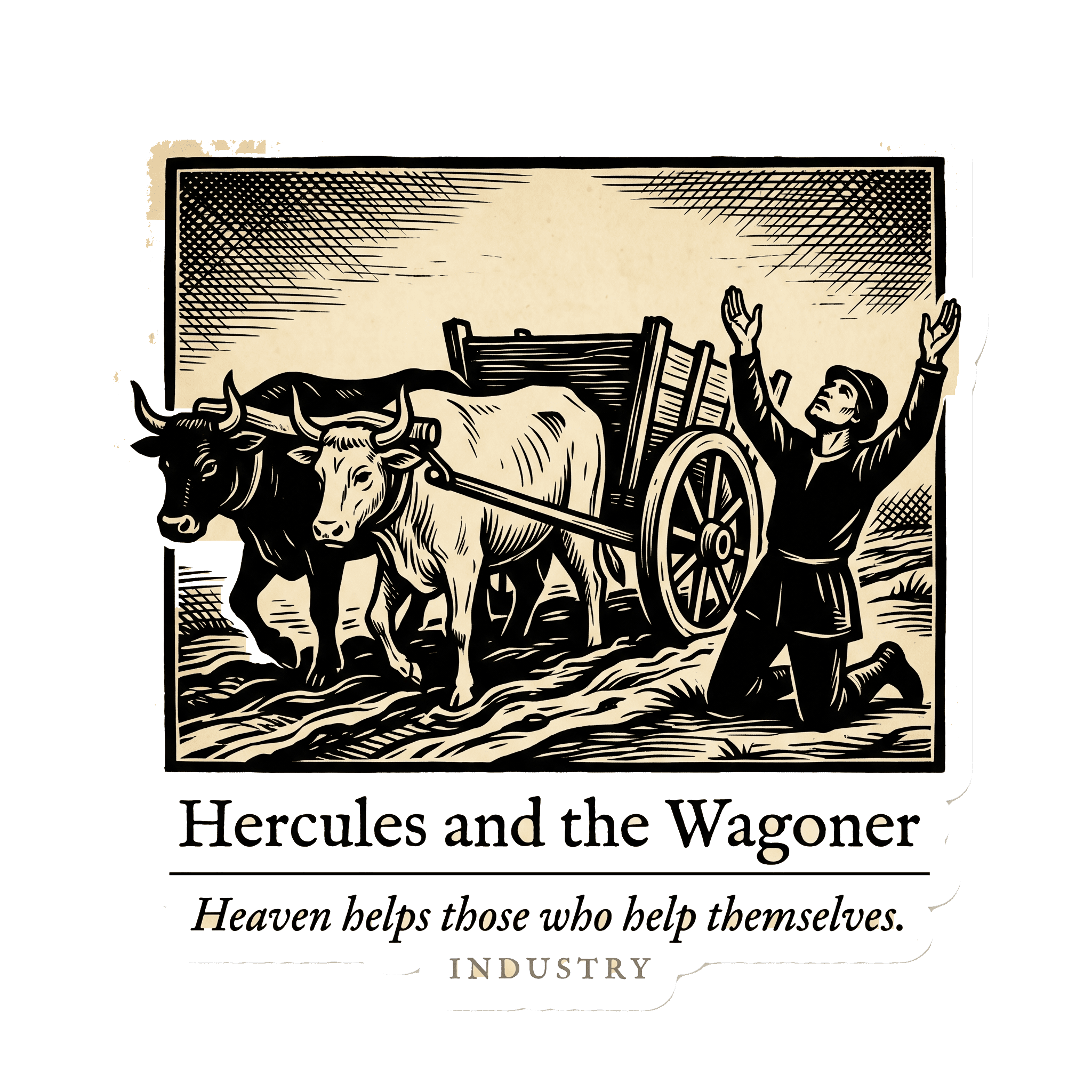
Help rarely lands on a still object. The wagon does not rise to prayer; it rises to a lever under the hub, a flat stone under the tire, a shove timed with the oxen’s pull. The inbox fills with wishes; the draft gets finished when the cursor moves. The car stuck in snow needs a shovel and kitty litter before a call to roadside. Luck shows up after sweat has cleared the first inch. Even Providence, if it is coming, finds you with mud on your hands.
Therefore
Before you ask for rescue, start the work. Put shoulder, tool, and plan to the stuck place, and the world begins to help.
Apollo 13, 1970
An oxygen tank exploded on Apollo 13, crippling the command module. Jim Lovell, Jack Swigert, and Fred Haise moved into the lunar module, and carbon dioxide began to climb: square lithium-hydroxide canisters from the command ship did not fit the lunar module’s round ports. In Houston, Ed Smylie’s crew dumped a table of odds and ends and built an adapter from a checklist cover, a plastic bag, hose, and gray tape. They radioed the steps. The astronauts cut, taped, and fitted the contraption; the CO₂ line bent downward. No miracle. Tools, hands, procedure — help arriving because someone had already started pushing.
Related patterns
contrasts with
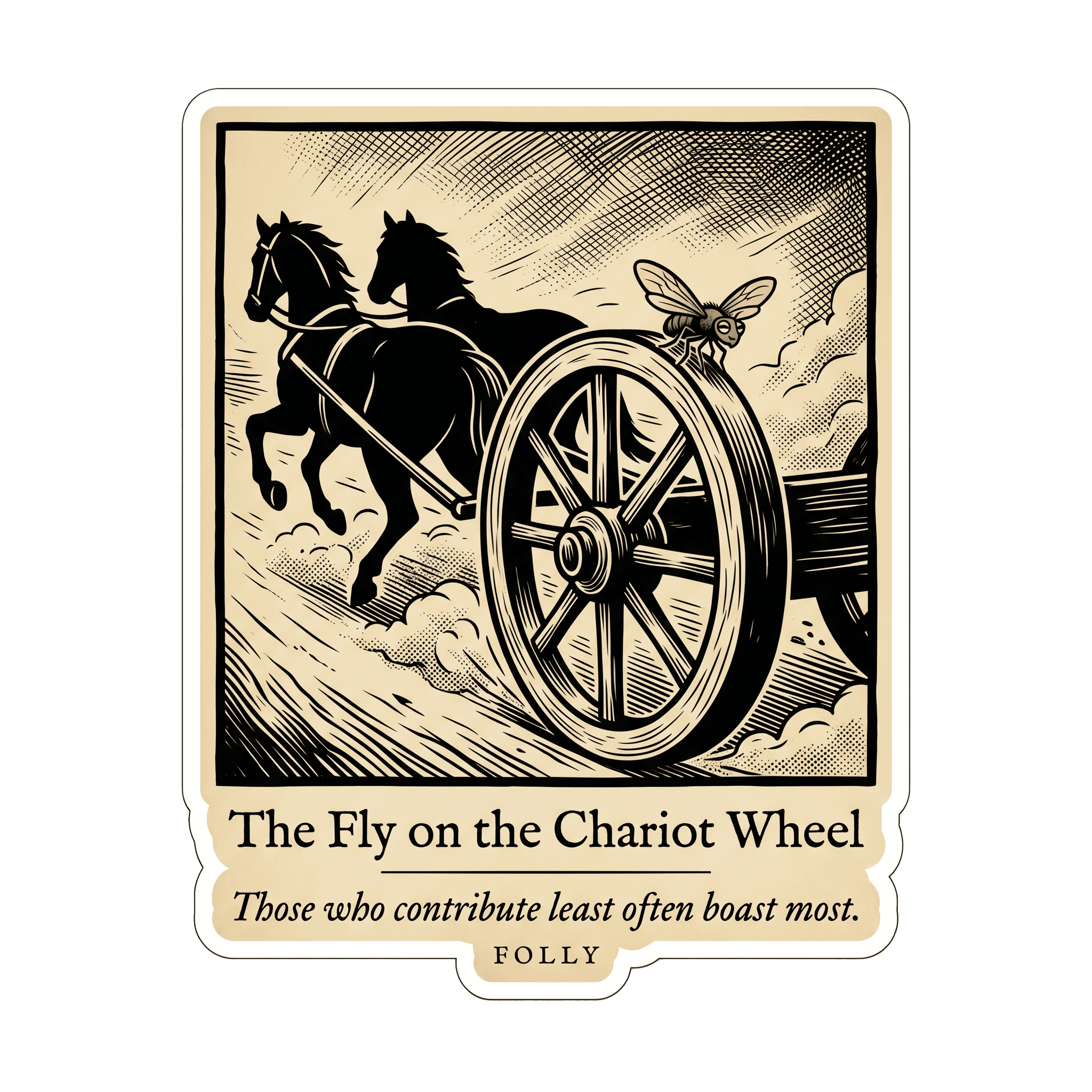
The Fly on the Chariot Wheel Fable Wisdom
Boasting replaces labor; wheels do not move.

pairs with
The Heron's Fable: Wisdom on Choice and Opportunity
Waiting loses the catch and the day.

extends to
The Oak and the Reed Fable: Adaptability Wisdom
Work with conditions; don’t fight ruts blindly.
A small reminder, on the glovebox or the workbench, that the lever is closer than the lightning.
$3.50
2.5 inches vinyl · weatherproof · ships in 1–3 days