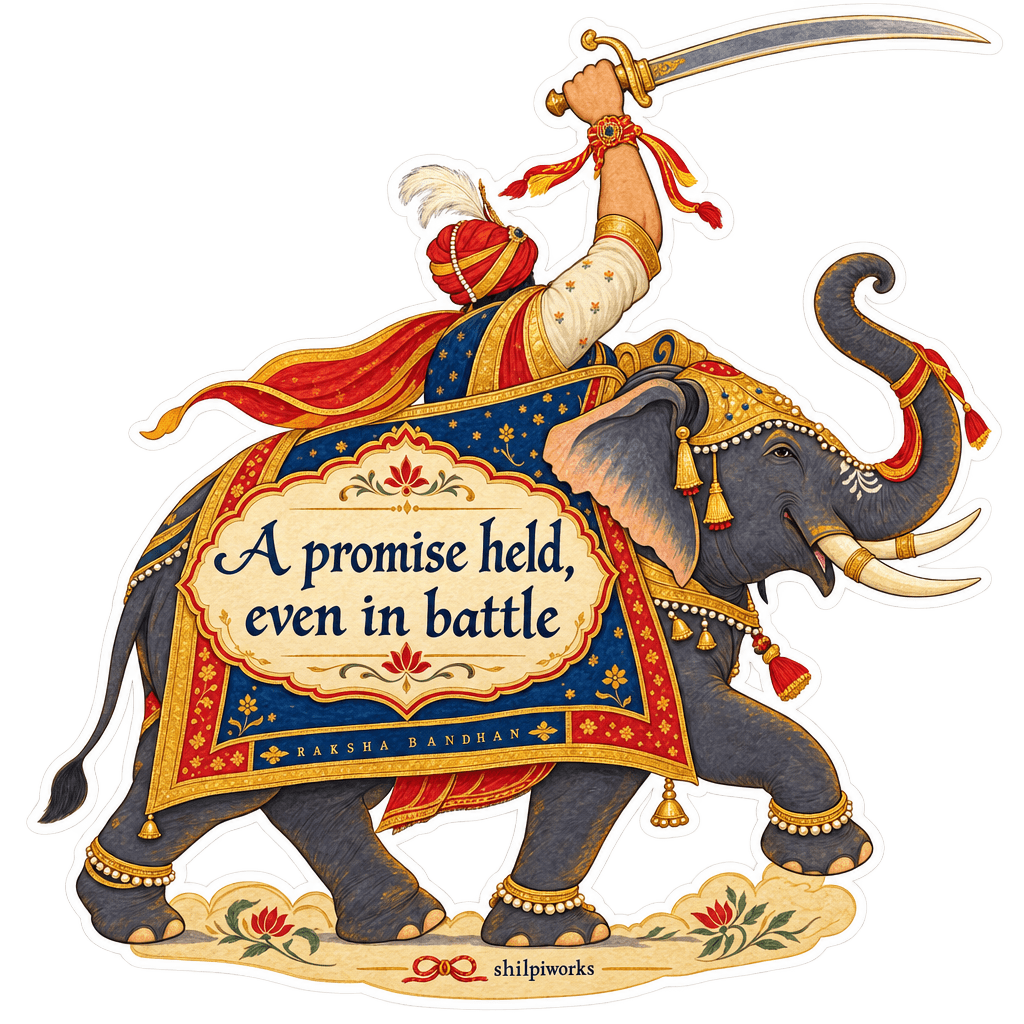
Brotherhood as Courage
The story
In 1905 the British drew a line through Bengal, splitting it along religious lines to weaken it. Rabindranath Tagore answered with the festival: he called Hindus and Muslims into the streets of Calcutta to tie rakhis on each other's wrists — strangers made siblings by the thousand, in public, on the day the partition took effect. The empire had maps and gazettes. Tagore had a household ritual that everyone already trusted, and he carried it into the street. The partition was annulled six years later. The thread had said what a petition could not.
Rabindranath Tagore's Raksha Bandhan observance against the 1905 Partition of Bengal
The same moment, today
Your office announces a reorg that pits two teams against each other. Bonus pools split. Chats fill with scorekeeping and quiet digs. On Monday someone drags two tables together and brings one big box of food for everyone. People sit mixed without labels and pass the same napkins. No one makes a speech. The room loosens because the act says the thing out loud: we belong together, even if the plan says otherwise. You can feel how a simple, shared move can choke off a split before it hardens.
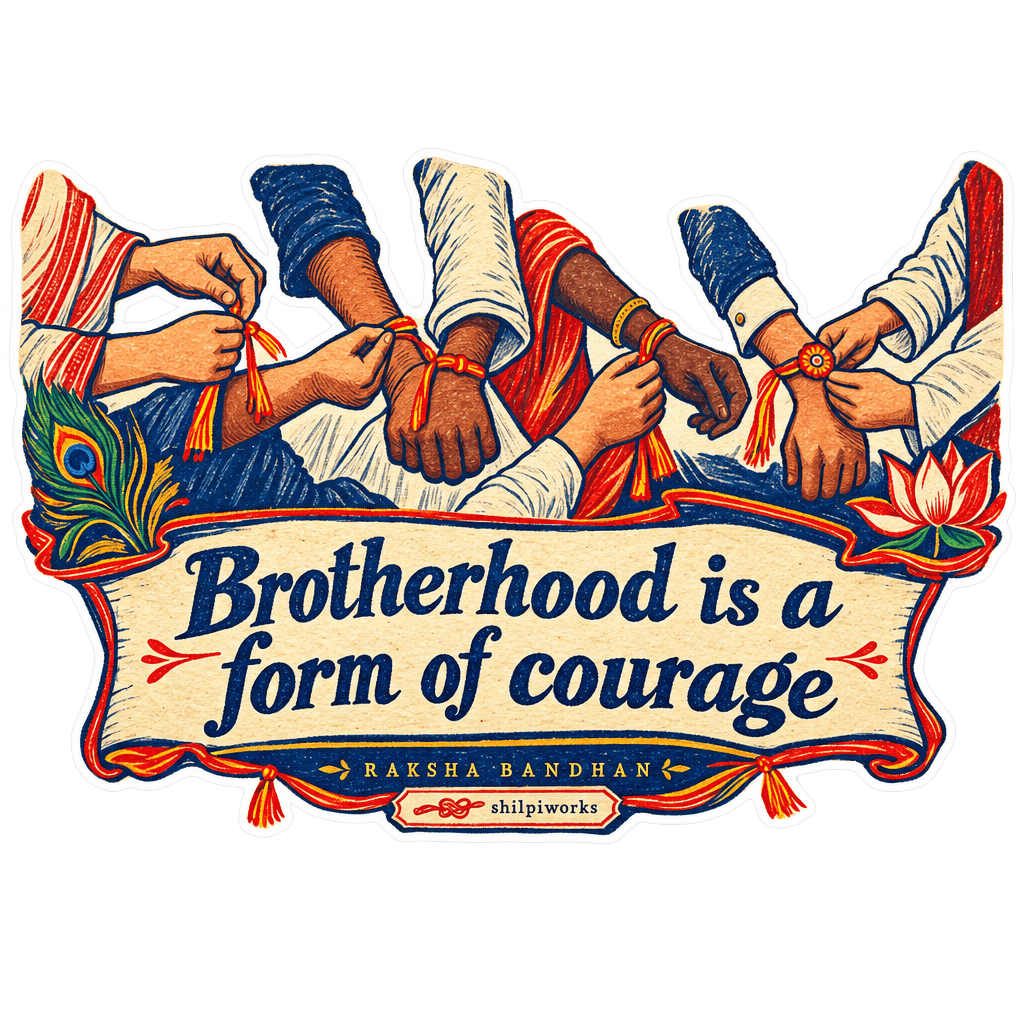
The story you just read used a household ritual in public. A thread is small, but it turns strangers into kin in a way you can see. When power tries to make sides, an argument sounds like just another side. A visible promise cuts through that. Many hands move at once, and the knot on each wrist is the proof. The cost is a few rupees, and the claim is that we will not be divided.
The lesson
When someone draws a line to split you, answer with a shared act done in public. Do not debate the line; show your belonging where people can see it.
Where this comes from
The Partition of Bengal, 1905–1911
The British split Bengal in 1905, with the new line announced to weaken political life by religion and region. On 16 October in Calcutta, Rabindranath Tagore urged people to mark the day with Rakhibandhan processions. Hindus and Muslims tied threads on each other’s wrists in the street. It became part of the swadeshi movement alongside boycotts, national schools, and songs. Tagore wrote “Banglar Mati Banglar Jol” for that moment; it is now West Bengal’s state song. The government moved the capital to Delhi and annulled the partition in 1911. The annulment had many causes, but the public rakhi gave the movement a clear, trusted form.
A small reminder, on the wrist or the street corner, that public belonging can answer lines drawn on paper.
$3.50
2.5 inches vinyl · weatherproof · ships in 1–3 days
Mix & save: 3 for $9 · 5 for $14 · 10 for $25· free shipping at ten
- Weatherproof vinyl
- Ships from Wayzata in 1–3 business days
- Secure checkout
If anything is wrong, we'll refund or replace it. Read the policy
The artwork is made with AI image tools, by agents we design and check. Each sticker is then printed on vinyl and die-cut to order.