Cell Theory
A scrape on your elbow scabs over after a fall on the sidewalk. In a week the crust peels away, and fresh skin sits underneath it. That new skin didn't appear out of thin air. The cells at the edge of the scrape grew and split down the middle. Then those new cells split again, filling in the gap one layer at a time. Every part of your body fixes itself this way.
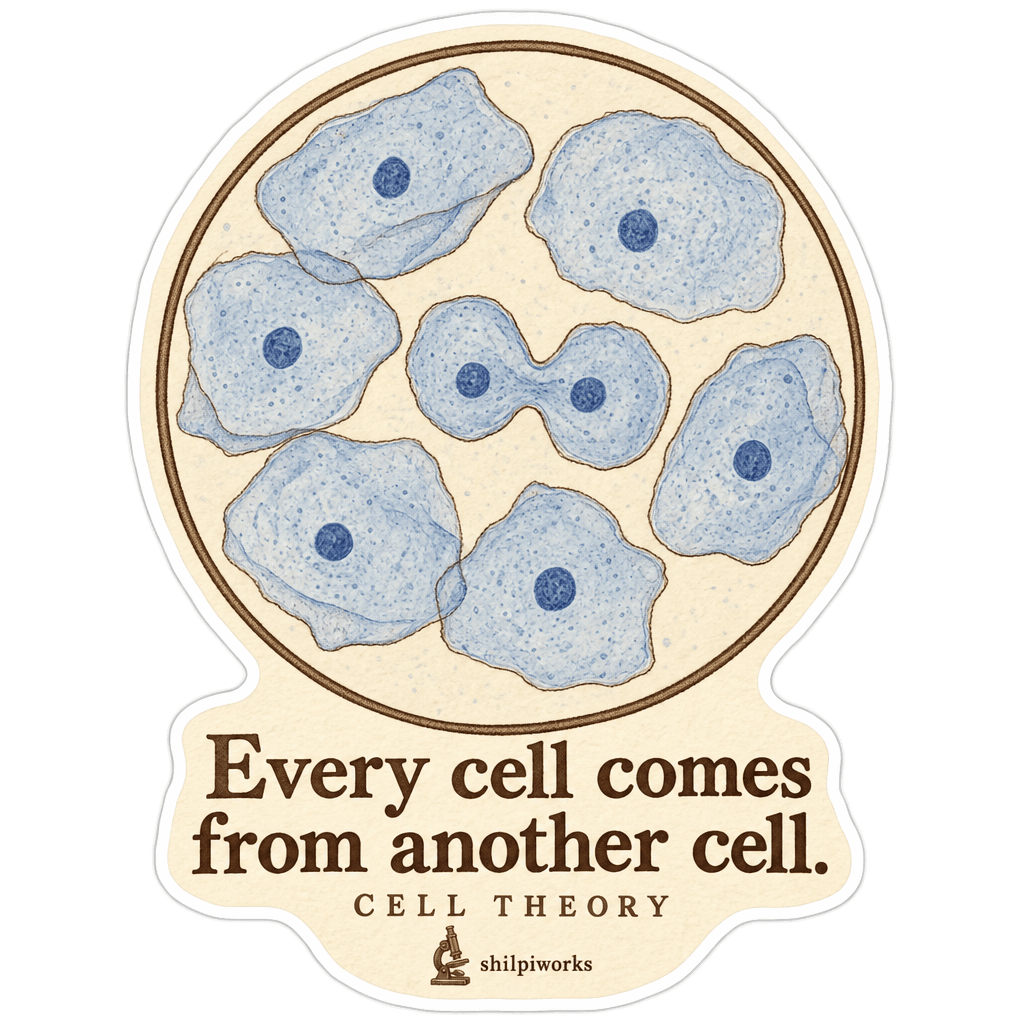
Every living thing on Earth is built from cells, and each new cell only forms when an older cell divides in two. Your own body started out as one cell, and it divided trillions of times to make you. The memory line says, "Every cell comes from another cell." That rule holds for every living creature today, but it can't explain the very beginning. The first cells on Earth formed over three billion years ago without parents, and scientists are still working out how that happened.
Therefore
When you watch a cut heal or a plant grow, remember that life never appears out of nothing. Look for the living cells that are already there and dividing.
Robert Remak, 1852
In 1852, a researcher named Robert Remak worked in Berlin with frog eggs and tissue samples. Most doctors back then thought cells formed out of a bodily fluid, the way sugar crystals form in syrup. Remak watched closely under his microscope and proved that cells only multiply by splitting in two. Three years later, in 1855, Rudolf Virchow in Würzburg published that same idea in an essay. Virchow wrote down a famous Latin line for it, but he didn't credit Remak, and Remak had to protest to defend his discovery.
A small reminder, on a notebook or a laptop lid, that your whole body grew from one cell dividing again and again.
$3.50
2.5 inches vinyl · weatherproof · ships in 1–3 days
Mix & save: 3 for $9 · 5 for $14 · 10 for $25· free shipping at ten
- Weatherproof vinyl
- Ships from Wayzata in 1–3 business days
- Secure checkout
If anything is wrong, we'll refund or replace it. Read the policy
Related patterns
extends to
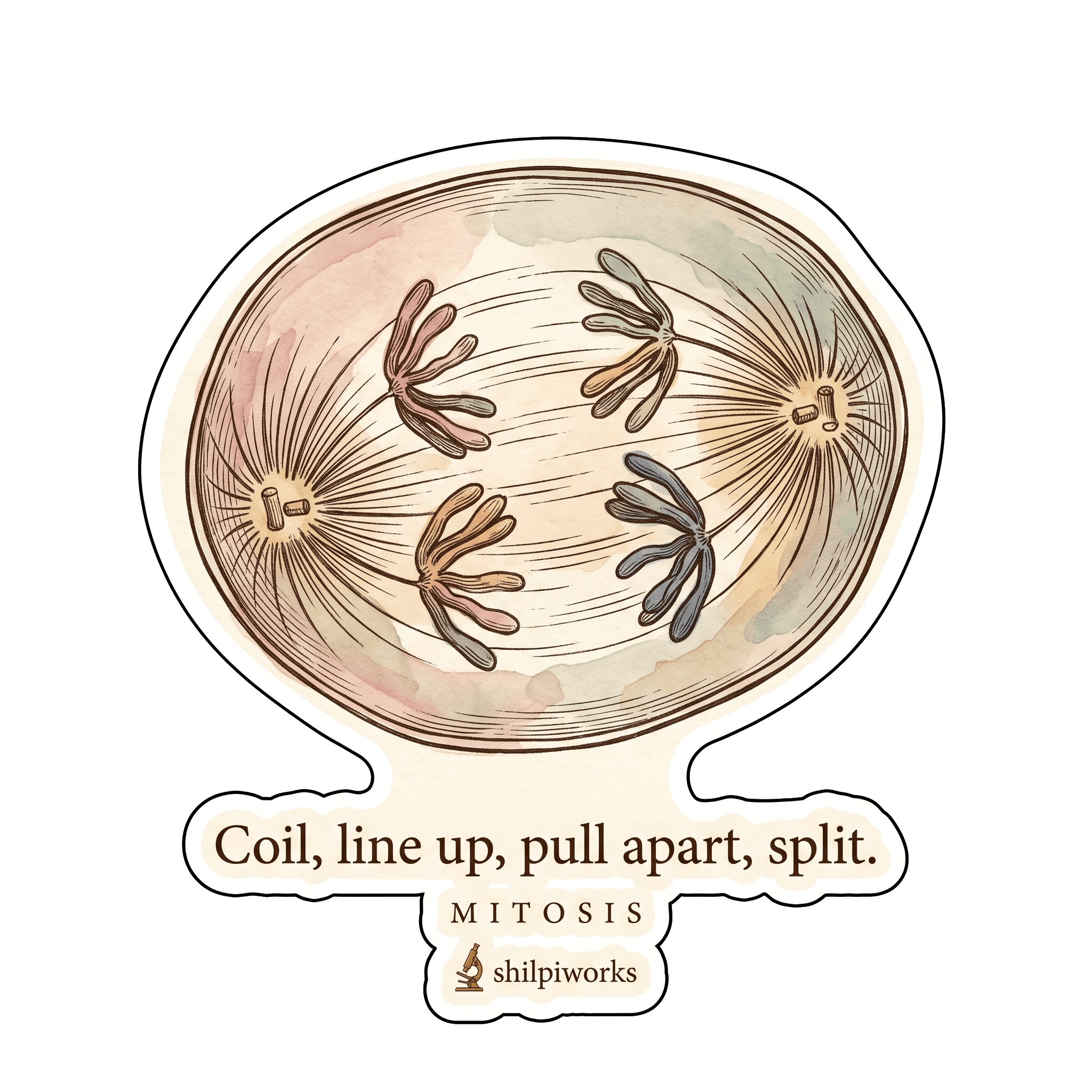
Mitosis — Coil, Line Up, Pull Apart, Split
Mitosis is the exact process a cell uses to split into two.
pairs with
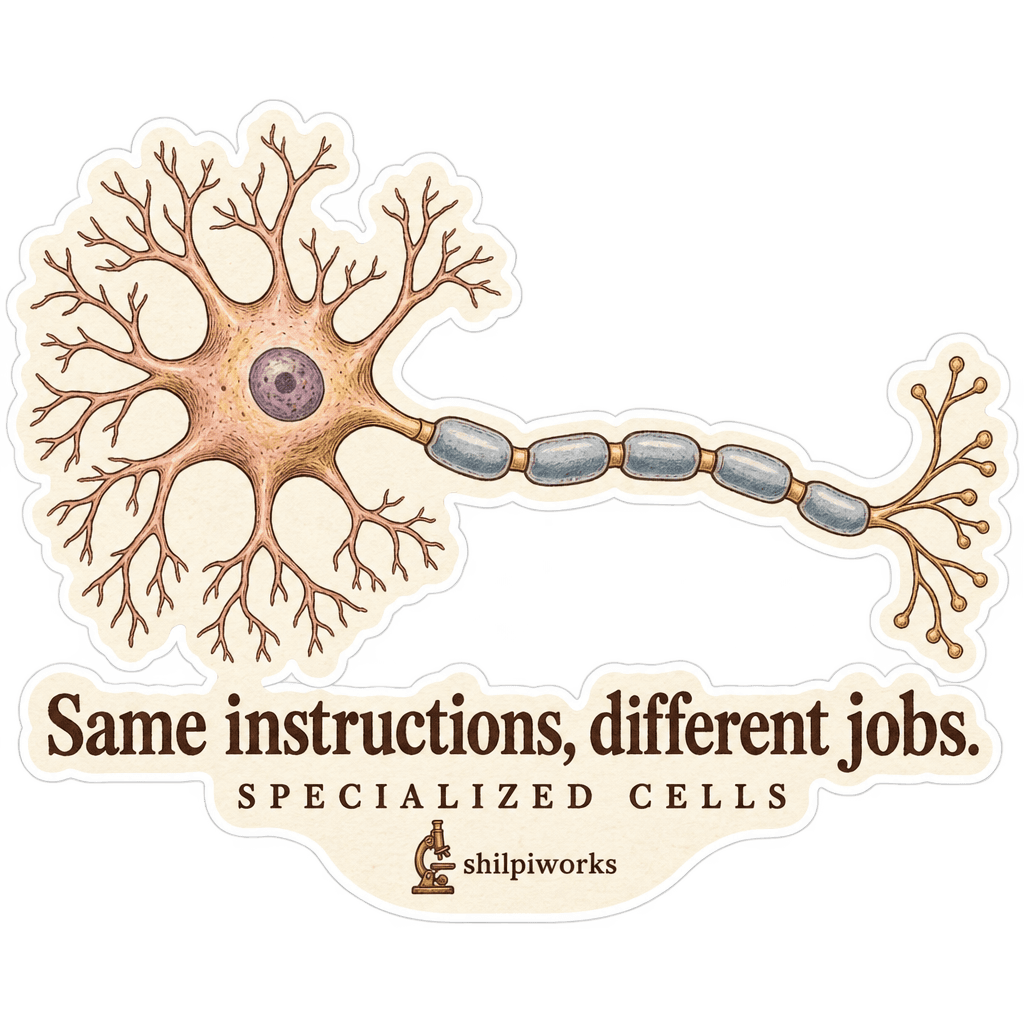
Specialized Cells — Same Instructions, Different Jobs
All your cells came from one cell, but they take on different jobs.
pairs with
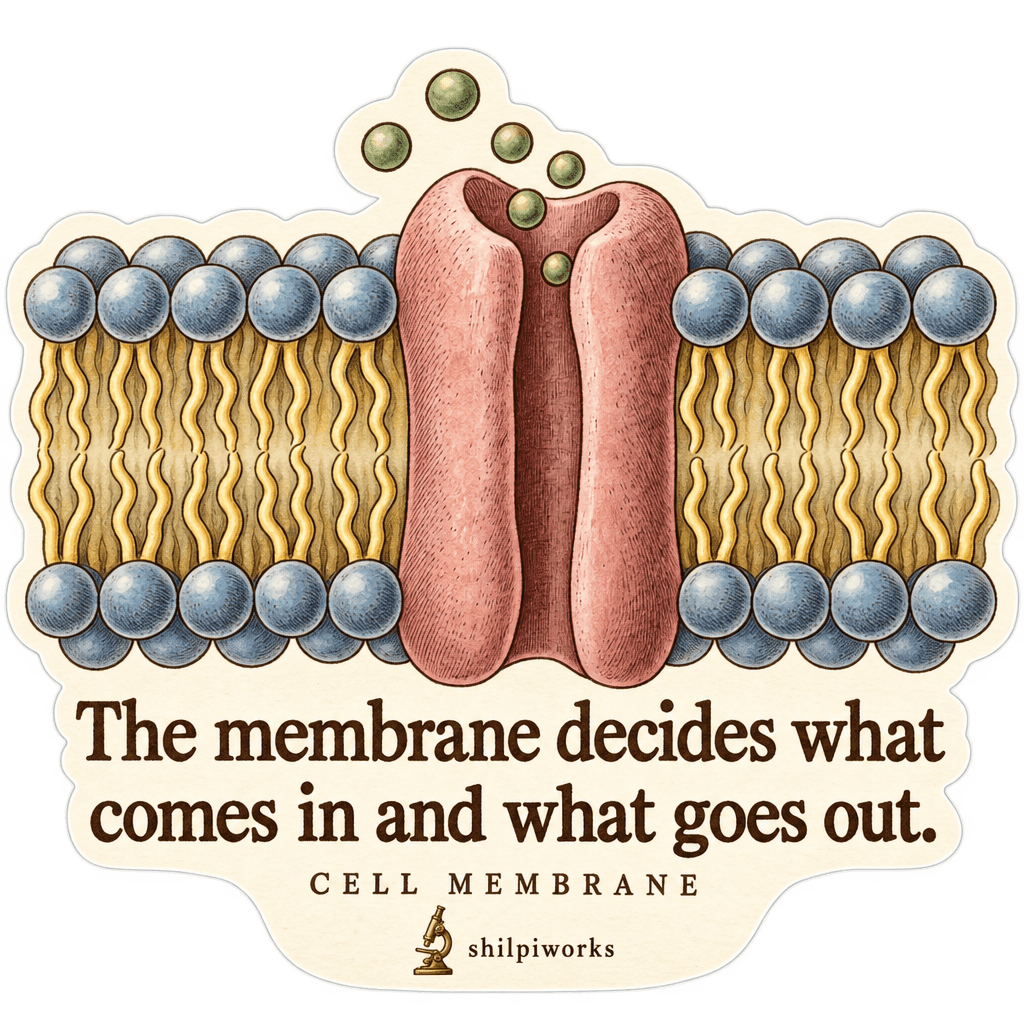
Cell Membrane — What Comes In and What Goes Out
Every cell needs an outer wall to keep its contents together.